

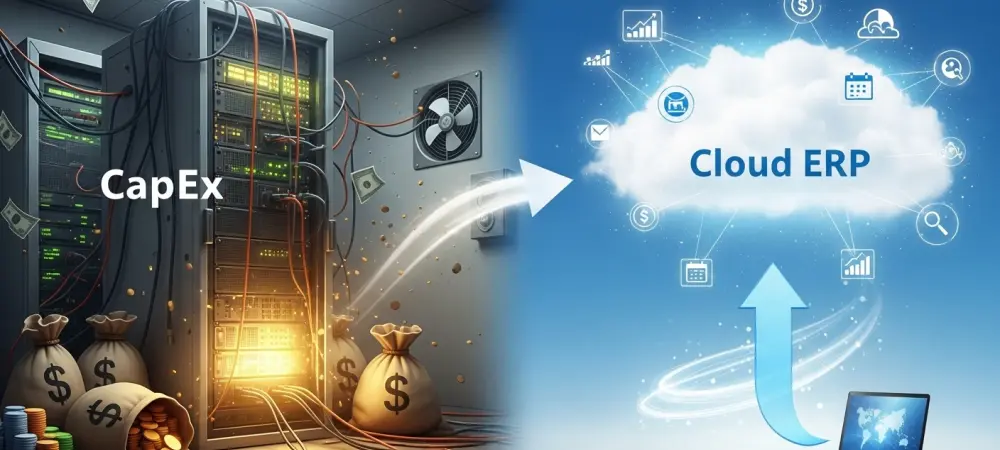
The traditional server room, once a humming monument to corporate stability and technological prowess, has rapidly transformed into an expensive liability for firms seeking high-velocity growth. As enterprise resource planning (ERP) matures, the financial architecture supporting these systems is moving away from the rigid constraints of capital expenditure (CapEx) toward the fluid adaptability of operational expenditure (OpEx). This shift represents a fundamental realignment of how mid-sized organizations and large enterprises view technology as an investment. Rather than sinking vast sums into depreciating assets, modern financial leaders are prioritizing liquidity and performance-aligned spending. The transition to cloud-based ERP platforms, such as Microsoft Dynamics 365, provides the framework necessary to navigate an increasingly complex economic environment where agility is the primary currency of success.
Modernizing Enterprise Finance: The Shift Toward Agile Investment Models
The landscape of enterprise technology investment is undergoing a transformation that redefines the relationship between the IT department and the finance office. Historically, the acquisition of high-end business software was a monumental event characterized by massive upfront costs, physical server installations, and long-term hardware maintenance contracts. This CapEx-heavy approach forced companies to gamble on their future needs, often resulting in either over-provisioned infrastructure that sat idle or under-powered systems that throttled growth. Today, the digital economy demands a more responsive model where investment scales alongside actual business performance.
Strategic financial leaders are now viewing ERP systems as dynamic services rather than static assets. This pivot toward the OpEx model allows organizations to treat software as a utility, much like electricity or internet connectivity. By doing so, the business can align its technology expenses with its monthly revenue cycles, creating a more harmonious financial ecosystem. This modernization is not merely about changing an accounting line item; it is about building a foundation for continuous improvement that ensures the organization is never tethered to obsolete technology simply because the initial investment has not yet fully depreciated.
Understanding the Foundations: Comparing CapEx and OpEx Frameworks
To appreciate the gravity of this industry shift, one must examine the divergent paths of capital and operational expenditure. Under the legacy CapEx framework, a business commits a substantial portion of its reserves to purchase perpetual software licenses and the physical hardware required to run them. These costs are recorded on the balance sheet as fixed assets and depreciated over several years. While this approach was standard for decades, it often created a “lock-in” effect, where companies remained on outdated versions of software to avoid the secondary capital shock of a major upgrade cycle. In contrast, the OpEx model, central to cloud ERP, functions on a subscription basis. The organization pays a recurring fee that bundles software usage, cloud hosting, advanced security, and ongoing maintenance into a single, predictable cost. This removes the burden of managing physical data centers and specialized IT staff for hardware upkeep. Because there is no massive initial outlay, the barriers to entry for advanced enterprise technology are lowered, allowing smaller firms to compete with global conglomerates using the same high-level tools. This historical movement from ownership to access reflects a broader macroeconomic trend toward service-oriented business models that prioritize flexibility over possession.
Analyzing the Strategic Financial Advantages of Cloud ERP
Optimizing Working Capital and Cash Flow Predictability
The preservation of working capital is a cornerstone of effective financial management, particularly in sectors like manufacturing or wholesale distribution where cash flow can be volatile. Traditional ERP deployments often require millions in upfront capital, which can strain a company’s liquidity and limit its ability to respond to market opportunities. By adopting a cloud-based OpEx model, Chief Financial Officers (CFOs) can distribute these costs over time. This approach ensures that capital remains available for research and development, marketing, or strategic acquisitions that drive actual revenue growth.
Furthermore, the predictability of a subscription model simplifies the budgeting process significantly. Instead of facing unexpected repair costs for an aging server or sudden license true-ups, the finance team works with a consistent, monthly expenditure. This stability allows for more precise cash flow forecasting and reduces the need for external financing or emergency lines of credit. When technology costs are predictable, the entire organization can plan with greater confidence, knowing that the digital backbone of the company is fully funded without looming “hidden” expenses.
Redefining Total Cost of Ownership and Asset Management
A comprehensive analysis of the Total Cost of Ownership (TCO) frequently reveals that the perceived savings of owning a perpetual license are illusory. On-premise systems incur a long list of secondary costs, including energy consumption for cooling, physical space requirements, and the constant cycle of hardware refreshes. Cloud ERP consolidates these fragmented expenses into a single, transparent fee. By shifting these responsibilities to the provider, the organization eliminates the administrative burden of managing vendor contracts for various hardware components, leading to a more streamlined and efficient IT operation.
From an accounting perspective, moving away from CapEx results in a leaner balance sheet. By reducing the volume of depreciating IT assets, companies can improve key performance indicators such as Return on Assets (ROA) and Return on Invested Capital (ROIC). A lean asset base often makes a firm more attractive to investors and lenders, as it demonstrates a commitment to operational efficiency rather than the accumulation of technical debt. This strategic management of assets ensures that the company remains nimble, avoiding the financial drag of maintaining a private data center that loses value with every passing month.
Enhancing Scalability and Mitigating Operational Risk
Business growth rarely occurs in a perfectly linear fashion, and the ability to scale technology to meet fluctuating demand is a vital advantage. Cloud ERP platforms offer elastic scalability, allowing businesses to add or remove users and functional modules with ease. This ensures that the cost of the system is always in direct proportion to the size and needs of the operation. In a CapEx model, scaling up requires another round of hardware procurement and installation, a process that is both slow and expensive. Conversely, scaling down in a CapEx environment is nearly impossible, as the hardware has already been paid for and cannot be easily returned.
Beyond financial flexibility, the cloud model addresses the critical issue of risk mitigation. Modern cybersecurity threats are increasingly sophisticated, and maintaining a secure on-premise environment requires immense investment in specialized personnel and software. Cloud providers operate at a scale that allows them to implement enterprise-grade security protocols, redundancy measures, and disaster recovery systems that most mid-market companies could never achieve alone. By migrating to the cloud, a business effectively transfers the vast majority of its technical and security risk to the provider, ensuring that data integrity and system availability are maintained by experts.
Anticipating the Future: Innovation and Industry Evolution
The trajectory of enterprise software is pointed toward a future where innovation is constant and incremental rather than sporadic and disruptive. In the past, companies often languished on ten-year-old software because the “upgrade shock” of a new version was too high to justify. The cloud ERP model has permanently altered this dynamic by delivering updates in real-time. This ensures that every business, regardless of size, has immediate access to the latest advancements in artificial intelligence, machine learning, and automated compliance tools as soon as they are released.
As regulatory environments become more complex and global trade patterns shift, the ability to integrate new technologies without a capital request becomes a major competitive differentiator. Future-ready businesses will leverage these automated updates to maintain a “living” system that evolves alongside the market. This constant state of readiness prevents the accumulation of technical debt and ensures that the finance team is always working with the most accurate, real-time data available. The transition toward this model is not just a trend; it is the new standard for any organization that intends to remain relevant in a data-driven economy.
Actionable Strategies for Navigating the Transition
For organizations considering this pivotal shift, the first step involves a rigorous audit of existing IT expenditures. This audit must go beyond the cost of software licenses to include electricity, real-time monitoring, floor space, and the percentage of IT staff time dedicated to hardware maintenance. Building a comprehensive TCO comparison is essential for demonstrating the long-term value of the OpEx model to stakeholders. Once the financial case is established, leadership should prioritize platforms like Microsoft Dynamics 365, which offer a unified ecosystem for finance, supply chain, and operations, ensuring that data silos are eliminated during the migration.
Successful transitions also require a shift in internal culture. Finance teams must be trained to utilize the real-time insights provided by cloud systems to move from descriptive reporting to predictive analytics. Instead of spending time on manual data entry or system maintenance, personnel can be redeployed to strategic roles that analyze trends and identify new growth opportunities. By focusing on the liberation of both capital and human resources, businesses can ensure that their move to the cloud is not just a technical upgrade, but a holistic improvement in operational capacity.
Conclusion: Embracing Agility in a Volatile Economy
The migration toward operational expenditure models proved to be the defining financial pivot for resilient enterprises during the recent cycles of market volatility. Companies that embraced this shift successfully liberated significant portions of their working capital, allowing them to reinvest in high-growth initiatives rather than maintaining aging server racks. The move from CapEx to cloud-based ERP delivered a level of financial elasticity that was previously unknown in the corporate world, transforming a static cost center into a dynamic engine for innovation.
The strategic advantages realized through this transition extended far beyond the balance sheet. By offloading the burdens of hardware management and cybersecurity to specialized providers, organizations improved their overall risk profiles and ensured continuous access to the latest technological advancements. As legacy systems reached their natural end-of-life, the decision to pivot to a subscription-based model became an obvious choice for any forward-looking leadership team. Looking ahead, the focus must now remain on leveraging these agile frameworks to maintain a permanent competitive edge in an environment where speed and adaptability are the ultimate measures of success.