

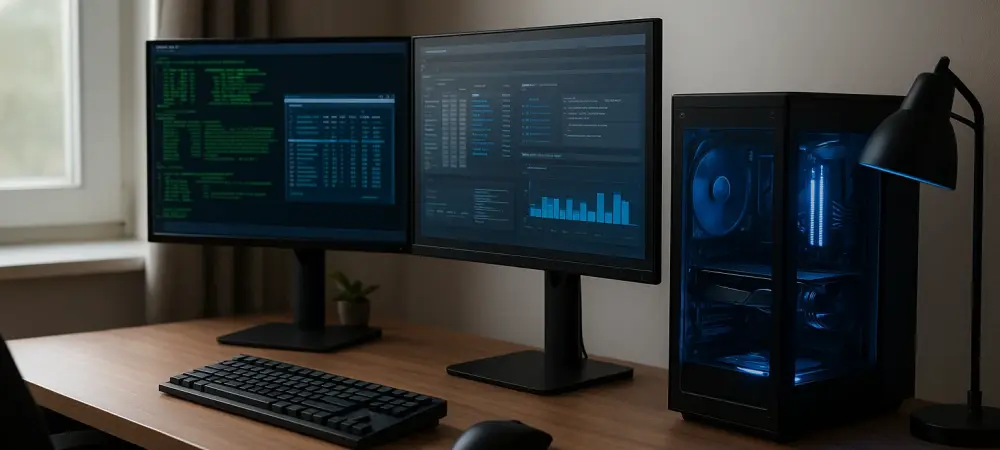
Processing high-resolution images locally using a discrete GPU offers a more immediate and private result than waiting for remote machine-learning models to return processed data. This movement toward a local-first computing model represents a strategic reclamation of digital sovereignty, where the power of modern processors is finally being utilized to serve the individual rather than the data-harvesting algorithms of large corporations. The efficiency gained by eliminating network latency is only surpassed by the peace of mind that comes from knowing sensitive business logic remains entirely within the physical confines of one’s own hardware. Transitioning to local tools is no longer a niche preference for enthusiasts; it is a necessary evolution for professionals who require reliability and confidentiality in an increasingly volatile digital environment.
Enhancing Privacy in Visual Workflows
Securing Static and Motion Captures
Visual information represents some of the most sensitive data generated during a typical workday, often including internal dashboards, system architectures, or unmasked credentials. Gradia addresses this concern by offering a comprehensive suite of markup tools that operate entirely within the local Linux environment. This ensures that every highlight, redaction, and callout is processed on-device, preventing the exposure of proprietary information to external entities. By maintaining a local workflow, organizations can enforce strict data governance policies while still providing employees with high-quality visual communication tools. This transition effectively eliminates the risk associated with vendor security failures, as the primary data never leaves the encrypted local storage, providing a level of security that cloud-native alternatives simply cannot guarantee.
The demand for video-based communication has exploded, yet the reliance on platforms like Loom has introduced a mandatory dependency on external hosting and proprietary streaming protocols. Kooha provides a streamlined alternative for the Linux desktop, enabling high-quality screen recording and window capture that bypasses the cloud entirely. Instead of forcing an immediate upload to a remote server, Kooha allows the user to save files in standard formats like WebM or MP4 directly to their drive. This granular control allows for the use of private sharing channels or peer-to-peer transmission methods, effectively removing the middleman from the distribution process. Furthermore, by recording locally, users are not limited by the bandwidth constraints or compressed bitrates often imposed by cloud recording services. The result is a sharper, more professional output that is accessible even in offline environments, ensuring that critical technical demonstrations or training sessions are preserved without being subject to the uptime or pricing tiers of a service provider.
Localized Text and Document Processing
Optical Character Recognition (OCR) is another area where users frequently rely on web-based engines to extract text from images, often unaware of the risks. Tools such as NormCap bring this functionality directly to the Linux desktop, utilizing local system resources to process text instantly from any part of the screen. By keeping the computation on-site, users can handle sensitive documents with the absolute assurance that no external server is analyzing or storing the contents of their captures. This local approach also results in much faster response times, as there is no need to wait for a file upload or a server-side queue to finish. The ability to grab text from an image or an uncopyable user interface element without leaving the desktop environment enhances productivity while maintaining a closed-loop security posture.
Beyond the immediate privacy benefits, local document processing provides a level of reliability that cloud services cannot replicate during internet outages or server downtime. When a professional needs to extract data from a batch of images for a deadline, relying on a remote API introduces a single point of failure that is outside of their control. Local tools like NormCap utilize optimized libraries that run efficiently on modern CPUs, ensuring that the performance remains consistent regardless of the user’s connection status. By choosing local Linux tools, individuals and businesses retain full ownership of their intellectual property and ensure that their data remains a private asset rather than a commodity for a service provider. This strategy builds a more resilient professional environment where tools are always available and data is always protected by default.
Maintaining Data Integrity and Professional Standards
Managing Backups and Document Annotation
Data protection is a critical concern for any professional, yet delegating the management of backups entirely to the cloud can lead to a significant loss of agency. While off-site storage is a valuable component of a disaster recovery plan, the control over the encryption, versioning, and deduplication processes should remain firmly in the hands of the user. Pika Backup provides a user-friendly interface for powerful local tools, allowing individuals to manage their data repositories on their own terms. This ensures that even if a cloud provider changes its terms of service or increases its pricing unexpectedly, the user’s backup history remains accessible and fully under their control. By utilizing open-source backup protocols, users avoid vendor lock-in and ensure that their data can be recovered using standard tools on any Linux machine. This level of independence is essential for long-term data preservation, particularly for sensitive archives that must remain readable for many years.
Professional document management often involves annotating PDFs that contain proprietary business information or confidential academic research. Cloud-based PDF editors may offer convenient collaborative features, but they often require the document to reside on their servers, where it is subject to the provider’s privacy policies. Xournal++ serves as a robust Linux-native alternative that prioritizes handwriting, sketching, and precise annotation directly on local files. This keeps the entire lifecycle of a document within the user’s private environment, which is essential for maintaining confidentiality in sensitive settings. The software allows for complex layers of notes and highlights that are saved locally, ensuring that the original file is never compromised by an external platform. This approach is particularly beneficial for professionals who work in regulated industries where data residency and document security are legal requirements, providing a powerful set of tools that do not sacrifice privacy for functionality.
High-Performance Local Creative Suites
The creative industry has been heavily dominated by subscription-based cloud ecosystems that effectively tether user files to specific platforms and recurring payments. For photographers and visual artists, moving to tools like RapidRAW allows for the development of high-resolution RAW files without a recurring fee or the need for a persistent internet connection. This provides total ownership over source files and image catalogs, ensuring that a professional’s portfolio is not held hostage by a subscription model that could become prohibitively expensive. Local processing also leverages the full power of the user’s hardware, often resulting in a faster and more responsive editing experience compared to browser-based tools that struggle with large file sizes. By keeping the creative process local, artists can work at the speed of their own hardware, utilizing every cycle of their GPU to render effects and adjustments in real time without the lag associated with remote rendering.
Building a local creative workflow also ensures that the metadata and organizational structure of a project remain private and accessible. Cloud-based photo managers often scan libraries to categorize images, using the resulting data to improve their own algorithms or target advertisements. In contrast, local Linux tools allow for the creation of sophisticated catalogs that reside only on the user’s storage devices. This prevents third-party services from gaining insights into an artist’s workflow or their subjects, which is vital for those handling sensitive or exclusive content. Furthermore, the use of open-source creative tools fosters a community-driven environment where features are developed based on user needs rather than a corporate drive for more monthly active users. This independence from the “creative cloud” allows for a more focused and intentional creative process, where the tools serve the artist and the data remains a private record of their professional journey.
Leveraging Local AI and Development Tools
Powering AI Without the Cloud
Artificial Intelligence has traditionally been a cloud-centric field due to the immense computational requirements needed for training and inference. However, the rise of powerful consumer GPUs has enabled local AI tools like Upscayl to perform image upscaling and enhancement that rivals expensive web services. By running machine learning models locally, users avoid the significant delays of uploading large image files and the privacy concerns of sharing personal photos with remote AI training sets. This local-first AI approach demonstrates that cutting-edge technology can coexist with strict privacy standards, allowing users to improve image quality for print or digital media without a remote server farm. The ability to perform these tasks on-device also means that the cost per operation is effectively zero once the hardware is purchased, offering a significant economic advantage over pay-per-use cloud AI models.
The performance gains of local AI inference are particularly noticeable when processing batches of images or high-resolution assets. Instead of being throttled by server-side rate limits or varying network speeds, the local Linux machine provides consistent and predictable performance. This reliability is crucial for professionals who integrate AI into their production pipelines and cannot afford to be dependent on the uptime of a third-party API. Moreover, using local AI tools allows for a greater degree of customization, as users can often swap models or adjust parameters that are hidden behind the simplified interfaces of cloud services. This transparency and flexibility empower users to understand how their data is being processed, leading to higher quality results that are tailored to specific project requirements. As local AI continues to mature, the gap between cloud and local capabilities is closing, making the transition to local tools a logical step for anyone looking to optimize their workflow.
Securing the Development Environment
The final frontier of the local-first movement is in software development, where AI-assisted coding has rapidly become the industry standard. Browser-based coding environments and cloud-linked IDE plugins often store entire project structures and proprietary intellectual property on remote servers, which can be a deal-breaker for many developers. Dyad and similar local tools allow developers to connect to powerful AI models while keeping their codebase and project logic entirely on their own machine. This transition fundamentally changes the security model of modern programming, ensuring that a developer’s creative output and project logic remain under their own jurisdiction. By keeping the source code local, companies can prevent accidental leaks of sensitive algorithms and ensure that their development environments are not vulnerable to the security flaws of a third-party cloud platform.
Maintaining a local development environment also provides a more stable and customizable workspace that is not subject to the whims of a service provider’s interface updates. Developers can fine-tune their Linux environment to their exact specifications, utilizing local AI assistants to speed up boilerplate generation or debugging without sacrificing privacy. This independence from the cloud also means that development can continue in environments with restricted internet access, such as secure research facilities or remote locations. The move toward local development tools reflects a broader industry trend toward “sovereign engineering,” where the tools of production are owned and managed by the creators themselves. This ensures that the foundation of modern software—the code itself—remains a private and secure asset, protected by the robust security features of the Linux operating system rather than the opaque policies of a cloud service provider.
Establishing a Resilient Digital Foundation
The transition from cloud-dependent applications to local Linux tools successfully restored the balance of power between the user and the software provider. By prioritizing local execution, professionals effectively eliminated the hidden costs of privacy erosion and the instability of subscription-based models. This shift was characterized by the adoption of high-performance alternatives for visual workflows, data management, and artificial intelligence, all of which operated within a secure, on-device environment. The strategic move toward local-first computing provided a roadmap for maintaining data integrity in an era where centralization often leads to vulnerability. Users who embraced this transition found that their productivity increased as they leveraged the full potential of their hardware without the interference of external network dependencies. To build upon this progress, individuals should conduct a comprehensive audit of their current software stack to identify cloud dependencies that can be replaced by Linux-native tools. Implementing a phased migration, starting with sensitive tasks like document annotation and backup management, allowed for a smooth adjustment to the local-first philosophy. It was also beneficial to invest in hardware that supports local AI inference, such as modern discrete GPUs, to ensure that future advancements in technology remain accessible without returning to the cloud. By staying informed about the latest developments in the open-source community, users ensured that their digital workspace remained both cutting-edge and private. Ultimately, the decision to host tools locally proved to be the most effective way to secure a professional future that is defined by ownership, reliability, and technical independence.