

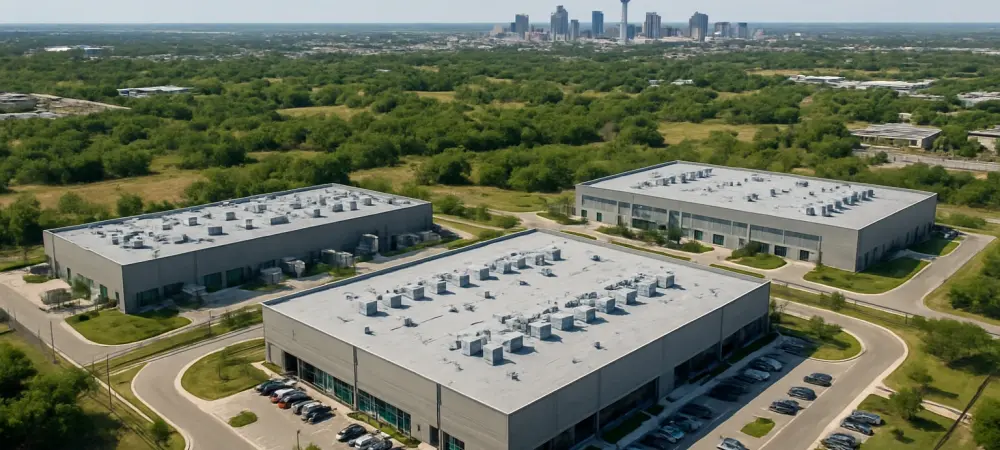
In an era where digital infrastructure serves as the backbone of modern technology, San Antonio, Texas, is emerging as a critical hub for data center development, with Vantage, a leading data center operator, at the forefront of this transformation. The city’s strategic location, access to resources, and proximity to major tech players have made it an attractive destination for companies looking to meet the skyrocketing demand for cloud computing and artificial intelligence capabilities. Vantage’s ambitious plans to build multiple facilities across two campuses in Bexar County signal a significant investment in the region’s tech ecosystem. This expansion is not just about increasing capacity but also about positioning the company to support the next wave of technological innovation. As data needs continue to grow exponentially, understanding the drivers behind such large-scale projects offers insight into broader industry trends and the future of digital infrastructure in Texas.
Strategic Investments in Bexar County
Vantage’s commitment to San Antonio is evident through its detailed plans for multiple data centers across two key campuses, showcasing a strategic approach to scaling operations. At the Rogers Road campus near State Highway 151, two major facilities are in development: TX21, a sprawling 360,000-square-foot, three-story structure with a budget of $157 million, and TX22, a 214,525-square-foot, two-story building costing $272 million, with construction timelines extending into 2027. Additionally, on Omicron Drive, acquired from a local university system, two more projects are underway: TX11, a 242,665-square-foot facility with 32MW capacity expected to launch in early 2026, and TX12, a larger 432,800-square-foot center with 96MW capacity budgeted at $276.8 million. These initiatives, totaling over $700 million in investments, highlight the company’s focus on creating high-capacity infrastructure to meet future demands. The scale of these developments underscores San Antonio’s growing importance as a nexus for data storage and processing, driven by the need for robust systems to support cutting-edge applications.
A Broader Tech Boom in Texas
Beyond individual projects, Vantage’s expansion in San Antonio reflects a larger trend of tech infrastructure growth across Texas, positioning the state as a powerhouse in the national data landscape. The city’s appeal is amplified by its proximity to significant facilities like Microsoft’s campus on Lambda Drive, alongside investments from other industry giants such as CloudHQ, CyrusOne, QTS, and Amazon, all of whom are establishing a presence in the Texas Research Park and surrounding areas. Meanwhile, Vantage is also developing the massive Frontier Campus in Shackelford County, a 1.4GW, 1,200-acre site planned to host 10 data centers, further cementing Texas’s role in supporting emerging technologies like AI through partnerships with major players. This collective activity paints a picture of fierce competition and collaboration, as companies race to build the digital backbone needed for cloud services and innovation. Reflecting on this period, it is clear that strategic locations and substantial financial commitments have laid the groundwork for Texas to become a cornerstone of tech infrastructure, with actionable steps taken to ensure sustained growth in the years that follow.