

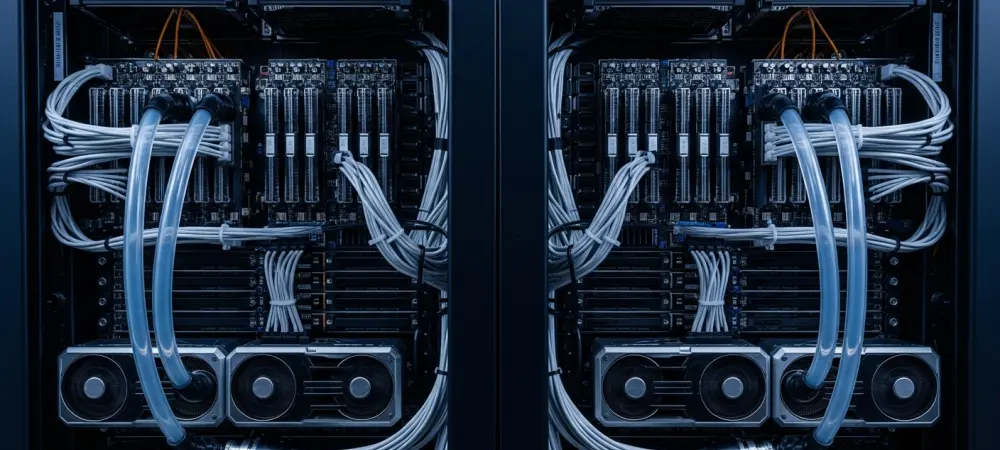
The relentless hum within a modern data hall has shifted from a gentle mechanical whir to a roar that signals the arrival of a new, power-hungry era of artificial intelligence. This shift is not just software deep; it represents a fundamental transformation of the physical world where data resides. As billions of parameters are processed every second, the underlying infrastructure is screaming for a level of management that legacy systems simply cannot provide. Without a robust and intelligent management framework, the very engines driving current technological progress are at risk of stalling under their own weight.
The transition from general-purpose computing to dense GPU clusters has created a gap between what current facilities were designed to do and what they are now forced to endure. Bridging this gap is no longer just a technical upgrade; it is a prerequisite for survival in a landscape where energy and heat are the new currencies of innovation. Consequently, organizations are finding that the physical layer of the data center has become the most critical bottleneck in the entire AI pipeline.
The Staggering Thermal Reality of High-Density Computing
The hardware driving modern innovation is radically different from the general-purpose servers of the previous decade. A single rack of AI-optimized GPUs can consume energy equivalent to several traditional server rows combined, pushing the electrical and thermal limits of older facilities to their breaking point. This concentrated energy intake is not merely an operational cost; it transforms into a massive heat signature that can quickly overwhelm standard air-conditioning systems. When the ambient temperature rises beyond specific thresholds, servers throttle their performance to prevent permanent damage, effectively neutralizing the speed advantage of expensive hardware.
Beyond the immediate performance loss, the physical toll on equipment is substantial and often underestimated. Sustained exposure to high temperatures accelerates component degradation, leading to shortened hardware lifespans and an increased frequency of localized failure. Traditional cooling methods, which rely on moving large volumes of chilled air, struggle to penetrate the densely packed racks common in AI clusters. This creates dangerous hot spots that can lead to catastrophic outages if not identified and mitigated with surgical precision by advanced environmental controls.
Navigating the Strain on Legacy Data Center Architectures
The shift toward AI-heavy workloads has rendered basic monitoring and manual interventions obsolete for modern infrastructure and operations leaders. Legacy systems were built for a more predictable time when workloads were static and server density was relatively uniform across the floor. Today, the data center perimeter has dissolved into a complex hybrid landscape that includes on-premises facilities, third-party colocation centers, and remote edge sites. Managing these disparate environments through disconnected silos is a major liability that introduces latency and increases the risk of human error during critical events.
Operational complexity has reached a point where visibility across the entire portfolio is the only way to maintain stability. Reactive, on-premises logging must give way to a cloud-based “single pane of glass” approach that provides real-time visibility regardless of where the physical hardware sits. This transition allows for the standardization of protocols and the elimination of blind spots that often hide brewing infrastructure crises. By centralizing management, organizations can ensure that a high-density deployment in a remote edge location is managed with the same rigor and oversight as the primary corporate facility.
Architecting Resilience Through Predictive and Distributed Management
Modern infrastructure management has evolved into a strategic discipline that relies on predictive analytics to stay ahead of potential disruptions. By utilizing machine learning algorithms, these platforms identify subtle hardware anomalies and forecast failures long before they impact the network. This shift from reactive to prescriptive maintenance allows teams to address issues during scheduled windows, preserving the uptime required for intensive AI training cycles.
Furthermore, advanced platforms are now capable of autonomous operational adjustments that reduce the need for constant human supervision. These systems can dynamically reconfigure cooling parameters in response to shifting workloads or automatically generate maintenance tickets when a component begins to deviate from its baseline. Digital twin simulations complement this by providing virtual representations of the physical environment, allowing operators to model “what-if” scenarios for cabling or airflow changes. This risk-free testing environment is essential for managing the complex physical interdependencies found in high-density AI clusters.
The Economic and Regulatory Case for Intelligent Oversight
Recent industry projections indicate that data center energy consumption could double by the end of this decade, moving efficiency from a peripheral concern to a central business requirement. This surge has transformed sustainability into a hard regulatory mandate, particularly with the introduction of frameworks like the European Union’s Corporate Sustainability Reporting Directive. Modern management platforms serve as the essential system of record for critical efficiency metrics, ensuring that organizations can defend their energy usage to auditors and stakeholders alike.
Efficiency is now measured through specific indicators that track the environmental cost of every calculation. Power Usage Effectiveness remains a vital benchmark for identifying the ratio of total facility power to the energy delivered to IT equipment. However, newer metrics like Carbon Usage Effectiveness and Water Usage Effectiveness are becoming equally important as organizations look to minimize their total environmental footprint. Intelligent oversight provides the granular data necessary to optimize these ratios, proving that high-performance AI and environmental responsibility are not mutually exclusive goals.
Operationalizing Modern DCIM for Sustainable AI Growth
The strategy for maintaining a competitive advantage in the current era required a fundamental rethink of infrastructure as a strategic asset. The first step involved an exhaustive audit of cooling capacities against the projected density of incoming GPU hardware to identify immediate failure points. Leaders then prioritized the integration of AI-powered management tools that offered multi-tenant visibility, allowing for the standardization of efficiency protocols across both central and edge sites. By automating the generation of audit logs and sustainability reports, firms ensured regulatory compliance while simultaneously optimizing their carbon footprint for long-term viability.
The path toward a resilient AI infrastructure was paved with the adoption of these specialized management frameworks. Decision-makers moved away from the idea that infrastructure was a background utility and instead treated it as a core component of the business model. This historical shift in management allowed the industry to accommodate the extreme demands of liquid-cooled racks without risking local power grids or operational stability. Ultimately, the successful deployment of modern DCIM platforms served as the bridge between the physical constraints of the facility and the infinite potential of the intelligence they supported.