

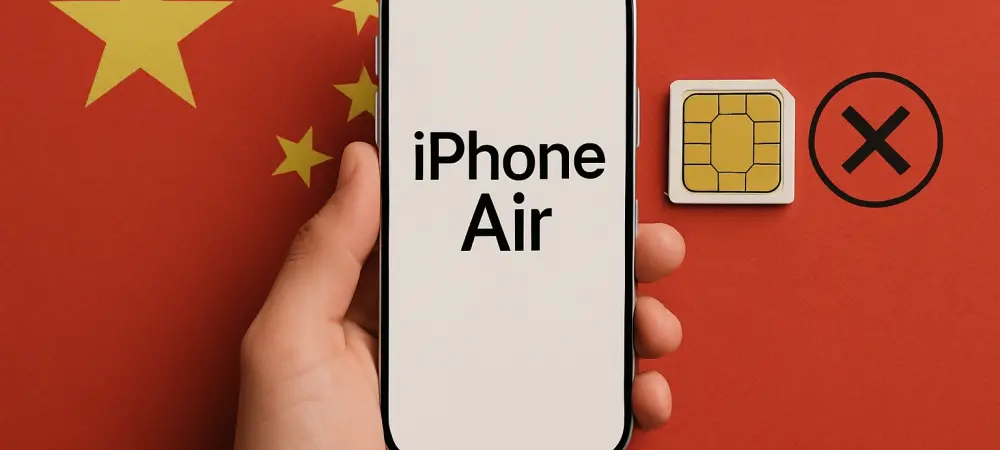
Unveiling the Stakes: Navigating eSIM Barriers in China’s Smartphone Arena
In a market as vast and competitive as China’s, where over 900 million smartphone users fuel relentless demand for innovation, Apple faces a critical obstacle with its latest iPhone Air. Launched globally with fanfare, this device—boasting a razor-thin 5.6mm design and an eSIM-only setup—has hit a regulatory wall in one of its largest revenue territories, signaling deeper tensions between cutting-edge technology and localized policies in a region that accounts for nearly 20% of the company’s global sales. This analysis dives into the market dynamics behind the postponed launch, examines the trends shaping eSIM adoption, and forecasts the potential impact on Apple’s positioning while exploring broader implications for tech giants operating in tightly regulated environments.
Dissecting Market Trends: eSIM Adoption and Regulatory Headwinds
China’s Telecom Landscape: A Fortress of Control and Caution
China’s telecom sector, dominated by state-owned giants like China Mobile, China Unicom, and China Telecom, operates under strict oversight from the Ministry of Industry and Information Technology (MIIT). This regulatory framework prioritizes national security and centralized control, often slowing the introduction of disruptive technologies like eSIM. Unlike Western markets where eSIM has streamlined carrier switching and device design since its debut in 2018, China has lagged, with limited rollout historically confined to a single partnership between Apple and China Unicom. The iPhone Air, with its exclusive reliance on eSIM to achieve a slimmer profile and enhanced battery life of up to 27 hours, challenges this cautious pace, exposing a rift between global innovation trends and local policy constraints.
Global eSIM Surge vs. China’s Gradual Shift
Globally, eSIM adoption has accelerated, with over 200 carriers across 70 countries supporting the technology by the current year. This surge reflects a market preference for flexibility, as users embrace digital SIMs for seamless international travel and multi-carrier options. In contrast, China’s market shows tentative progress, with recent signals from major operators indicating readiness to support eSIM for devices like the iPhone Air. China Mobile has already enabled services, while China Telecom awaits final MIIT clearance, expected soon. This disparity highlights a fragmented adoption curve, where China’s 1.4 billion potential consumers represent untapped opportunity but also a complex regulatory maze for Apple to navigate during critical launch windows.
Competitive Pressures: Apple’s Market Share at Stake
Apple’s delay in launching the iPhone Air in China, while other iPhone 17 models roll out on schedule, risks ceding ground to competitors like Huawei and Xiaomi, who capitalize on localized strategies and faster compliance with regional norms. With pre-orders for the iPhone Air stalled—initially slated for a Friday at 8 p.m. local time before being indefinitely postponed—the company faces potential erosion of its premium brand appeal during a peak sales period. Market data suggests that delays in flagship launches can impact consumer sentiment, especially in a price-sensitive yet innovation-hungry market like China, where domestic brands are rapidly closing the technology gap with aggressive pricing and feature sets tailored to local preferences.
Forecasting the Future: eSIM’s Path and Apple’s Strategic Play
Regulatory Evolution: A Window for Accelerated Adoption
Looking ahead, China’s regulatory stance on eSIM could soften within the next two to three years, driven by increasing consumer demand for innovative devices and pressure from global tech trends. If MIIT approvals for the iPhone Air set a precedent, a broader policy shift might emerge, aligning China more closely with international standards. Industry analysts anticipate that successful navigation of current hurdles by Apple could catalyze eSIM support across a wider range of devices, potentially unlocking a market of hundreds of millions of users eager for next-generation smartphone features. This forecast hinges on sustained dialogue between tech firms and regulators to balance innovation with oversight.
Apple’s Adaptation: Balancing Design Innovation with Market Realities
Apple’s response to this delay will likely shape its long-term strategy in China. The company might explore region-specific variants of future devices, reintroducing physical SIM slots for markets with slower eSIM adoption, or double down on advocacy for regulatory reform through expanded telecom partnerships. Current efforts to collaborate with China Unicom, China Mobile, and China Telecom demonstrate a proactive stance, but the uncertainty of approval timelines suggests Apple may need contingency plans to maintain launch momentum. This adaptability will be crucial as the firm seeks to protect its market share against domestic rivals who face fewer barriers to rapid deployment.
Broader Market Implications: A Blueprint for Tech Giants
Beyond Apple, the iPhone Air’s launch delay offers a case study for other global tech players entering China. The market’s unique blend of scale and regulation demands localized strategies, from early engagement with authorities to tailored product designs that preempt compliance issues. Projections indicate that as eSIM becomes mainstream globally by 2027, companies ignoring regional nuances risk similar setbacks, potentially losing billions in revenue. This situation underscores the need for a dual focus on technological advancement and policy alignment, a balance that could redefine competitive edges in emerging and established markets alike.
Reflecting on the Analysis: Strategic Lessons from a Stalled Launch
Looking back, the examination of the iPhone Air’s delayed rollout in China revealed a critical intersection of innovation and regulation that challenged even a market leader like Apple. The interplay between eSIM technology’s global rise and China’s cautious telecom policies painted a vivid picture of market-specific barriers. Moving forward, actionable steps emerged from this scenario: tech firms need to prioritize preemptive regulatory engagement, invest in robust local partnerships, and consider flexible design adaptations to mitigate launch risks. A key lesson was the importance of anticipating policy bottlenecks well before product unveilings, ensuring smoother market entries. As the industry evolves, this experience suggests that fostering dialogue with authorities could pave the way for faster technology adoption, offering a strategic roadmap for navigating similar challenges in other regulated regions.