

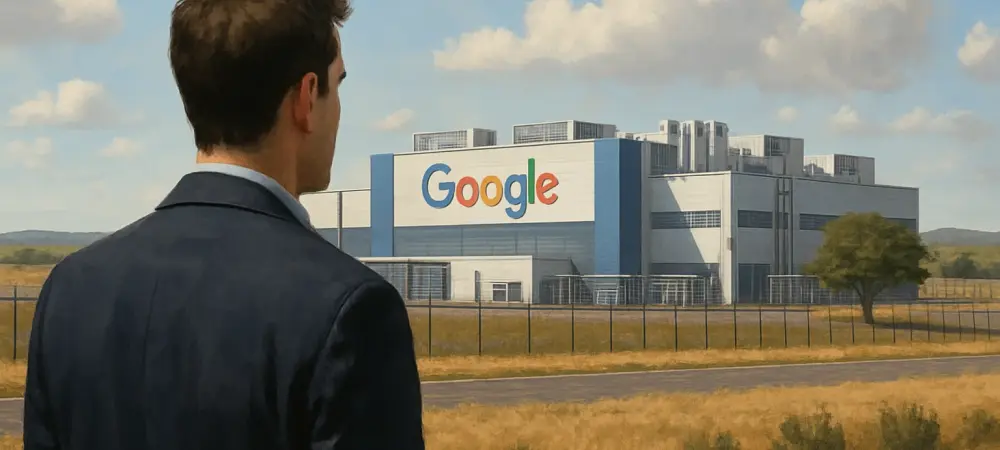
What drives a tech titan to stake $40 billion on a single state in the heart of America, and how does this investment signal a seismic shift in the landscape of innovation? Picture a place where sprawling plains meet cutting-edge technology, where data centers hum with the promise of artificial intelligence (AI) reshaping every facet of life. Texas, long known for oil and cattle, is now the epicenter of a technological revolution, with Google leading the charge. This isn’t just about building infrastructure; it’s about redefining the future of technology on a scale few could have anticipated. Dive into the story of how one company’s bold vision is transforming the Lone Star State into an AI powerhouse.
The Stakes Behind the Investment
At the core of this monumental move lies a simple truth: AI and cloud computing are no longer optional—they’re the lifeblood of modern economies. Google’s $40 billion commitment to Texas, part of its broader “Investing in America” initiative, signals a critical pivot toward securing dominance in these fields through 2027. With demand for AI-driven solutions surging by over 60% annually in sectors like healthcare and finance, according to industry reports, the need for robust data centers has never been more urgent. Texas, with its vast resources and strategic position, emerges as the perfect stage for this high-stakes gamble.
This investment isn’t merely a financial play; it’s a statement of intent. By pouring such a staggering sum into the state, Google underscores the importance of staying ahead in a race where competitors like Microsoft and Meta are also planting deep roots. The implications ripple far beyond corporate boardrooms, touching everything from local job markets to global tech trends. Understanding this move means grasping how AI infrastructure is becoming as vital as highways once were to industrial growth.
Blueprint of a Tech Revolution
Google’s strategy in Texas unfolds like a carefully crafted map, with multiple layers of ambition. The plan includes constructing three new data centers—one in Armstrong County in the Panhandle and two in Haskell County near Abilene, with one paired with a solar and battery storage plant to lessen the load on the state’s power grid. Meanwhile, existing facilities in Ellis County, south of Dallas, are set for major expansions, cementing Google’s foothold in the region. Each of these projects is a piece of a larger puzzle aimed at scaling AI capabilities.
Beyond bricks and circuits, sustainability and community impact are woven into the fabric of this initiative. A $30 million Energy Impact Fund has been established to support local energy efficiency efforts, a nod to the immense power demands of data centers amid Texas’s strained grid. Additionally, a partnership with the Electrical Training Alliance aims to train over 1,700 electricians by 2030, nearly doubling the projected new hires in this field. This blend of innovation and responsibility sets a benchmark for how tech giants can grow while giving back to the areas they inhabit.
Voices from the Top
Leadership on both sides of this deal has been vocal about its significance. Google CEO Sundar Pichai has described AI as the catalyst for a new era of American ingenuity, pointing to Texas’s talent and optimism as key reasons for this historic investment. His words paint a picture of a state brimming with potential, ready to lead in a transformative field. Such endorsements from industry leaders highlight the strategic alignment between corporate goals and regional strengths. Texas Governor Greg Abbott has echoed this enthusiasm, calling the investment the largest by any single company in the state’s history. He emphasized how it positions Texas at the forefront of the AI revolution while fostering energy solutions and workforce growth. These statements are backed by tangible trends: Anthropic’s $50 billion pledge to U.S. AI projects, Microsoft’s hyperscale campus in Barstow, and Meta’s $1.5 billion data center in El Paso all point to a collective belief in Texas as the place to build tech’s future.
Texas as the Tech Magnet
Why Texas, though? The answer lies in a unique mix of geography and economics. The state offers vast tracts of land and energy costs that are among the lowest in the nation, making it an ideal hub for power-hungry data centers. Compared to other tech hotspots like California, where space and electricity come at a premium, Texas provides a cost-effective alternative without sacrificing connectivity or access to talent.
This allure has drawn a crowd of tech heavyweights, turning the state into a battleground for AI infrastructure. Projects like the Stargate initiative near Abilene, involving OpenAI, Oracle, and SoftBank, underscore a shared vision among industry players. Google’s move, while massive, fits into a broader pattern of investment that could redefine Texas’s identity from an energy state to a technology titan, with ripple effects on everything from local economies to national policy.
Lessons from a Giant’s Playbook
Google’s approach offers a roadmap for navigating the intersection of technology and community needs. One key takeaway is the importance of integrating sustainability into growth plans—pairing data centers with renewable energy solutions like solar storage can address environmental concerns while meeting operational demands. This balance is critical as public scrutiny of tech’s carbon footprint intensifies.
Another lesson lies in workforce investment. Training programs, such as the electrician initiative, ensure that local communities aren’t just spectators but active participants in the tech boom. Businesses and policymakers can adopt similar models to build skilled labor pools tailored to emerging industries. Finally, leveraging regional advantages—whether it’s affordable energy in Texas or another unique asset elsewhere—can turn a location into a magnet for innovation, proving that strategic alignment between place and purpose drives lasting impact.
Reflecting on a Transformative Leap
Looking back, Google’s $40 billion investment in Texas stood as a defining moment in the evolution of AI infrastructure. It wasn’t just about erecting data centers; it was about laying the groundwork for a future where technology and community intertwined. The initiatives around sustainability and training reshaped how large-scale projects could benefit local areas, setting a precedent for others to follow.
As the tech landscape continued to shift, the challenge became clear: replicate this model in other regions by identifying unique strengths and addressing local needs. Stakeholders across industries were tasked with finding ways to balance innovation with responsibility, ensuring that the next wave of technological advancement didn’t leave communities behind. The story of Texas offered a starting point—a blueprint for building not just infrastructure, but a legacy of shared progress.