

The Illusion of Speed in the Modern Broadband Landscape
American consumers have finally reached a point where the raw gigabits delivered to their homes no longer correlate with the actual quality of their digital lives. For years, the telecommunications industry focused almost exclusively on a single metric: headline speed. This marketing-driven obsession suggested that a faster download rate would naturally lead to a better experience. However, the reality of the current landscape reveals a fundamental mismatch between the way networks are sold and how they actually perform under the pressure of modern, real-time applications.
The focus of the industry is currently shifting from closing rural connectivity gaps to addressing the structural limitations inherent in suburban infrastructure. While rural expansion remains a significant policy goal, the most frequent performance failures are now occurring in densely populated areas where high-speed fiber is theoretically available. These suburban environments often rely on outdated routing architectures that were never designed to handle the sheer volume of simultaneous, high-priority data streams that define a modern household. Legacy network designs struggle to support a bidirectional digital economy that prizes low latency over bulk data throughput. Most existing systems were built for an era of passive consumption, where users primarily downloaded static content. Today, the internet is a participatory space requiring constant, two-way communication for everything from remote surgery to immersive gaming. Because many major market players continue to rely on vertically integrated, proprietary hardware, they lack the agility required to modernize their networks as quickly as consumer demands evolve.
The Disconnect Between Advertised Gigabits and User Experience
Emerging Usage Trends and the Suburban Congestion Crisis
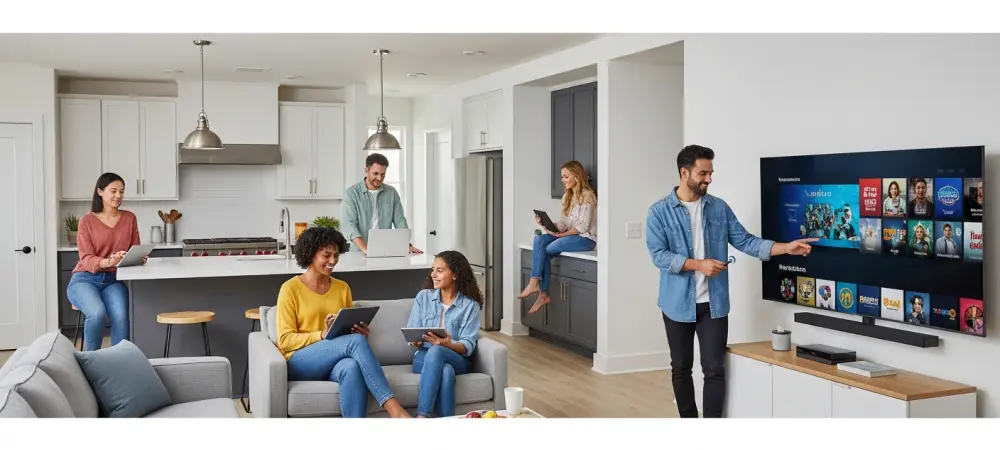
The transition toward 4K and 8K streaming, alongside the rise of competitive cloud gaming and high-definition professional video conferencing, has fundamentally altered network stability requirements. These applications do not just need a wide pipe; they require a pipe that is consistently clear of interference. In a typical suburban household, where multiple devices engage in these activities at once, the result is often a bottleneck that has little to do with the physical cable and everything to do with the intelligence of the network routing. Suburban congestion has become a silent crisis because it occurs at the edge of the network where outdated architectures meet high-density demand. When several households on the same street attempt to upload large video files or attend simultaneous meetings, the legacy routing systems often fail to prioritize traffic effectively. This creates a situation where a consumer might pay for a gigabit connection but still experiences the same stuttering video and lag that plagued much slower connections a decade ago.
Consumer behavior has moved away from the simple bulk data downloads of the past toward a need for low-latency, high-reliability connectivity. People no longer judge their internet by how quickly a movie starts, but by whether their video call remains stable throughout a presentation. As reliability becomes the primary concern, the industry is finding that its traditional marketing tactics are no longer sufficient to maintain customer satisfaction or prevent churn.
Performance Indicators and the Erosion of Consumer Trust
Statistical data paints a stark picture of the current state of connectivity, with 70% of Americans reporting frequent buffering despite being on high-speed plans. This paradox suggests that the “speed” being sold is often an intermittent peak rather than a consistent reality. Nearly 20% of households face these disruptions on a daily basis, turning a minor technical annoyance into a persistent barrier to productivity and entertainment.
Market data indicates that only 37% of consumers completely trust their service providers to deliver the reliability they promise. This erosion of trust is a direct result of the gap between advertised gigabits and the actual user experience. When a consumer experiences lag while using a premium service, the brand equity of the provider takes a significant hit. This skepticism makes it increasingly difficult for operators to upsell new services or convince users of the value of even higher speed tiers. Household data demand is projected to increase by 25% over the next two years. This growth is driven by the integration of more smart devices and the move toward cloud-based operating systems that require a constant, stable heartbeat of data. Without a change in the underlying architecture, the gap between consumer expectations and network performance will likely widen, further damaging the relationship between ISPs and their subscribers.
Architectural Rigidity and the Legacy Infrastructure Bottleneck
The complexities of monolithic network designs represent a significant barrier to agile scaling in the current market. Traditional networks are built using “black box” systems where the software and hardware are inseparable, meaning that any significant upgrade requires a complete physical overhaul of the equipment. This rigidity prevents operators from responding quickly to localized congestion or deploying new features that could improve the user experience without massive capital investments. Throwing money at fiber rollouts has proven to be an incomplete solution to the latency problem. While physical fiber is a superior medium for carrying data, it does not fix the congestion that occurs at the routing layer. This high capital expenditure trap has left many operators with faster physical cables but the same old bottlenecks in the software that manages the traffic. Consequently, the user experience remains stagnant despite the billions of dollars spent on physical infrastructure upgrades.
Vendor lock-in further complicates the path to modernization, as operators find themselves tied to the development cycles and pricing of a single hardware provider. This lack of competitive procurement makes it difficult for ISPs to adopt the latest technological advancements or negotiate better terms. To break this cycle, the industry must move away from proprietary systems and toward more open, flexible frameworks that allow for rapid iteration and a more diverse supply chain.
Navigating the Evolving Standards of Connectivity and Compliance
A regulatory shift toward transparency is beginning to force a change in how broadband is marketed and measured. New standards for broadband labeling are designed to provide consumers with a clearer understanding of what they are actually buying, including more honest data on latency and typical speeds during peak hours. This move toward transparency is intended to hold providers accountable and shift the competitive landscape from “headline speed” to verified performance.
Government standards are increasingly focused on ensuring reliability and consistency rather than just chasing the highest possible numbers. Policymakers have realized that a stable 100 Mbps connection is more valuable for the economy than an unstable gigabit connection. This shift in focus is likely to influence future funding and infrastructure grants, favoring operators who can prove the resilience and low latency of their networks over those who merely promise the fastest speeds.
Security compliance also plays a critical role in the move away from proprietary hardware systems. Many legacy “black box” solutions offer limited visibility into their internal workings, creating potential risks in an era of heightened cybersecurity threats. By moving toward more open and transparent architectures, operators can better audit their systems and ensure they meet the rigorous security standards required for modern digital infrastructure.
Moving Toward an Elastic and Disaggregated Digital Future
Network disaggregation emerged as the primary disruptor of traditional ISP models by separating the network software from the underlying hardware. This approach allows operators to run high-performance routing software on standardized, off-the-shelf hardware, similar to how the data center industry transformed decades ago. This flexibility enables ISPs to scale their capacity in a more granular way, adding resources exactly where they are needed most.
The role of open-source software and standardized hardware is creating a more vendor-neutral environment where innovation can happen at the software layer. By adopting these standards, operators can deploy “edge routing” solutions that bring processing power closer to the end user. This geographical shift in network architecture is essential for supporting the next generation of high-resolution, low-latency applications that cannot afford the round-trip delay of traditional centralized routing.
Future growth areas, particularly in the Internet of Things and cloud-integrated systems, will depend entirely on this new, elastic architecture. As more devices in the home become interconnected, the network must be able to manage thousands of tiny, simultaneous data streams without skipping a beat. A disaggregated network provides the necessary elasticity to handle this complexity, ensuring that the smart homes of the future remain functional and responsive.
Restoring Reliability as the New Currency of American Connectivity
The transition from a quantity-based to a quality-based broadband market became inevitable as the limitations of legacy systems grew more apparent. Operators realized that the old strategy of marketing raw speed was no longer effective in a landscape defined by real-time interaction. It was observed that the most successful providers were those who pivoted their focus toward architectural modernization to meet the actual needs of the consumer. Recommendations for operators centered on the adoption of disaggregated architectures to reduce customer churn and increase brand equity. By decoupling software from hardware, ISPs gained the ability to scale efficiently and respond to suburban congestion in real-time. This structural shift allowed for a more reliable user experience, which proved to be a more valuable asset than any speed-based marketing campaign.
Final assessments showed that architectural modernization was the only viable path to meeting the demands of the next decade. The industry learned that reliability, not just speed, was the true currency of digital connectivity. Those who invested in flexible, open systems were able to restore consumer trust and build a foundation for a more resilient digital future.