

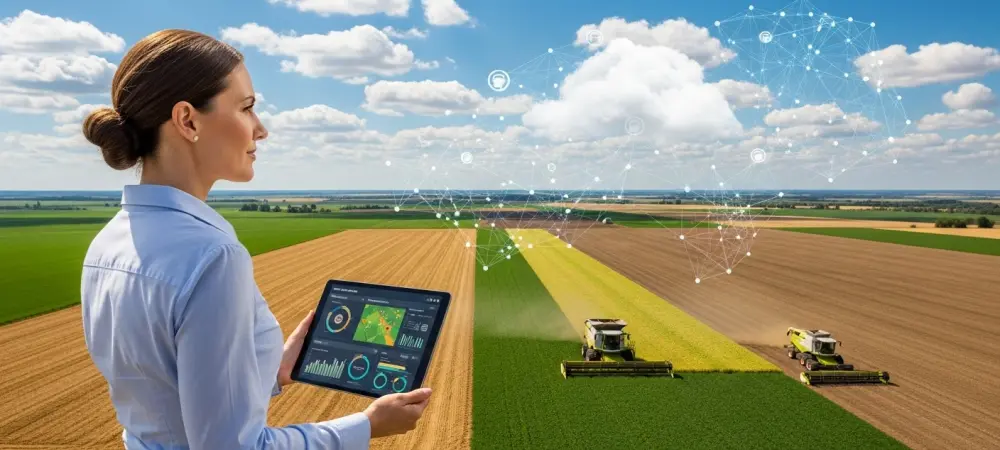
The agricultural landscape has fundamentally shifted from a model of predictable cycles to one defined by constant volatility, where success hinges on the ability to make swift, data-informed decisions. In this high-stakes environment, agribusinesses are discovering that their traditional management tools, like disconnected spreadsheets and aging legacy systems, are no longer sufficient to navigate the intricate web of modern challenges. A profound digital transformation is underway, driven by a convergence of external pressures and internal operational complexities. Cloud-based Enterprise Resource Planning (ERP) systems have emerged as the foundational technology for this new era, providing the integrated intelligence, agility, and comprehensive visibility necessary for agribusinesses to not only survive but also thrive. These platforms are proving to be the critical link that connects every facet of the operation, from the field to the financial ledger, creating a resilient and future-ready enterprise.
Unlocking Operational Excellence
Navigating Modern Agricultural Challenges
The contemporary agribusiness operates within a highly complex and interconnected ecosystem, a far cry from the simpler models of the past. Today’s agricultural enterprises must contend with a barrage of external pressures that introduce unprecedented levels of uncertainty. Persistent supply chain disruptions can halt the flow of essential materials, while fluctuating commodity prices can dramatically impact profitability from one quarter to the next. Pervasive climate instability introduces new risks to crop yields and resource management, and chronic labor shortages create significant operational hurdles. Compounding these issues are the increasingly stringent regulatory and food safety requirements that demand meticulous tracking and reporting. Managing these multifaceted challenges effectively is virtually impossible with outdated, fragmented systems that isolate critical data and prevent a holistic view of the business, rendering older management methods fundamentally inadequate for the demands of the modern agricultural market.
Internally, the operational complexity of agribusiness has grown exponentially, requiring a sophisticated and unified management approach. A typical enterprise now juggles multi-location inventory, intricate seasonal demand forecasting, and the coordination of a vast network of vendors and distributors. Financial management is equally complex, often spanning multiple legal entities and diverse revenue streams that must be consolidated and reconciled accurately. When these functions are managed with disconnected tools, the result is a patchwork of information silos where data is inconsistent, manually intensive to share, and prone to human error. This fragmentation fosters operational inefficiencies, delays critical decision-making, and creates blind spots in the value chain. The clear trend identified across the industry is a strategic move toward a centralized, unified system that integrates all business functions, from procurement and production to sales and finance, thereby improving accuracy, reducing manual processes, and creating a single source of truth for the entire organization.
Gaining Unprecedented Visibility and Agility
In an industry where timing is paramount, the need for real-time visibility across the entire agricultural value chain cannot be overstated. From the moment a seed is procured to the final delivery of a product, every step is time-sensitive. Delays in procurement can disrupt planting schedules, inefficient harvesting can lead to spoilage and waste, and logistical bottlenecks in distribution can result in significant financial losses and missed market opportunities. Cloud ERP systems directly address this fundamental challenge by providing a live, consolidated view of all operations. These platforms deliver actionable data through features like real-time inventory tracking across multiple warehouses, complete visibility into production schedules, and up-to-the-minute monitoring of logistical movements. This continuous flow of information empowers business leaders to move beyond reactive problem-solving and adopt a proactive stance, identifying potential issues before they escalate and making adjustments on the fly to maintain operational momentum and protect margins.
The granular level of insight provided by a modern cloud ERP is a game-changer for enhancing both compliance and operational efficiency. Advanced platforms offer features like detailed batch and lot traceability, which is essential for meeting stringent food safety regulations and executing swift, precise recalls if necessary. Performance monitoring for procurement and distribution, often presented through intuitive, customizable dashboards, allows managers to track key metrics and identify areas for improvement. This capability transforms raw data into strategic intelligence, enabling leaders to respond swiftly and decisively to sudden demand fluctuations, unexpected supply shortages, or logistical disruptions. By having a clear and accurate picture of the entire operation at their fingertips, decision-makers can optimize resource allocation, improve planning accuracy, and build a more agile and resilient enterprise capable of navigating the inherent volatility of the agricultural sector with confidence and control.
Building a Resilient and Future-Proof Foundation
Achieving Scalability and Financial Integrity
The agriculture industry is characterized by its inherent seasonality and significant growth potential, creating a dynamic environment that demands a flexible and scalable technological infrastructure. Rigid on-premise or custom-built systems often struggle to adapt to these fluctuating needs, locking businesses into a fixed capacity that is either insufficient during peak seasons or wastefully underutilized during quieter periods. In contrast, cloud ERP offers unparalleled elasticity. Businesses can seamlessly scale their user base up or down to match seasonal workforce changes, manage complex multi-entity or multi-national operations without major system overhauls, and expand into new markets with confidence. As new opportunities arise, functional modules for different business areas can be added without causing major disruptions, ensuring that the technology can grow and adapt in lockstep with the business, supporting both seasonal cycles and long-term strategic expansion plans.
Alongside operational agility, maintaining strict financial control and ensuring regulatory compliance are paramount for long-term success. Agribusinesses must navigate a complex web of food safety regulations, evolving tax policies, and stringent financial reporting standards, where manual processes introduce a high risk of non-compliance and financial inaccuracies. Cloud ERP mitigates these risks by embedding robust financial controls directly into core workflows. Key features include comprehensive audit trails that track every transaction from creation to completion, role-based access controls to secure sensitive data, and automated financial reporting tools that ensure accuracy and timeliness. Sophisticated functionalities for budgeting and forecasting allow for better strategic planning and resource management. By standardizing these critical processes within a unified system, businesses can significantly reduce compliance risks, improve investor confidence, and maintain the high degree of financial integrity required in today’s tightly regulated market.
Creating a Connected Technological Ecosystem
Contemporary agribusiness relies on a connected ecosystem of digital tools, and a modern cloud ERP serves as the central hub that unites these disparate systems into a cohesive and powerful whole. These platforms are architected for seamless integration, designed to communicate effortlessly with a wide array of other critical business applications. This includes Customer Relationship Management (CRM) platforms, banking systems, eCommerce portals for direct-to-consumer sales, Business Intelligence (BI) and analytics tools, and even IoT-enabled farming equipment like field sensors and drones. This level of connectivity is crucial for unlocking deeper insights and driving operational efficiency. For instance, integrating ERP with analytics tools allows leaders to generate highly accurate demand forecasts by analyzing historical sales data, while data from IoT sensors can be fed directly into the ERP to optimize crop performance and resource allocation, creating a truly smart and responsive agricultural enterprise.
Achieving this degree of integration with custom or legacy systems is often prohibitively expensive and technically challenging to maintain over the long term. In contrast, leading cloud ERP solutions are built on open architectures and often come with a broad ecosystem of partners and pre-built integrations, significantly reducing the technical debt and resource burden on the company. This approach not only facilitates a more connected operation but also leads to a lower total cost of ownership (TCO). While a custom solution may initially seem tailored to unique workflows, it frequently incurs substantial long-term costs related to developer dependency, ongoing maintenance, security management, and complex integration rebuilds during system upgrades. A cloud ERP provider manages the infrastructure, delivers regular and seamless updates, and handles security protocols, freeing up internal resources to focus on strategic initiatives rather than system upkeep, thereby providing a more sustainable and cost-effective technological foundation for growth.
Harnessing Data for Strategic Advantage
The integration of Artificial Intelligence (AI) and automation within cloud ERP platforms is a transformative capability that is now accessible to agribusinesses of all sizes. AI is revolutionizing the industry by providing predictive insights that optimize everything from planting schedules and inventory management to resource allocation and waste minimization. Leading cloud ERP solutions for agriculture now embed these advanced capabilities directly into daily workflows, moving them from the realm of specialized projects into core operational processes. This includes features like automated bank reconciliations that reduce manual effort, predictive analytics for sales and operations that improve forecasting accuracy, and AI-assisted reporting that uncovers hidden trends in business data. This built-in intelligence helps agribusinesses operate with greater efficiency and foresight without the need to invest in expensive, custom-developed AI systems, democratizing access to powerful decision-making tools.
Ultimately, all of these benefits converged to empower data-driven decision-making and future-proof the agribusiness. By centralizing all operational and financial data into a single, consistent model, ERP systems provided leaders with a definitive “single source of truth.” Through customizable dashboards and detailed reports, decision-makers gained deep and reliable insights into financial performance, inventory turnover rates, production cost breakdowns, and other critical key performance indicators. This unprecedented access to accurate, timely data reduced uncertainty and directly contributed to improved profitability and strategic agility. By investing in a modern, adaptable cloud ERP platform, agribusinesses were not merely solving today’s operational problems; they were building a flexible and resilient foundation that could readily adapt to future challenges and opportunities, such as increasing climate variability, new regulatory landscapes, and the continued rise of digital marketplaces.