

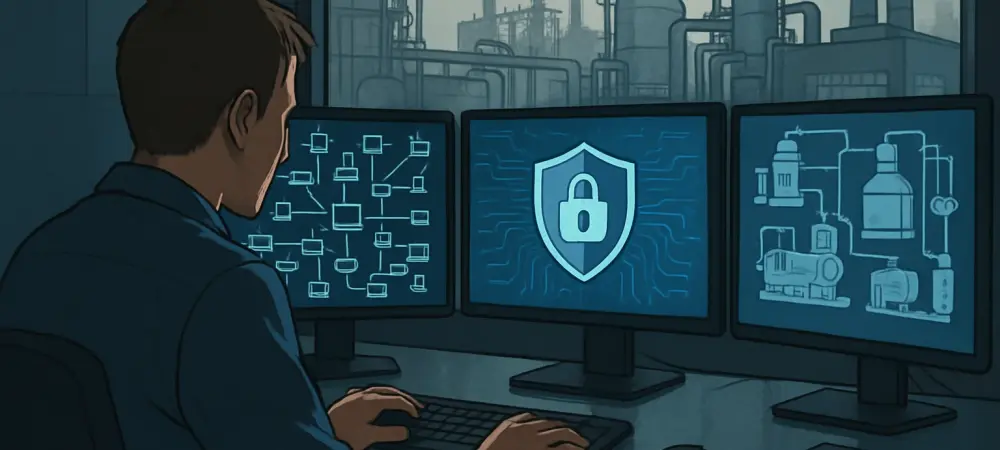
In the heart of a sprawling industrial complex, a single unsecured device—perhaps a forgotten programmable logic controller—sits silently connected to the internet, its vulnerabilities exposed to anyone with the right tools, painting a grim picture of risk. This isn’t a scene from a dystopian thriller; it’s a stark reality for countless organizations managing critical infrastructure like power grids, water systems, and manufacturing plants, where cyber attackers grow bolder by the day, targeting these operational technology (OT) environments for disruption or political gain. With the question looming—how can industries protect what they can’t even see?—this hidden danger underscores a pivotal challenge in today’s digital landscape, where knowing every asset on a network is no longer optional but essential for survival.
The stakes of industrial cybersecurity have never been higher. As critical systems become more interconnected, a breach in one sector can cascade into societal chaos, disrupting energy supplies or halting production lines. This pressing issue demands attention not just from technical teams but from policymakers, business leaders, and communities reliant on these services. Asset visibility—understanding every device, its role, and its risks—stands as the cornerstone of defense against escalating cyber threats. Exploring this vital topic reveals how unseen vulnerabilities threaten global stability and what steps must be taken to safeguard essential operations.
Hidden Dangers: Unseen Vulnerabilities in Industrial Networks
Industrial systems often operate under a dangerous illusion of isolation. Many organizations assume their networks are air-gapped, cut off from external threats, only to discover internet-exposed devices with minimal security. These blind spots create fertile ground for attackers who can exploit outdated firmware or weak authentication to gain entry. A single compromised asset, like a sensor or controller, can serve as a gateway to cripple an entire facility, highlighting the urgent need to map and monitor every connected element.
Beyond individual devices, the complexity of OT environments compounds the risk. Unlike standard IT setups, these systems often include legacy equipment dating back decades, running on proprietary protocols that modern security tools can’t interpret. Such diversity and age make comprehensive oversight a daunting task, leaving gaps that adversaries eagerly target. The reality is stark: without a clear inventory of assets, defending industrial networks remains an exercise in guesswork, vulnerable to unseen flaws.
Rising Stakes: Industrial Cybersecurity in a Digital Age
The digitization of critical infrastructure has transformed the threat landscape, amplifying the consequences of a cyber breach. A successful attack on a power grid or water treatment plant doesn’t just affect a single company; it can disrupt entire regions, endangering public safety and economic stability. Recent trends show a surge in state-sponsored attacks and ransomware campaigns specifically aimed at OT systems, driven by geopolitical motives or financial gain, making this a global concern.
Consider the ripple effects of such disruptions. An outage in energy supply can halt hospitals, schools, and transportation, while a manufacturing shutdown can break supply chains, costing billions. With adversaries exploiting these high-impact targets, the urgency to secure industrial environments has grown exponentially. Protecting these systems isn’t merely a technical challenge—it’s a societal imperative tied to the reliability and safety everyone depends on daily.
Foundation of Defense: How Asset Visibility Secures OT Environments
Asset visibility forms the bedrock of effective industrial cybersecurity, providing a clear picture of every device on a network, its function, and its potential weaknesses. Without this knowledge, organizations remain risk-blind, unable to assess threats or detect intrusions in time. For instance, many assume their systems are secure, only to find exposed assets during audits, a gap that attackers exploit with alarming ease, often causing significant operational damage.
The challenges are magnified by the unique nature of OT compared to IT. Operational technology prioritizes uptime over security, often forgoing updates to avoid downtime, while relying on diverse, legacy systems that standard tools can’t monitor. Add to this the sophistication of modern threats—such as the Bauxite group targeting Unitronics controllers for ideological reasons—and the need for tailored visibility becomes undeniable. Furthermore, supply chain risks, where a vendor’s vulnerability can compromise an entire network, extend the visibility challenge beyond internal boundaries.
These layers of complexity demonstrate that asset visibility isn’t a one-time task but a continuous process. It addresses blind spots, bridges the OT-IT divide, counters evolving threats, and mitigates external risks. By establishing this foundation, industries can move from reactive panic to informed defense, a shift critical for protecting vital infrastructure in an era of relentless cyber aggression.
Expert Perspectives: Real-World Lessons on Visibility
Insights from industry leaders bring the importance of asset visibility into sharp focus. Magpie Graham, Technical Director at a leading cybersecurity firm, emphasizes that visibility is the first step in threat detection and risk management. Drawing from extensive experience, Graham notes that without understanding what’s on a network, any defensive strategy is akin to fighting in the dark—a losing battle against increasingly cunning adversaries.
A striking lesson comes from Graham’s prior role at a major tech corporation, where it became evident that a handful of communication providers underpinned vast networks of cloud customers. This revealed a systemic supply chain risk, where a breach in one small link could impact countless organizations. Such real-world experiences underscore that visibility isn’t just about internal assets but extends to interconnected ecosystems, a perspective that reshapes how industrial security must be approached.
These expert accounts highlight a universal truth: theory alone isn’t enough. Practical challenges, from undetected devices to hidden dependencies, show that asset visibility is the linchpin of resilience. Hearing from those on the front lines adds urgency to the conversation, proving that this issue demands immediate and sustained attention across all levels of industry.
Actionable Strategies: Building Visibility in Industrial Settings
Recognizing the need for asset visibility is only the starting point; implementing it requires deliberate, practical steps tailored to industrial contexts. Deploying passive monitoring tools designed for OT environments offers a non-intrusive way to observe network traffic and establish a baseline of normal activity. These solutions ensure operations aren’t disrupted while providing critical insights into connected devices and potential anomalies.
Beyond monitoring, maintaining a dynamic inventory of all assets, including aging systems, is essential to eliminate blind spots. Mapping communication patterns between devices further clarifies dependencies and risks. Equally important is extending visibility to supply chains by collaborating with vendors to monitor shared systems, addressing threats that originate outside internal networks. Leveraging frameworks like the UK’s Cyber Security and Resilience Bill, alongside accessible tools for smaller entities, provides structure and support for these efforts. Proactive defense must replace the costly habit of reacting after breaches occur. Investing in detection capabilities before incidents strike saves resources and prevents catastrophic losses. These strategies collectively form a roadmap for industrial organizations to secure critical operations, ensuring they can anticipate threats rather than merely respond to them, a shift that fortifies resilience in an unpredictable digital world.
Reflecting on Solutions: A Path Forward for Industrial Security
Looking back, the journey through the hidden perils of industrial cybersecurity revealed a landscape fraught with unseen risks and escalating threats. Experts and real-world cases painted a vivid picture of the chaos that ensues when networks remain in the shadows. Each lesson pointed to a singular truth: without asset visibility, defense was little more than a gamble against sophisticated adversaries.
Yet, from those challenges emerged actionable paths forward. Industries were urged to adopt passive monitoring, maintain rigorous asset inventories, and extend oversight to supply chains, ensuring no vulnerability went unnoticed. Regulatory guidance and accessible tools stood ready to support even the smallest players in this critical fight. These steps, taken with urgency, promised a future where critical infrastructure could withstand the relentless tide of cyber threats.
As reflection turned to action, the next horizon became clear. Organizations needed to commit to continuous improvement, integrating visibility into every layer of their operations from 2025 onward. Partnerships across sectors had to deepen, sharing insights and resources to tackle systemic risks. By embracing a proactive stance, industrial leaders could transform vulnerability into strength, safeguarding the systems that underpin modern life for generations to come.