

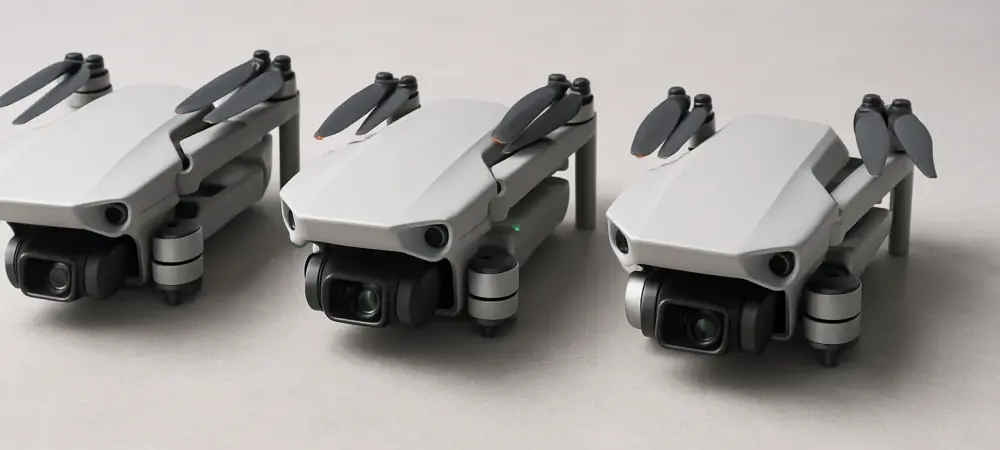
Imagine capturing breathtaking aerial footage for a social media campaign, only to realize your budget drone lacks the quality or safety features to pull it off. In the world of sub-250g drones, where regulations are lenient in regions like Europe, choosing between DJI’s Mini 5 Pro and Mini 4K can make or break such moments. With a price gap as wide as $299 for the Mini 4K versus $689 for the Mini 5 Pro, the decision isn’t just about cost—it’s about value, capability, and creative freedom. This roundup gathers insights from drone enthusiasts, tech reviewers, and content creators to unpack whether splurging on the premium model truly pays off for hobbyists and semi-professionals alike.
Diving Into the Price Debate: Cost vs. Long-Term Value
The stark price difference between the Mini 5 Pro and Mini 4K often sparks heated discussions among drone buyers. Many budget-conscious users argue that the Mini 4K, with its wallet-friendly price of around $299, serves as an ideal entry point for beginners who don’t need advanced features. Reviewers from various tech platforms note that this affordability allows new pilots to experiment without significant financial risk, making it a popular choice for casual use.
On the flip side, seasoned drone operators emphasize the Mini 5 Pro’s long-term value despite its higher cost of $689. Industry voices suggest that investing in a more robust build and cutting-edge technology can prevent the need for frequent replacements, a common issue with cheaper models that may not withstand wear and tear. The consensus among these experts is that while upfront savings are tempting, the premium model often proves more economical over time for those committed to regular flying.
A third perspective comes from content creators who weigh cost against output. Some argue that the Mini 5 Pro’s price is justified only if users plan to monetize their footage, as its advanced features cater to professional needs. This viewpoint highlights a divide: casual users may stick with the Mini 4K, while ambitious creators see the higher price as a necessary step toward better results.
Safety Features: Confidence in the Skies
Safety remains a critical concern when comparing these two drones, and opinions from the drone community vary on its importance. Beginner-focused reviews often point out that the Mini 4K’s basic downward sensors suffice for simple flights in open spaces, keeping costs low while still offering minimal protection during takeoff and landing. This perspective appeals to those prioritizing simplicity over complexity.
In contrast, safety advocates within tech circles praise the Mini 5 Pro for its omnidirectional object sensing and front-facing LiDAR, which significantly reduce collision risks even in challenging conditions like low light. Many experienced pilots share stories of near-misses with budget drones lacking such technology, arguing that the premium model’s safety features build confidence for bolder maneuvers and protect the investment from damage.
A balanced take from drone forums suggests that safety needs depend on the user’s environment and skill level. While some users feel the Mini 4K’s limitations are manageable with cautious flying, others warn that its lack of advanced avoidance systems can lead to costly crashes, especially in cluttered or urban settings. This diversity of opinion underscores the need to match safety features with individual flying habits.
Video and Camera Quality: Meeting Modern Content Demands
When it comes to video and camera capabilities, the gap between the two models draws sharp commentary from content creators. Budget drone reviewers often defend the Mini 4K’s 1/2.3-inch sensor and 4K at 30fps as adequate for casual vloggers or hobbyists who don’t require high-end output. They argue that for basic social media posts, this level of quality gets the job done without breaking the bank.
However, professional videographers and photographers overwhelmingly favor the Mini 5 Pro’s 1-inch sensor, which supports 4K at 120fps, 10-bit color depth, and 50MP stills. Insights from creative communities highlight how these specifications translate into vibrant, detailed footage suitable for commercial projects, alongside a gimbal with 225-degree rotation for versatile framing like vertical shots. Such capabilities are seen as essential in today’s content-driven landscape.
A middle ground emerges from tech enthusiasts who suggest that the choice hinges on audience expectations. For creators targeting platforms with high-quality standards, the Mini 5 Pro is non-negotiable, while those producing informal content may find the Mini 4K’s output sufficient. This spectrum of views reveals how video needs shape the perceived value of each drone.
Flight Performance: Endurance and Precision Under Scrutiny
Flight performance is another battleground where opinions diverge based on user priorities. Entry-level drone users often express satisfaction with the Mini 4K’s 31-minute battery life and 10km transmission range, noting that these specifications cover most short, recreational flights. Community feedback frequently mentions that for quick outings, such performance meets basic expectations at a low cost.
In contrast, advanced pilots and reviewers advocate for the Mini 5 Pro’s superior stats, including a 36-minute flight time, 19m/s top speed, and 20km range, paired with 360-degree ActiveTrack for precise subject following. Many in this camp argue that these enhancements enable longer, more complex shoots in dynamic environments, offering a clear edge for serious projects or challenging terrains.
A nuanced perspective from drone racing and cinematic filming circles suggests that flight performance impacts creative potential. While the Mini 4K handles straightforward tasks, its limitations can frustrate users attempting intricate shots, whereas the Mini 5 Pro’s capabilities open up new possibilities. This range of insights points to a trade-off between basic functionality and ambitious exploration.
Practical Takeaways: Navigating the Drone Decision
Synthesizing these varied opinions, a few practical takeaways emerge for potential buyers. Many experts agree that the Mini 5 Pro stands out for users prioritizing safety, professional-grade content, and extended flight capabilities, making it a worthwhile investment for those with the budget. Conversely, the Mini 4K remains a solid pick for beginners or casual flyers focused on affordability over advanced features.
Another recurring tip from the community is to assess personal goals before purchasing. Drone enthusiasts recommend mapping out intended uses—whether for fun, travel, or commercial work—to determine if premium features align with long-term plans. Some even suggest renting or testing both models to get a hands-on feel for their differences.
A final piece of advice centers on future-proofing. Tech commentators often stress that as drone technology evolves rapidly, opting for a model like the Mini 5 Pro could delay the need for upgrades, especially for users whose skills and demands are likely to grow over time. This strategic approach helps frame the decision beyond immediate costs.
Reflecting on the Roundup: Steps Forward for Drone Buyers
Looking back, this exploration of expert and user opinions revealed a clear divide between affordability and capability in the choice between DJI’s Mini 5 Pro and Mini 4K. The discussions highlighted the premium model’s dominance in safety, quality, and performance, while acknowledging the budget option’s niche for new or casual users. Moving forward, buyers are encouraged to dive deeper by exploring hands-on reviews or joining drone communities for real-world insights. Considering a trial flight or seeking mentorship from experienced pilots could also refine the decision, ensuring the chosen drone aligns with both current needs and future aspirations.