

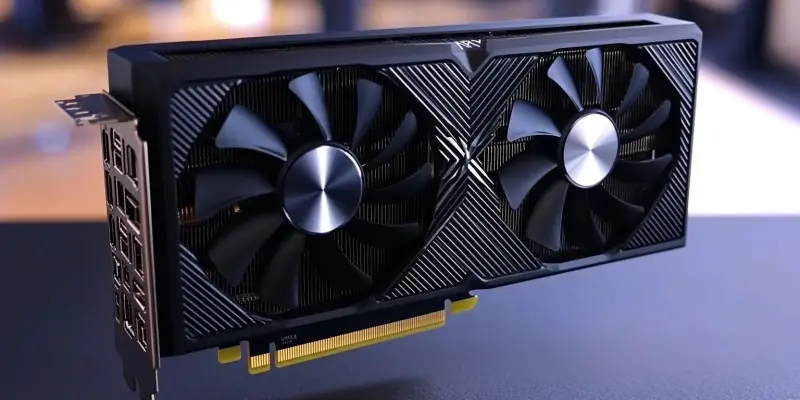
As technology progresses at an unprecedented pace, one of the sectors facing pronounced cost increases is the graphics processing unit (GPU) market, and NVIDIA’s RTX 50 series stands as a prime example. Consumers are increasingly finding these GPUs priced beyond their budget, baffling many who rely on NVIDIA’s hardware for gaming, professional use, and more. Delving into the intricacies of these soaring prices reveals a complex interplay of component costs, market dynamics, and strategic adjustments made by vendors and distributors.
High Cost of GPU and VRAM Components
Vendor Price Struggles
An insightful revelation from one of NVIDIA’s board partners highlights a staggering cost breakdown that illuminates why consumers end up paying so much for the RTX 50 series. A significant 80% of the cost attributed to these GPUs stems from expensive GPU and VRAM components provided directly by NVIDIA. This kind of cost structure presents a notable challenge for vendors attempting to sell these GPUs at the manufacturer’s suggested retail price (MSRP) without incurring substantial losses. The stark reality is that this leaves very little room for profit margins.
As a result, vendors find it impractical to stick to the MSRP, pushing them to adopt strategies to stay afloat financially. One such method involves the sale of factory-overclocked models. These ‘OC’ models come with enhanced clock speeds and are marketed at higher prices. Not only do these models promise better performance, but they also allow vendors to add a premium, thus generating more profits. Consequently, these practices inevitably lead to GPUs hitting retail markets at prices significantly above the base MSRP, much to the dismay of consumers looking for a more budget-friendly option.
Distributors Influence
Further exacerbating the pricing issues is the role played by distributors in the GPU market. Rumors and reports confirm that distributors often stockpile these high-demand GPUs, waiting for the perfect moment to reintroduce them into the market with a notable upcharge. This tactic not only inflates retail prices but also creates a sense of scarcity, pushing consumers to make purchases quickly out of fear that prices may increase even further. The combined effect of these strategies results in a much higher out-of-pocket expense for anyone eager to get their hands on an NVIDIA RTX 50 series GPU.
Interestingly, this pricing dynamic is not exclusive to NVIDIA. AMD’s RX 9070 series has also fallen prey to similar patterns, witnessing rapid and steep price hikes shortly after their market release. This trend indicates that the market forces driving prices higher extend beyond just one company and impact the broader GPU landscape. Competitive as the market is, both NVIDIA and AMD must contend with these harsh realities, affecting how they position and price their premium GPU products.
Market Dynamics and Pricing Trends
MSRP Versus Selling Price
Modern market dynamics for GPUs have profoundly shifted, with the MSRP often not reflecting the actual prices consumers end up paying. This is largely due to the high cost of crucial components and profit-driven strategies employed by vendors and distributors. For instance, the factory-overclocked models that vendors sell at higher prices are not just a means of generating more revenue but also a necessity to cover the exorbitant costs of the GPUs themselves. Thus, when consumers see these inflated prices, it’s not just about profit margins; it’s about financial survival for vendors.
Adding to this, the practice of stockpiling by distributors exacerbates the disparity between MSRP and street prices. This hoarding creates supply chain disruptions that misleadingly suggest a scarcity of GPUs, driving prices even higher. For consumers, this means navigating a market where actual prices often bear little resemblance to the MSRP, potentially deterring many from making GPU upgrades. The negative feedback loop continues as inflated prices lead to lower availability and vice versa, creating a challenging environment both for buyers and sellers.
Path Towards Price Stabilization
As technology advances at a remarkable speed, the graphics processing unit (GPU) market is one of the industries experiencing significant cost hikes, with NVIDIA’s RTX 50 series exemplifying this trend. Many consumers are finding these GPUs far beyond their financial reach, leaving countless individuals puzzled, especially those who depend on NVIDIA’s products for gaming, professional work, and other applications. Analyzing the reasons behind these skyrocketing prices unravels a complex web of factors—rising component costs, shifting market dynamics, and strategic decisions made by vendors and distributors all contribute to the higher prices. The latest models boast advanced architectures and higher manufacturing costs, which, combined with supply chain disruptions and increased demand, push prices even higher. Additionally, cryptocurrency mining has surged, further straining supply and raising prices. As a result, long-time users, from gamers to professionals relying on cutting-edge graphic capabilities, find themselves grappling with financial challenges when attempting to upgrade their hardware.