

In a world where digital demands surge by the minute, businesses are racing against an unforgiving clock to expand capacity, and the stakes couldn’t be higher. Picture a tech giant on the brink of launching a groundbreaking AI platform, only to be stalled by a data center build that lags years behind schedule, resulting in lost market share, competitors surging ahead, and millions in revenue vanishing. This scenario is no longer a rare nightmare but a stark reality for many in 2025, as the hunger for data infrastructure outpaces traditional construction methods. A solution, however, is emerging from factory floors and modular designs, promising to reshape how the industry meets these relentless needs.
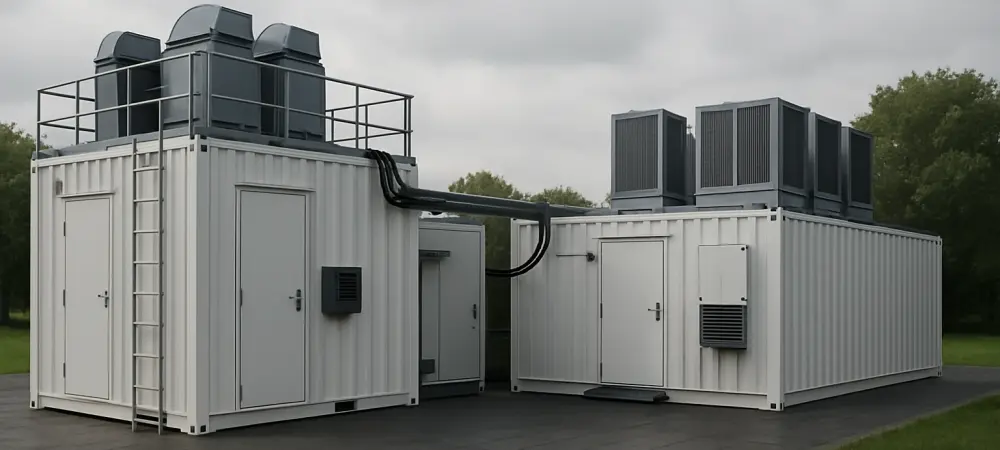
The stakes have never been higher in the digital economy. With data consumption driven by artificial intelligence, cloud computing, and IoT devices, the pressure to deliver infrastructure at breakneck speed defines competitive advantage. Modular data centers—prefabricated, scalable units built off-site—stand as a transformative answer to this crisis. This feature delves into why these innovative structures are not just a trend but a fundamental shift, addressing the industry’s most pressing challenges with agility and precision.
The Urgent Race for Digital Dominance
Speed is the currency of survival in today’s tech landscape. Companies cannot afford to wait two to three years for a traditional data center to come online when customer demands and technological advancements evolve in mere months. A recent study by Uptime Institute revealed that 60% of enterprises reported significant financial losses due to delayed infrastructure projects, underscoring the cost of inaction.
This urgency hits hardest for industries like streaming services or fintech, where downtime or capacity shortages translate directly to lost users. Modular data centers, assembled in controlled factory environments, cut deployment timelines to as little as six months. This rapid turnaround allows businesses to seize opportunities—whether launching a new app or scaling during peak demand—without the crippling delays of conventional builds.
The ripple effects of this speed extend beyond individual companies. Entire sectors stand to benefit as faster infrastructure deployment fuels innovation, enabling smaller players to compete with tech titans. The ability to go from concept to operation in record time is redefining what it means to stay relevant in a hyper-connected world.
Traditional Data Centers Under Siege
Beyond the need for speed, traditional data center construction grapples with a host of systemic barriers. The explosion of data—projected by IDC to grow by 23% annually from 2025 to 2030—strains existing facilities, while AI workloads demand unprecedented rack densities that older designs can’t support. These escalating requirements clash with the slow, on-site build processes that dominate the industry.
Compounding the issue are external pressures like supply chain disruptions, which have plagued projects with delays in materials and labor shortages. Energy costs, too, are soaring, with many regions facing grid constraints that make powering new facilities a logistical puzzle. Budgets, already stretched thin, cannot absorb the overruns that often accompany these sprawling, multi-year builds.
For IT leaders, these challenges are not abstract but painfully tangible. Every delayed project risks operational bottlenecks, while every cost overrun threatens strategic priorities. The mounting frustration with conventional methods has opened the door to alternatives that promise not just relief but a complete rethinking of infrastructure delivery.
Modular Solutions Tackling Core Industry Pain Points
Modular data centers address these struggles head-on with a suite of targeted advantages. First, their speed to market is unparalleled—off-site prefabrication means units can be deployed in months, not years. A case study from a major cloud provider showed a 40% faster rollout, allowing revenue generation far sooner than anticipated.
Supply chain reliability is another strength; standardized modules built in factories sidestep the unpredictability of global disruptions, ensuring consistent delivery schedules. Scalability on demand further protects investments by letting operators add capacity in increments of 5-10 MW, avoiding the financial pitfalls of overbuilding. For AI workload readiness, modular designs accommodate high-density racks from day one, with flexibility to adapt as technology evolves. Lastly, on energy constraints, prefabricated power modules paired with battery storage systems offer solutions where grid access falters, as seen in regions with chronic power scarcity.
These benefits are not theoretical but grounded in real-world impact. Data from Gartner indicates that companies adopting modular designs report a 30% reduction in capital expenditure over traditional builds. This multifaceted approach positions modular systems as a lifeline for an industry stretched to its limits by modern demands.
Expert Perspectives on a Modular Future
Industry voices echo the growing consensus around modular infrastructure as a cornerstone of digital strategy. “The shift to prefabricated data centers isn’t a temporary fix; it’s how the sector will sustain growth amid volatility,” notes Sarah Bennett, a senior analyst at Forrester. Her perspective aligns with a 2025 report from McKinsey, which predicts that 50% of new data center capacity will come from modular builds by 2027.
Project managers on the ground offer equally compelling insights. Mark Torres, who oversaw a modular rollout during a recent supply chain crunch, recalls, “When steel shipments stalled our original plans, the modular units arrived pre-assembled and ready to plug in. It saved the project—and our sanity.” Such firsthand accounts highlight the practical edge these solutions bring to chaotic environments.
These endorsements underscore a broader truth: modular data centers are gaining traction not as a niche experiment but as a proven model. From analysts to operators, the message is clear—adaptability and speed are no longer optional but essential for navigating the complexities of digital expansion.
A Blueprint for Adopting Modular Infrastructure
For businesses ready to pivot, implementing modular data centers requires a strategic roadmap tailored to their unique advantages. Start by assessing current and projected capacity needs with precision, ensuring that infrastructure aligns with actual demand to prevent costly missteps. This data-driven approach sets the foundation for a seamless transition.
Next, collaboration with vendors is critical to customize module designs that support high-density workloads like AI and machine learning. Integrating energy solutions, such as battery storage, also ensures resilience in power-scarce areas, while detailed deployment schedules capitalize on faster build times to minimize operational disruptions. Each step should prioritize scalability and efficiency to maximize return on investment.
The path forward demands not just adoption but active planning. Engaging with experienced partners and leveraging industry benchmarks can smooth the shift, turning modular systems into a competitive edge. Businesses that act decisively stand to redefine their infrastructure for a landscape where agility is paramount.
Reflecting on a Transformative Shift
Looking back, the journey toward modular data centers revealed a profound mismatch between traditional infrastructure and the relentless pace of digital growth. The challenges of prolonged builds, supply chain hiccups, and energy limitations exposed vulnerabilities that once seemed insurmountable. Yet, through innovative design and strategic foresight, a viable path emerged.
The next steps for stakeholders were clear—embrace detailed capacity planning and forge partnerships with vendors who understand the nuances of modular deployment. Prioritizing energy resilience through integrated solutions became a non-negotiable focus. These actions promised not just to address immediate needs but to build a foundation for sustained adaptability.
Beyond individual efforts, the industry as a whole stood at a crossroads where collaboration and knowledge-sharing could amplify impact. Exploring pilot projects or joining consortiums offered ways to test and refine modular approaches. This collective momentum hinted at a future where digital infrastructure no longer lagged behind ambition but propelled it forward.