

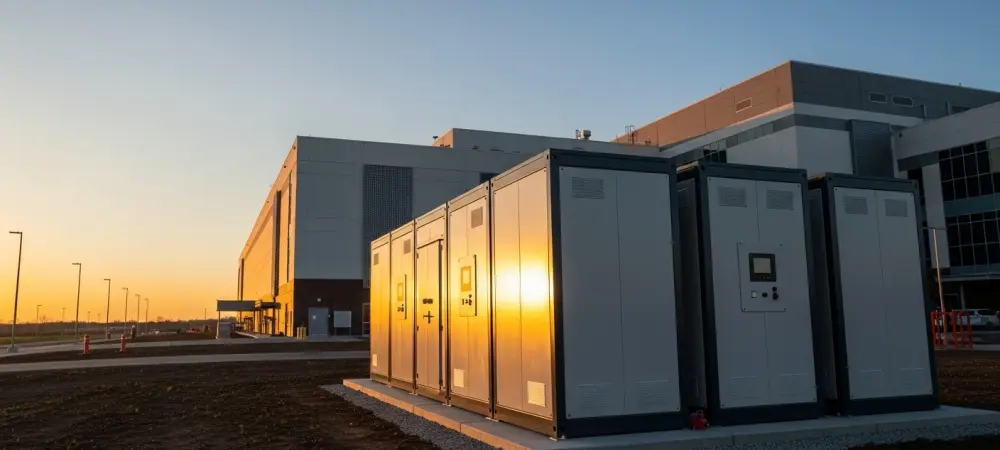
The digital world’s insatiable appetite for data and processing power has created an unprecedented energy dilemma, pushing the very infrastructure of the internet to its breaking point. As artificial intelligence and cloud computing continue their exponential growth, the data centers that power these technologies are consuming electricity at a rate that public utility grids were never designed to handle. This has forged a critical “power expectation gap,” a chasm between the gigawatts required to build the future and the grid’s lagging capacity to deliver it. Faced with multi-year delays for new power connections and the looming threat of stalled growth, the data center industry is undergoing a radical transformation. No longer content to be passive consumers at the end of the line, operators are actively pursuing energy independence, fundamentally rewriting the rules of how and where the digital world is powered by moving generation directly onsite.
The Widening Gap Between Demand and Supply
A Strategic Pivot to Energy Independence
The move toward onsite power generation represents a fundamental strategic pivot for the data center industry, transforming what was once a backup contingency into a primary operational necessity. A recent industry report highlights this dramatic shift, revealing that a full one-third of all hyperscale and colocation providers are now planning to transition to entirely self-sufficient, onsite power production by 2030. This is not a distant, aspirational goal but an active, urgent strategy driven by current market realities. The demand for these independent power solutions has surged by an astonishing 22% in just the last six months, underscoring the speed at which the industry is adapting. Onsite power is no longer merely about ensuring uptime during a grid failure; it has become a core component of business continuity, scalability, and future-proofing operations against an increasingly unreliable and overburdened public infrastructure.
This transition is born from the stark realization that the traditional model of relying on public utilities is no longer sustainable for an industry defined by rapid, large-scale deployment. The very timelines of development have become misaligned. Industry analysis shows a growing chasm between the speed at which data centers can be built and the much slower pace at which utilities can provide the necessary power. In critical markets such as Northern Virginia and California’s Bay Area, developers are facing power delivery schedules that are 1.5 to 2 years longer than their project timelines anticipate. This bottleneck effectively paralyzes development, rendering multibillion-dollar investments unviable before they even break ground. With projections indicating that over half of new data center campuses will require more than 500 megawatts of power by 2035, the scale of this mismatch becomes clear, forcing operators to take control of their energy destiny.
The Remapping of America’s Digital Infrastructure
The direct consequence of this energy bottleneck is a significant geographic redistribution of the U.S. data center market, with power availability now supplanting all other factors in site selection. Traditionally dominant markets, once prized for their connectivity and proximity to population centers, are experiencing a dramatic decline as their grid capacity falters. States like California and Oregon, long-standing hubs of technological innovation, are projected to lose over half of their data center market share in the coming years due to these power constraints. Developers are now bypassing these established regions in favor of new frontiers where energy is both abundant and accessible, fundamentally redrawing the map of the nation’s digital infrastructure based on the new currency of megawatt availability.
In the wake of this shift, new power-rich hubs are rapidly emerging to capture the immense investment flowing out of constrained markets. Texas, with its vast land and plentiful access to affordable natural gas, is poised to become the new epicenter of the data center world, projected to capture nearly 30% of the entire national market by 2028. Its deregulated energy market and streamlined permitting processes offer a stark contrast to the gridlocked environments of the West Coast. Similarly, Georgia is experiencing a surge in development, with its market share expected to increase by an incredible 75%. The state’s proactive investment in power-producing potential has made it a magnet for hyperscalers and colocation providers seeking the certainty and scale that other regions can no longer promise, marking a clear trend toward energy-centric development strategies.
Embracing a New Generation of Power
The Rise of Behind the Meter Solutions
As traditional grid connections become a liability rather than an asset, the industry has accelerated its adoption of “behind-the-meter” grid alternatives that offer speed, scalability, and cost-effectiveness. Among these, fuel cell technology is gaining significant traction as a leading solution to the power gap. Unlike conventional generators, fuel cells provide a continuous, reliable source of clean energy that can be deployed rapidly and scaled modularly to meet growing demand. This makes them an ideal fit for the dynamic needs of modern data centers. The economic case is just as compelling, with the fuel cell market forecast to grow at an impressive annual rate of 20%, projected to reach a value of $28.4 billion by 2031. This rapid market expansion is a direct reflection of the industry’s consensus that alternative, onsite energy sources are no longer optional but are an essential component of any large-scale data center strategy moving forward.
The widespread adoption of these technologies is not driven by a preference for complexity but by the sheer necessity of survival and growth in a power-constrained era. Industry leaders and energy experts are in agreement: the public grid, in its current state and with its current pace of expansion, will be fundamentally unable to satisfy the future power demands of the digital economy. The exponential energy requirements of AI model training, large-scale data processing, and cloud services are creating a demand curve that far outpaces the linear growth of utility infrastructure. This reality has forced a paradigm shift, where data center operators are now viewing themselves as integrated energy producers. The pursuit of behind-the-meter solutions like fuel cells is therefore not just a trend but a foundational evolution required to power the next generation of digital innovation.
A Future Forged by Onsite Energy
The industry’s decisive turn toward energy self-sufficiency represented a crucial adaptation to a landscape where power had become the primary constraint on growth. Operators who embraced onsite generation found they could deploy new capacity faster and with greater predictability, sidestepping the bureaucratic and logistical hurdles that had come to define utility partnerships. This proactive approach not only solved the immediate problem of power availability but also unlocked new opportunities for innovation in energy management and sustainability. The integration of advanced technologies like fuel cells and microgrids allowed for greater control over energy costs and carbon footprints. In retrospect, this period marked the moment the data center industry matured from a passive consumer of energy into a sophisticated producer, fundamentally altering its relationship with the grid and establishing a new blueprint for scalable and resilient digital infrastructure that would define its future for decades to come.