

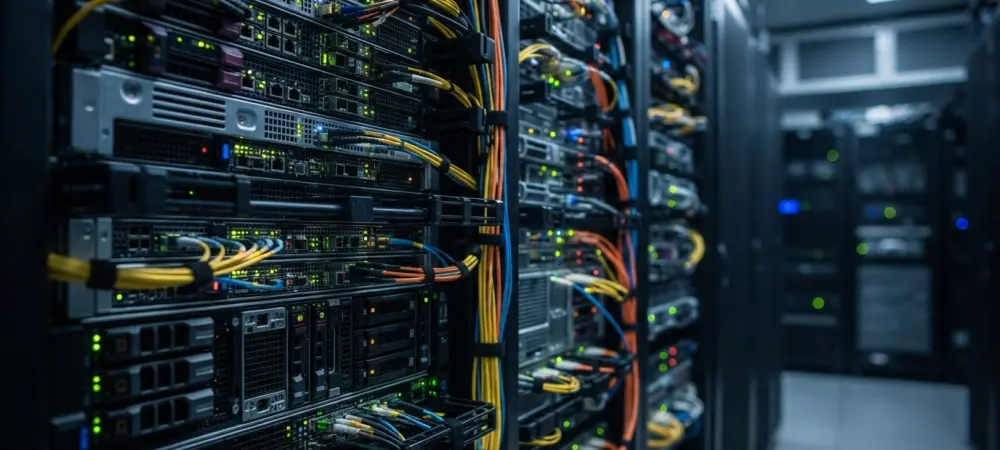
Enterprise leaders must connect economic goals with technical decisions by using the cost per successfully completed task as a central operating measure for AI. This requirement has become increasingly urgent as a distinct paradox defines the current technological landscape: specialized hardware is being purchased at record rates while a massive portion of existing GPU capacity remains vastly underutilized. Recent industry data indicates that approximately 81% of organizations running AI in production use 50% or less of their available compute power. Despite this surplus, over 70% of these same firms are planning to acquire even more infrastructure within the next 12 months. This drive to expand when current resources are idle suggests that the primary challenges are not found in raw processing speed, but in the structural complexities of integration, memory management, and security. Leading technology figures have pivoted their messaging to describe these environments as AI factories, moving beyond the sale of components to promote comprehensive ecosystems. The pressure to transition from merely consuming AI to actively producing it has created a sense of urgency that often outpaces the ability of an organization to optimize its existing hardware. As enterprises attempt to scale, the focus is shifting toward architectures that can transform model potential into verifiable, high-quality work that justifies its high operational costs.
1. Establish a Clear Definition of Success
The initial step in rectifying infrastructure inefficiency involves a fundamental shift in how organizations define productive output. For too long, the industry has measured progress through secondary metrics like token throughput or uptime, but these figures do not necessarily equate to business value. A product owner or application lead must take the helm in establishing what a successfully completed task looks like in a concrete, measurable sense. If an AI agent closes a customer support case but provides incorrect information that necessitates a follow-up, that task should be recorded as a failure rather than a completion. Setting these rigorous quality standards is essential because the cost of correcting errors—often referred to as the repair cost—must be factored into the total operating expense of the infrastructure. By defining success through the lens of high-quality, autonomous completion, leaders can begin to see why their current clusters are not delivering the expected returns.
Establishing these success metrics also necessitates a deep understanding of the specific requirements of agentic applications. Unlike traditional chatbots, modern agents take on longer, more complex assignments that require them to navigate multiple steps and maintain state over extended periods. Because of this complexity, the definition of success must also account for the reliability of the system under stress. If an infrastructure platform allows an agent to reach a conclusion but fails to preserve the task state during a minor interruption, the resulting rework represents a waste of expensive GPU time. Therefore, success is not just about the final answer, but about the efficiency of the path taken to get there. Builders should implement rigorous benchmarking that compares the performance of different model sizes and configurations against these success definitions to ensure maximum hardware value.
2. Pinpoint Reliable Data Sources
Identifying and categorizing the information that feeds an AI system is as critical as the hardware it runs on. The data management team must take an active role in distinguishing between institutional memory and transient task memory to ensure the architecture is both efficient and secure. Institutional memory consists of an organization’s durable knowledge, such as official policies, historical records, and standard operating procedures. If an agent retrieves outdated or contradictory information from a poorly managed data silo, the resulting errors consume compute resources without delivering value. To prevent this, data teams should implement frameworks like the Model Context Protocol or governed APIs that provide a clear, authoritative path to verified information. By setting specific rules for who can access particular datasets, organizations protect their intellectual property while ensuring the AI has the context it needs to perform.
Beyond durable records, the architecture must also manage agent task memory, which represents the temporary state required to complete a specific assignment. This includes a history of actions taken, decisions made, and intermediate results generated during a long-running process. If this memory is not handled correctly, agents may repeat work or lose progress, leading to the same idle-capacity issues observed in recent market surveys. Effective infrastructure should support the preservation of agent state as compute scales up and down, a capability that emerging sandbox stacks are beginning to offer. These environments allow agents to maintain their context across different processing nodes, ensuring that a task started on one GPU can be seamlessly finished on another without a loss of information. Furthermore, security teams must be involved to implement confidential computing measures, protecting sensitive data and model weights during processing.
3. Implement Comprehensive Monitoring
Treating AI infrastructure with the same rigor as any other critical enterprise application is a prerequisite for operational excellence. Platform engineers must move beyond basic hardware health checks and implement deep observability that tracks the entire lifecycle of an AI request. This involves monitoring latency not just at the network level, but also within the model’s reasoning layers and the retrieval-augmented generation pipelines. By tracking how long each component takes to contribute to a final answer, teams can identify specific bottlenecks that cause GPUs to sit idle while waiting for data from slow storage or external APIs. Furthermore, hardware utilization must be measured in the context of specific workloads to determine if the provisioned resources are appropriately sized for the actual task demand. Caching efficiency is another vital metric, as techniques like automatic prefix caching can significantly reduce prompt-processing work.
Comprehensive monitoring also extends to the economic side of the equation, specifically tracking overall operational expenses alongside technical performance. Leaders should look at metrics such as the cost per million tokens, which has seen increased scrutiny in recent months as organizations try to manage their spending. However, a low price per token can be misleading if the model requires ten retries to produce a usable result. Therefore, platform engineers should work to surface the total cost of a workflow, including storage, repeated attempts, and the human review required for auditing. This data provides the necessary evidence to decide whether to stick with a current platform or migrate to a new one that might offer better scheduling. Many organizations that plan to buy new infrastructure do so without a clear understanding of why their current systems are underperforming, and robust monitoring turns these environments into transparent systems.
4. Collaborate with the Finance Department
Bridging the gap between the engineering team and the finance department is essential for validating the return on investment for AI projects. Currently, a striking discrepancy exists: while the majority of companies are expanding their infrastructure, only about 10% have an ROI figure that has been formally reviewed and signed off by financial leaders. This lack of oversight suggests that many AI investments are driven by strategic fear rather than by hard economic data. To change this, technical leaders must engage with finance to establish a baseline of current costs and projected benefits. This collaboration should focus on the total cost of ownership, which includes not just the purchase price of the hardware but also the electricity, cooling, maintenance, and personnel costs required to run it. When finance professionals are involved in the early stages, they can help set realistic expectations for when the infrastructure will become profitable.
A significant challenge in this collaboration is the differing priorities between senior executives and individual contributors. While vice presidents and directors are often focused on the broad business impact, engineers may prioritize ease of implementation and technical performance. Finance acts as the arbiter in this scenario, providing a common language that connects these disparate goals. By verifying the benefit of a new infrastructure platform through an agreed-upon baseline, finance can help justify the purchase of additional GPUs or suggest that the company focus on optimizing its existing capacity. This validation process is especially important for agentic applications, where the value delivered can be harder to quantify than in traditional automation. If finance can confirm that the cost per successfully completed task is lower than the previous method, the investment is defensible.
5. Execute Incremental Architectural Adjustments
Once a baseline is established and monitoring is in place, organizations should adopt a scientific approach to optimizing their AI stacks. Instead of making sweeping changes to the entire infrastructure, teams should modify only one component at a time to accurately measure its impact on the system’s overall efficiency. For example, a team might test whether switching from a massive, general-purpose model to a specialized, smaller language model reduces the cost per successful outcome without sacrificing quality. These smaller models often make more economic sense for bounded, repetitive tasks because they require less memory and fewer GPU cycles. By running a controlled experiment where the model is the only variable, the organization can see exactly how much they save on inference costs. This incremental method also applies to the retrieval path, where an engineer might swap out a basic search function for a more sophisticated context layer.
The results of these incremental adjustments should be integrated into the standard software development lifecycle to ensure long-term viability. Teams should perform regular evaluations of their configurations, especially when new model versions or hardware accelerators become available. This continuous testing cycle ensures that the architecture remains optimal even as the underlying technology evolves. For instance, if a new caching technique is introduced, it should be tested against representative workloads to verify that it actually improves utilization before it is deployed across the entire fleet. By calculating the impact of each change on the total cost per successful outcome, builders can make data-driven decisions about which technical features are worth the investment. This approach moves the focus away from infrastructure as a default solution and toward smarter architecture as a primary goal for the enterprise.
Realizing Strategic Value Through Architectural Precision
In the period leading up to 2026, the global technology sector witnessed a massive surge in AI hardware procurement that often outpaced actual application demand. Enterprises sought to secure their position in the new economy by building vast AI factories, yet many found themselves managing clusters of GPUs that remained significantly underutilized. The realization dawned that simply having access to compute was not enough to guarantee success; instead, the focus shifted toward the architectural decisions that determined how effectively that compute was used. Successful organizations were those that recognized the need to move beyond raw performance metrics. They began to prioritize the integration of memory systems, the security of their data pipelines, and the precision of their task-monitoring frameworks. By treating AI as a core component of the enterprise stack rather than an isolated experiment, these companies established a foundation for scalable, high-value operations.
The transition from over-provisioning to optimization required a rigorous alignment between technical builders and financial leaders. Organizations that implemented the cost per successfully completed task as their primary metric were able to justify their infrastructure spending with concrete data. They systematically identified bottlenecks, secured their institutional knowledge, and refined their model selections through incremental testing. These actions allowed them to turn idle silicon into a productive asset that delivered measurable business outcomes. As the industry progressed, the most resilient firms proved to be those that did not just buy more hardware, but instead invested in the processes needed to manage it intelligently. They learned that the true value of an AI factory lay in the efficiency with which it converted raw data and compute into successful, autonomous actions. Moving forward, the industry adopted these strategies as the standard for economically defensible AI deployment.