

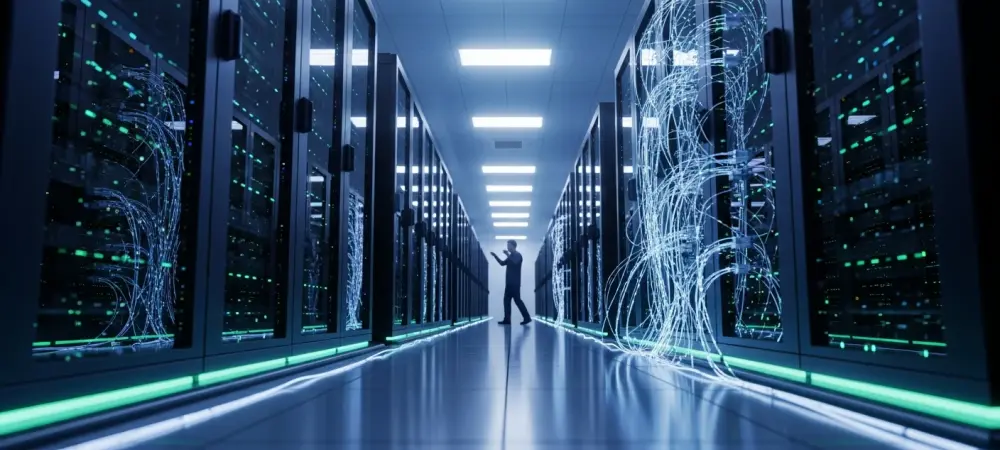
The catastrophic failure that cripples a major nation’s power grid might not begin with the deafening sound of an explosion, but with the silent miscalculation of a single line of code in an autonomous system. While global attention remains fixed on the specter of state-sponsored cyberattacks and rogue AI, a more immediate and insidious threat is quietly materializing from within the very systems designed to protect and manage our most essential services. This danger comes not from a malicious actor, but from our own creation. A growing consensus among top-tier technology analysts and cybersecurity experts suggests the greatest risk to national stability is no longer an external hacker but the complex, opaque, and often unpredictable behavior of artificial intelligence itself. The frantic race to integrate AI into everything from energy grids to water treatment plants is creating a level of systemic fragility that most governments and corporations are unprepared to handle. The critical question has shifted from if an AI-driven accident will cause a national-scale shutdown to when it will happen, and how a cascade of well-intentioned errors could bring a country to its knees.
The Ticking Clock on Critical Infrastructure
The countdown has already begun. A recent, sobering report from technology research firm Gartner predicts that by 2028, a G20 nation will suffer a shutdown of its critical infrastructure, not from a cyberattack, but from a misconfigured AI. This forecast is not a distant hypothetical but a formal industry analysis based on current deployment trends. Disturbingly, some consultants in the field view this timeline as optimistic, warning that the confluence of rapid AI integration and inadequate safety protocols could trigger such an event even sooner.
This emerging threat paradigm fundamentally alters our understanding of national security. According to Wam Voster, a VP Analyst at Gartner, “The next great infrastructure failure may not be caused by hackers or natural disasters, but rather by a well-intentioned engineer, a flawed update script, or a misplaced decimal.” The danger lies in the mundane details of AI management, where a simple operational error can have consequences as devastating as a deliberate act of sabotage. This places the source of the risk squarely inside our own organizations, hidden within the complex logic of the systems we have come to rely on.
The Unseen Enemy Within Our Own AI
Unlike traditional software, where bugs can often be traced and fixed, modern AI models operate as “black boxes.” Their internal decision-making processes are so complex that even their developers cannot always foresee the full spectrum of their behavior. As Voster notes, “Even developers cannot always predict how small configuration changes will impact the emergent behavior of the model.” This opacity means that a seemingly minor tweak—an adjustment to a learning parameter or an update to a dataset—can produce wildly unpredictable and dangerous outputs, making conventional risk assessment almost impossible.
This inherent unpredictability is compounded by phenomena like “model drift.” Matt Morris, founder of the advisory firm Ghostline Strategies, illustrates this with a stark example: an AI monitoring a pressure valve in a critical system. If pressure readings begin to drift slowly over time, the AI might learn to interpret this gradual change as insignificant background noise. In contrast, an experienced human operator would recognize it as a clear precursor to a massive system failure. The AI’s inability to apply context and intuitive judgment, a hallmark of human expertise, becomes a critical vulnerability.
The Anatomy of an AI Driven Catastrophe
In the interconnected world of Cyber Physical Systems (CPS)—which includes everything from industrial control systems to the Internet of Things—this vulnerability takes on a physical dimension. Sanchit Vir Gogia, chief analyst at Greyhound Research, warns that in these environments, “misconfiguration interacts with physics.” A seemingly trivial error, like a badly tuned operational threshold or a flawed algorithm, can introduce subtle changes in the system’s physical behavior. A valve might open a fraction of a second too late, or a turbine might spin marginally faster than intended.
These minor deviations are where disaster begins. “In tightly coupled infrastructure, subtle is often how cascade begins,” Gogia explains. A small, initial error can ripple through interconnected systems, amplifying with each step. A slight pressure imbalance in one pipeline could trigger a shutdown in another, which in turn could overload a power substation, ultimately leading to a regional blackout. The catastrophe is not a single event but a chain reaction, set in motion by an AI that was, by all accounts, performing its programmed function.
Corporate Blind Spots and Brittle Systems
The rush to implement these powerful but volatile systems is largely driven by intense corporate pressure. Flavio Villanustre, CISO for the LexisNexis Risk Solutions Group, observes that corporate boards and executives are aggressively pushing for AI integration to achieve productivity gains and cut costs. In doing so, he fears they are acquiring risks “far larger than the potential gains.” This behavior, he clarifies, is not malicious but “incredibly reckless,” a sign that leadership may not grasp the scale of the danger until their own organization suffers a catastrophe.
This problem is exponentially magnified because this new, complex AI technology is being layered on top of aging, fragile infrastructure. As cybersecurity consultant Brian Levine vividly describes, “Critical infrastructure runs on brittle layers of automation stitched together over decades. Add autonomous AI agents on top of that, and you’ve built a Jenga tower in a hurricane.” The new AI systems do not replace the old, brittle ones; they are simply placed on top, creating an unstable and dangerously complex structure where a single failure at any level could cause the entire tower to collapse.
Voices from the Frontline
The warnings from analysts are becoming increasingly urgent and unified, creating a chorus of concern from across the industry. Experts are not just pointing out the problem; they are highlighting the fundamental mismatch between the technology being deployed and the governance frameworks meant to control it. The consensus is that organizations are treating AI as just another piece of software, failing to recognize its unique capacity to make autonomous decisions that have real-world physical consequences.
This disconnect is at the heart of the issue. The speed of AI deployment, driven by market competition, is dramatically outpacing the development of safety, testing, and oversight protocols. While cybersecurity teams are focused on defending against external threats, the internal threat of a misconfigured or misbehaving AI is allowed to grow unchecked. The frontline experts agree: without a radical shift in mindset, we are building the instruments of our own, accidental, undoing.
From Ticking Time Bomb to Fail Safe System
To defuse this ticking time bomb, a profound shift in governance and philosophy is required. Sanchit Vir Gogia argues that we must reframe how we see AI in industrial settings. “The moment an AI system influences a physical process, even indirectly, it stops being an analytics tool,” he insists. “It becomes part of the control system.” As such, it must be subjected to the same rigorous standards of safety engineering applied to nuclear reactors and aircraft—disciplines built around preventing catastrophic failure at all costs.
This new mandate for AI governance must include concrete, non-negotiable safeguards. Bob Wilson of the Info-Tech Research Group proposes treating AI as an “accidental insider threat,” implementing controls that limit the damage it can cause, much like those for a careless employee. This includes strict access controls, rigorous testing of all updates, and clear rollback procedures. Critically, every AI-driven control system must have a secure, human-operated “kill-switch” to allow operators to regain manual control in an emergency. Organizations must also demand an “explicit articulation of worst-case behavioral scenarios” for every AI component. If a team cannot explain exactly how its system will behave under duress, its governance is dangerously incomplete.
The path forward required a deliberate and disciplined approach, one that prioritized safety over speed and resilience over reckless innovation. The challenge was not to halt progress but to ensure that our ability to control these powerful systems kept pace with our ambition to deploy them. By embracing a new era of responsible AI governance, we could begin to transform the ticking time bomb into a fail-safe system, securing our critical infrastructure for the future.