

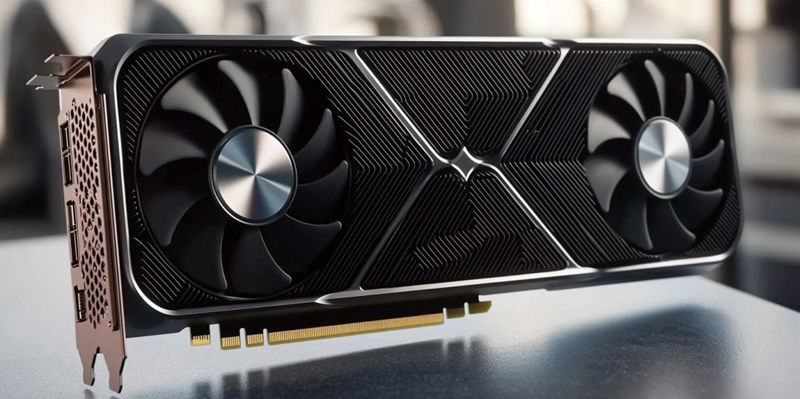
NVIDIA is making waves in the tech industry with its upcoming GeForce RTX 50 "Blackwell" GPU lineup, expected to debut at CES 2025. This new series marks a significant leap forward in both desktop and laptop graphics technology, promising innovations that will excite not only gamers but also AI enthusiasts. According to recent leaks, the lineup will feature an impressive array of 13 SKUs for the mobile segment alone, showcasing NVIDIA’s commitment to offering a wide range of performance options. The mobile variants will include models like the RTX 5090, RTX 5080, RTX 5070 Ti, RTX 5070, RTX 5060, and RTX 5050, with GDDR7 memory capacities ranging from 8 GB to 16 GB. This technological advancement underscores NVIDIA’s focus on providing exceptional performance and memory capacity, essential for high-end gaming and professional workloads.
New Architecture and Memory Interface
One of the most exciting aspects of the RTX 50 "Blackwell" GPUs is the introduction of a brand-new architecture along with a cutting-edge memory interface, GDDR7. While specific core configurations for these GPUs have not yet been disclosed, the PCI IDs give us a glimpse into what each variant will offer. For example, GN22-X11 is identified as the RTX 5090 with 16 GB of memory, and GN22-X2 is marked as the RTX 5050 with 8 GB of memory. This new architecture and memory interface promise to deliver significant performance gains, making these GPUs highly anticipated in the tech community. The adoption of GDDR7 memory in this lineup signifies NVIDIA’s dedication to pushing the boundaries of technology to support increasingly demanding applications.
NVIDIA’s focus on upgrading both the architecture and memory is a clear indicator that these GPUs are designed to handle the most strenuous computing tasks. The inclusion of GDDR7 memory, known for its higher bandwidth and efficiency compared to its predecessors, will likely have a profound impact on how games and AI applications perform. Jensen Huang, NVIDIA’s CEO, is expected to emphasize this during his keynote speech at CES 2025. This focus on gaming represents a shift back to a more balanced approach after a period where AI dominated NVIDIA’s strategy. The company’s renewed emphasis on high-end GPUs like the RTX 5090 and RTX 5080 is expected to elevate performance standards across a variety of use cases, from gaming to professional environments.
Gaming and AI Focus
NVIDIA’s upcoming RTX 50 "Blackwell" series isn’t just about raw power; it’s also about balance. By offering high-end GPUs like the RTX 5090 and RTX 5080 alongside more accessible options like the RTX 5060 and RTX 5050, NVIDIA aims to cater to both gaming enthusiasts and AI developers. This dual focus is set to be a highlight in Jensen Huang’s CES 2025 keynote, where gaming is expected to share the spotlight with AI advancements. The strategic emphasis on both sectors is a response to the evolving technological demands that require versatility in GPU performance. With these GPUs, NVIDIA aims to provide a comprehensive solution that meets the needs of a diverse audience, from hardcore gamers to AI researchers.
The introduction of the GB102 chip, speculated for the RTX 5090, is another indication of NVIDIA’s commitment to pushing the performance envelope. This chip is expected to deliver exceptional power, possibly extending its capabilities to workstation models, thus bridging the gap between gaming and professional use. The overall trend points toward an expanding and diversified GPU lineup tailored for both desktop and mobile segments. NVIDIA’s promise to unveil these GPUs at CES 2025, alongside next-generation laptops featuring Intel and AMD CPUs, adds another layer of excitement to the forthcoming tech extravaganza.
Conclusion
NVIDIA’s upcoming RTX 50 "Blackwell" series aims to deliver not just sheer power, but also balance. With high-end GPUs like the RTX 5090 and RTX 5080, along with more budget-friendly options like the RTX 5060 and RTX 5050, NVIDIA seeks to cater to both gaming fans and AI developers. This dual focus will be highlighted in Jensen Huang’s CES 2025 keynote, which is expected to showcase gaming alongside AI advancements. The strategic emphasis on both sectors is a response to evolving tech demands that require versatile GPU performance. These GPUs aim to provide a comprehensive solution for a diverse audience, from hardcore gamers to AI researchers.
One major feature is the GB102 chip, speculated for the RTX 5090, which shows NVIDIA’s commitment to top-tier performance. This chip is expected to deliver exceptional power and may also extend its capabilities to workstation models, bridging gaming and professional use. The overall trend indicates an expanding and diversified GPU lineup, tailored for desktop and mobile segments. NVIDIA’s promise to unveil these GPUs at CES 2025, along with next-generation laptops sporting Intel and AMD CPUs, adds another layer of excitement to the upcoming tech event.