

Today, we sit down with Dominic Jainy, a distinguished IT professional whose expertise spans the cutting edge of artificial intelligence, machine learning, and blockchain. With Microsoft undertaking one of its most ambitious cloud infrastructure expansions in the United States, we delve into the strategy behind the new data center regions, the drivers for this growth, and what it signals for the future of cloud computing. This conversation will explore the strategic placement of new facilities in Georgia, the logic behind enhancing existing availability zones across the country, and how this domestic push fits into an aggressive global expansion plan.
The upcoming East US 3 region in Atlanta involves multiple projects in Fulton and Douglas counties. Can you detail the strategic importance of this multi-facility approach versus a single large campus and explain what specific advantages Atlanta offers for this massive 2027 launch?
It’s a fantastic question because it gets right to the heart of modern cloud architecture. Spreading East US 3 across multiple sites in Fulton and Douglas counties is a deliberate move toward resilience and scalability. A single, monolithic campus creates a single point of failure. By distributing the infrastructure, you mitigate risks from localized power outages or physical disruptions. Atlanta itself is a strategic prize; it’s a major connectivity hub in the Southeast, offering low-latency routes and a rich talent pool. This multi-facility build-out, which began with groundbreaking in July 2024, is designed from day one to be a comprehensive cloud region capable of handling every customer workload imaginable, moving beyond the specialized AI focus of the initial “Fairwater” site.
Beyond the Atlanta hub, Microsoft also acquired a 347-acre property in Rome, Georgia, about 70 miles away. Could you elaborate on how this separate campus fits into the broader regional strategy? Perhaps you can share some metrics related to its development and intended role alongside East US 3.
The Rome campus is a classic example of strategic diversification and future-proofing. Placing a massive 347-acre campus 70 miles away from the primary Atlanta hub accomplishes several key goals. First, it provides crucial geographic separation, which is the bedrock of any robust disaster recovery plan. Should anything impact the Atlanta metro area, services can failover to a facility on a different power grid and in a separate geographic risk zone. Second, it allows for massive, unconstrained growth that might be difficult to achieve in the more developed metro area. This campus, purchased in 2023, isn’t just an extension; it’s a parallel pillar supporting the entire regional architecture, ensuring long-term capacity and resilience for the Southeast.
Microsoft is adding availability zones in five other US locations by 2027, including US Gov Arizona. Could you provide a step-by-step overview of what this expansion process entails and what key performance metrics signal the need to add AZs to an already established region?
Adding Availability Zones, or AZs, is a sign of a region’s maturity and success. The process starts long before any concrete is poured. It begins with monitoring customer demand and usage patterns. When we see a critical mass of clients architecting for high availability or when latency-sensitive workloads hit a certain threshold, that’s the trigger. The first step is planning and site acquisition for physically separate facilities with independent power and networking. Then comes the construction and deployment of the core infrastructure, followed by rigorous testing to ensure they function as a single, resilient region. The phased rollout we’re seeing—with US Gov Arizona getting three new AZs by early 2026 and established hubs like Virginia and Texas also expanding—is a direct response to customer demand for fault tolerance and higher-level service guarantees.
Considering the recent announcements for Denmark and the $17.5 billion commitment to India, where does this multi-region US expansion rank in terms of global priority? Please share some anecdotes or data that illustrate how customer demand in the US compares to these rapidly growing international markets.
It’s not about ranking one over the other; it’s about a two-pronged global strategy. The investment in India, a staggering $17.5 billion, and the new region in Denmark are about capturing explosive growth in emerging and underserved markets. The US expansion, in contrast, is about reinforcing the foundation of the entire global network. The US is Microsoft’s most mature market, and the demand here is both massive and sophisticated. While international markets are growing faster in percentage terms, the sheer volume of data and computation happening in established regions like East US 2 is immense. This expansion is essential to meet the ever-growing needs for AI, machine learning, and enterprise cloud services from a massive existing customer base, ensuring the core of the network, which includes over 400 data centers worldwide, remains robust and capable.
What is your forecast for the evolution of cloud data center design over the next decade?
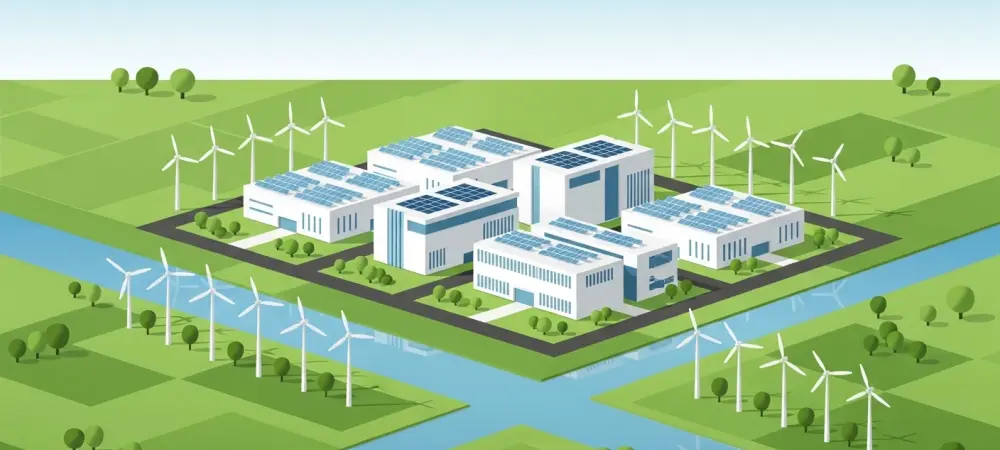
I believe we’re moving toward a future of highly specialized, sustainable, and intelligent data centers. The one-size-fits-all model is fading. Instead, we’ll see facilities purpose-built for specific workloads, like high-density AI clusters that rely on advanced liquid cooling. Sustainability will be non-negotiable, with designs deeply integrated into local renewable energy grids and engineered for extreme water and power efficiency. The biggest leap, however, will be in autonomous operations. AI-driven management systems will handle everything from predictive hardware maintenance to real-time energy optimization, creating a distributed, resilient, and almost self-aware global infrastructure.