

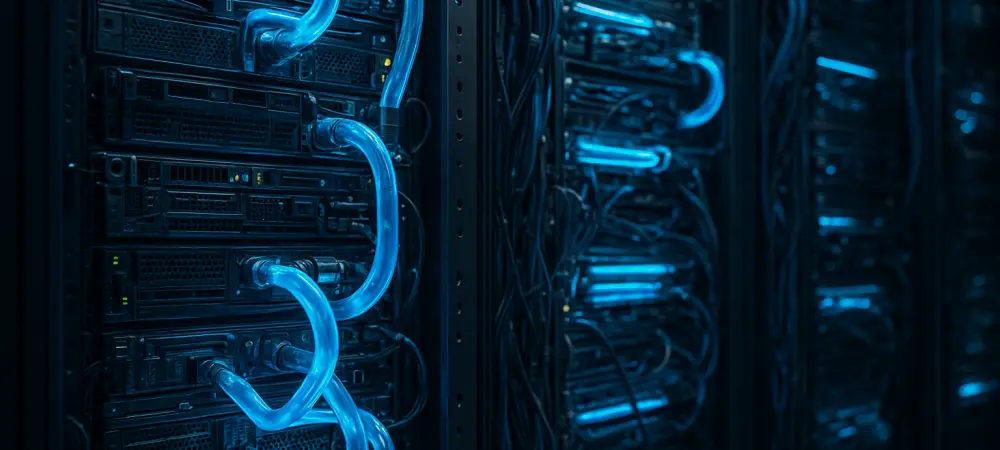
Deep in the heart of industrial zones where the hum of high-voltage transformers drowns out the wind, a new breed of digital architect is quietly dismantling the monopoly once held by the world’s largest technology conglomerates. The headlines currently focus on the soaring capabilities of generative models and the eye-watering valuations of software startups, but the real power shift is occurring in the basement of the internet. This physical struggle for dominance is reshaping the global economy, moving away from code and toward massive power grids, liquid-cooled server racks, and high-performance silicon. As traditional cloud giants struggle to keep pace with the specific, voracious demands of artificial intelligence, specialized infrastructure providers—the neoclouds—have emerged to claim the foundational layer of the digital future.
This “quiet war” for infrastructure represents the most significant shift in computing since the transition from on-premise servers to the cloud. While many viewed the cloud as a finished product dominated by a few invincible players, the sudden arrival of large-scale machine learning has exposed cracks in the general-purpose model. The emergence of neoclouds is not merely a niche trend; it is a fundamental realignment of how humanity builds and scales intelligence. These players are successfully carving out territory by offering exactly what the hyperscalers cannot: hyper-specialized, GPU-first environments that treat artificial intelligence as the primary resident rather than a secondary tenant.
The Invisible Arms Race Powering the Intelligence Revolution
The intelligence revolution is often discussed in abstract terms, but its requirements are brutally physical and increasingly scarce. In the current 2026 landscape, the competition for high-performance hardware has evolved from a simple supply chain issue into a comprehensive arms race involving national security and global energy strategies. Neoclouds have positioned themselves at the center of this race by securing massive allocations of the latest chips and building the specialized environments required to run them at peak efficiency. This isn’t just about owning the hardware; it is about the entire physical stack, from the transformer on the electrical grid to the sophisticated software orchestration that keeps thousands of GPUs working as a single, coherent brain.
The struggle for dominance is no longer fought solely in Silicon Valley boardrooms but in the procurement offices of power companies and the engineering departments of specialized cooling firms. Traditional data centers were never intended to handle the extreme heat and power density required by modern training clusters. Neoclouds have seized this opportunity by designing facilities that can support 100 kilowatts per rack or more, often utilizing advanced liquid-to-chip cooling systems that are technically difficult to retrofit into older enterprise data centers. This physical optimization provides a performance cushion that translates directly into faster training times and lower costs for the largest AI labs in the world.
Moreover, the rise of these specialized providers has forced a broader conversation about the nature of technological sovereignty. Governments and large enterprises are realizing that relying on a handful of general-purpose clouds creates a dangerous bottleneck. Neoclouds often offer more flexible, localized, and sovereign options, allowing organizations to maintain closer control over their data and their compute destiny. This shift toward specialized infrastructure is the invisible engine driving the most ambitious projects in the history of computer science, turning raw electricity into the synthetic reasoning that now defines the modern era.
Beyond General Purpose: Why Specialized Infrastructure Matters Now
For the past two decades, the “hyperscalers” established a paradigm of versatility, designing platforms that could host everything from a local bakery’s website to a massive corporate database. This general-purpose approach was highly successful for the era of traditional enterprise software, where workloads were predictable and resources could be shared efficiently among diverse tasks. However, the 2026 AI market has proven that machine learning workloads are a different species entirely. They do not need a “jack of all trades” cloud; they require an environment that is ruthlessly optimized for the specific mathematics of deep learning, where every microsecond of latency between GPUs can cost millions of dollars in lost productivity.
The transition from “general-purpose computing” to “accelerated computing” is the primary driver behind the neocloud movement. Traditional clouds were built on a foundation of virtualization and multi-tenancy, where small slices of a CPU were sold to thousands of different customers. AI training, by contrast, requires “bare metal” performance and massive, dedicated clusters that act as a single supercomputer. When thousands of GPUs need to communicate simultaneously, the networking overhead of a standard cloud becomes a massive liability. Neoclouds solve this by implementing flat, high-speed networking fabrics that allow data to flow between nodes without the bottlenecks common in traditional enterprise architectures.
Furthermore, the economic structure of AI development has changed the math of cloud consumption. In the old model, the cloud was a way to save money by paying only for what was used. In the current era, the cloud is a way to access a resource that is otherwise unavailable. The scarcity of high-end silicon and the electricity to power it means that availability is now more important than sheer versatility. Neoclouds have optimized their business models to provide long-term, reliable access to these resources, often offering more transparent pricing and better support for the complex engineering challenges associated with training frontier models.
Decoding the Neocloud Ecosystem: Four Strategic Pillars
The neocloud market has matured into a sophisticated landscape, with players specializing in distinct segments of the AI lifecycle to meet different needs. The first pillar consists of full-stack AI infrastructure providers, such as CoreWeave and Nebius, which prioritize power density and build custom data centers for massive AI clusters. Their strategy focuses on securing the latest hardware and building custom data centers that prioritize power density over general flexibility. By controlling the entire stack, they provide the massive scale needed for frontier research and the training of models with trillions of parameters.
The second pillar focuses on the democratization of AI through developer and self-serve GPU clouds. While full-stack providers target the enterprise, platforms like Vultr, Runpod, and Together AI serve individual researchers and early-stage startups. These providers prioritize speed and ease of use, allowing users to spin up GPU instances with just a few clicks. This segment acts as the vital “sandbox” of the industry, where the next generation of applications is prototyped before moving to production. By lowering the barrier to entry, these neoclouds ensure that innovation is not restricted to the few companies with multi-billion-dollar infrastructure budgets.
Inference-first AI clouds represent the third pillar, focusing on the phase where a model actually generates a response for an end-user. As the industry moves from the training phase to the deployment phase, the focus has shifted toward low latency and high throughput. This segment features radical hardware innovations, such as Groq’s Language Processing Unit architecture, which focuses on speed rather than the general flexibility of a standard GPU. These providers often offer “serverless” models where developers pay by the token, making AI deployment more economically viable for real-time applications like customer service bots or live translation tools.
The fourth pillar is comprised of data-center and capacity-heavy players who control the physical real estate of the AI boom. At the bottom of the stack are companies like Applied Digital and Core Scientific, which focus on land, specialized buildings, and power contracts. In a world where electrical capacity is a finite and increasingly expensive commodity, these players act as the ultimate gatekeepers. Many of these firms successfully pivoted from the energy-intensive world of cryptocurrency mining to AI infrastructure, leveraging their existing power assets to provide the physical foundation upon which all other cloud services are built.
Expert Perspectives on the Infrastructure Shift
Industry analysts and engineering experts suggest that the primary constraint on AI progress in the current year is no longer just the availability of chips, but the availability of the grid. Market observations indicate that the most successful neoclouds are those moving toward radical vertical integration by controlling the power contract, the cooling system, and the software orchestration layer simultaneously. Experts agree that while the models themselves may eventually become commoditized, the physical infrastructure required to run them remains the most durable and valuable part of the AI economy.
The consensus among infrastructure engineers is that the “soft” layer of AI—the algorithms—is evolving faster than the “hard” layer can keep up. This has led to a situation where the architecture of the data center itself becomes a competitive advantage. Experts point out that the ability to implement liquid cooling or to negotiate direct-to-grid power connections is now just as important as writing efficient code. This realization has led to a surge in investment toward neoclouds that demonstrate a deep understanding of the physical limitations of computing, as these are the players best positioned to survive a long-term resource crunch.
Furthermore, there is a growing recognition that the “sovereignty” of AI infrastructure is a major strategic concern for global corporations. Experts highlight that neoclouds are often more willing than hyperscalers to build localized data centers that comply with specific regional regulations or energy requirements. This flexibility allows for a more distributed and resilient global AI ecosystem, reducing the risk of a single point of failure in the global intelligence supply chain. The expert view is clear: the future of AI belongs to those who can master the physical environment as effectively as the digital one.
Strategies for Navigating the Neocloud Landscape
Successfully navigating this new infrastructure landscape required a fundamental shift in how organizations approached their computing budgets and architectural choices. Leaders realized that matching the specific workload to the right type of provider was the only way to balance the conflicting demands of performance and cost. For research and development phases, companies utilized the agility of developer clouds to experiment without long-term commitments. Once a model moved into the large-scale training phase, they transitioned to full-stack providers who offered the networking performance necessary to keep thousands of GPUs synchronized without wasting expensive compute cycles.
The most forward-thinking organizations prioritized inference efficiency as their primary operational metric once their models reached production. They recognized that staying on the same hardware used for training was a recipe for excessive costs and sluggish user experiences. By moving production workloads to inference-first providers, these companies significantly reduced their cost-per-query and improved latency, which proved vital for maintaining a competitive edge in a crowded market. This strategic migration allowed them to scale their AI applications to millions of users while maintaining a sustainable path to profitability.
Finally, solving the challenges of power and sovereignty became a cornerstone of long-term infrastructure planning. Large enterprises sought out partnerships with capacity-heavy players to secure their future access to the electrical grid, effectively “pre-buying” the energy needed for their growth roadmaps. They also leaned into neoclouds that offered localized data centers, ensuring that their AI operations remained compliant with evolving data laws across different jurisdictions. These proactive steps allowed organizations to build a resilient foundation for the next decade of innovation, ensuring they were never held hostage by the physical limitations of an aging and overcrowded general-purpose cloud. The shift toward specialized infrastructure was not just a technical choice; it was a strategic imperative that defined the winners of the intelligence era.