

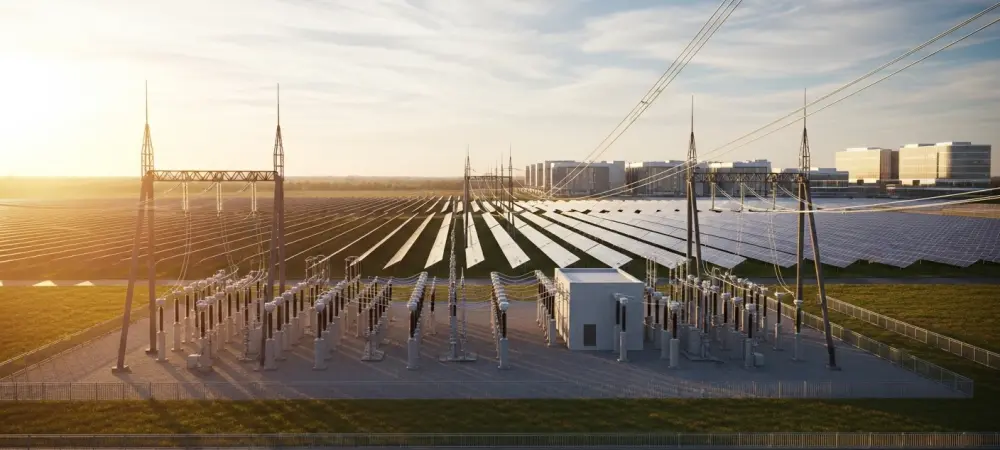
The digital architecture of the artificial intelligence revolution, promising unparalleled innovation across every sector of society, is being built upon a physical foundation with a voracious appetite for the planet’s most vital resources. This insatiable demand for energy and water has created significant environmental and social friction, sparking a critical new trend: the push for sustainable, community-integrated AI infrastructure. The immense data centers that power AI are no longer abstract concepts in the cloud but tangible, resource-intensive facilities with profound local impacts. This article analyzes Microsoft’s pioneering “community-first” initiative as a definitive case study, dissecting its strategic pillars, financial implications, and its powerful potential to set a new industry standard for responsible growth.
The Emergence of the Community First Infrastructure Model
The Data Behind the Demand
The sheer scale of the AI infrastructure boom is difficult to comprehend, but the financial figures offer a clear picture. Microsoft’s capital expenditures, a significant portion of which is dedicated to data center leases and construction, soared to $34.9 billion in the first quarter of 2026 alone. The company’s spending target for the year, aimed at doubling its global footprint, ranges from a conservative $80 billion to an astounding $125 billion. This exponential growth translates directly into unprecedented energy requirements, with projections indicating that data centers could consume as much as 8% of all U.S. electricity by 2030. This reality has transformed data center expansion from a niche industrial concern into a national energy policy issue, highlighting the urgent need for sustainable solutions.
In response to these staggering projections, a core component of the new sustainable infrastructure trend involves proactive energy investment rather than passive consumption. Microsoft has exemplified this shift by securing contracts for 7.9 gigawatts of new power generation capacity within the Midcontinent Independent System Operator (MISO) region. This move more than doubles the company’s existing consumption in the area and is explicitly designed to ensure grid stability, not strain it. This monumental investment is fueled by the company’s immense market success, with projected 2026 revenues of $327 billion, largely propelled by its Azure cloud services and its foundational partnership with OpenAI. This financial power enables the company to fund its ambitious infrastructure goals while simultaneously rewriting the rules of corporate energy engagement.
Microsofts Strategy in Action
A cornerstone of the community-first model is the principle of direct financial responsibility. In a groundbreaking move in Wisconsin, Microsoft petitioned the Public Service Commission not for tax breaks, but to have its own utility rates increased. This unprecedented request was made to ensure the company would cover the full costs of necessary grid upgrades, thereby preventing the financial burden from being passed on to local residents and businesses. This action marks a radical departure from the traditional corporate playbook of extracting concessions from municipalities and externalizing infrastructure costs. It signals a strategic choice to invest in social license and long-term goodwill over short-term financial gains.
This commitment to responsible resource management extends deeply into water conservation. Building on years of experiments with zero-water cooling technologies in arid locations like Arizona, Microsoft is now systematically deploying a suite of advanced water-saving solutions. These include a greater reliance on sophisticated air-cooled systems, the implementation of large-scale rainwater harvesting, and the integration of advanced water recycling processes within its facilities. The tangible goal of this multipronged effort is to reduce water usage by up to 50% in targeted data centers by 2030, directly addressing one of the most contentious aspects of data center development in water-stressed regions.
Beyond resource management, the trend emphasizes direct and formalized community integration. Microsoft is institutionalizing this by establishing community advisory boards for all major projects. These boards are designed to provide residents with a formal and influential platform for providing input on crucial decisions, including site selection, environmental impact assessments, and the distribution of local economic benefits. Complementing this social infrastructure is a strategic approach to physical infrastructure. The company is investing heavily in private fiber networks, such as the Fairwater Network, to create interconnected “mega-clusters” of data centers. This allows massive AI workloads to be distributed efficiently across multiple locations, reducing the need to construct single, monolithic “super factory” facilities in areas where resources are particularly sensitive.
Rationale and Expert Insights on the Strategic Pivot
This comprehensive initiative, as articulated by Vice Chair and President Brad Smith, is far more than a public relations campaign; it is a calculated investment in long-term operational viability and risk mitigation. By preemptively addressing the primary criticisms that fuel opposition to data center expansion—excessive energy and water use and the externalization of infrastructure costs—Microsoft aims to achieve smoother regulatory approvals and sidestep the costly project delays that have plagued the industry. Grassroots opposition has become a significant financial and logistical hurdle, and this strategy is designed to defuse those conflicts before they begin.
The consensus among industry watchers is that this strategic pivot is both shrewd and necessary. The decision to forgo valuable tax incentives and voluntarily absorb higher utility costs is seen as a savvy trade-off for a more stable and predictable expansion path. In an era of heightened antitrust scrutiny and public skepticism toward big tech, this approach also significantly enhances the company’s reputation as a responsible corporate citizen. By demonstrating a willingness to internalize its environmental and social footprint, Microsoft is building a powerful defense against criticism while clearing the path for the continued growth its business model demands.
Future Outlook and Industry Implications
Microsoft’s community-first approach is poised to become a new benchmark for the entire technology sector, fundamentally altering the expectations placed on major industry players. This move will inevitably pressure competitors like Amazon and Google, who have faced similar public backlash over resource consumption and a lack of transparency, to adopt comparable measures of community investment and environmental accountability. It signals a critical maturation of the tech sector, marking a transition from an era of unchecked, often disruptive growth to one of accountable, integrated expansion where social license is as valuable as a building permit.
Looking ahead, this trend will likely accelerate the adoption of related technological innovations. The industry will see a greater reliance on modular data centers, which can be deployed with greater speed and a smaller environmental footprint, and the proliferation of AI-optimized energy management systems to maximize efficiency. Furthermore, the search for reliable, carbon-free power will intensify the exploration of next-generation sources, including advanced nuclear energy, to meet the colossal demands of AI computing. The primary challenge, however, remains in execution. The success of this new model hinges on the verifiable and transparent delivery of these ambitious commitments. A successful outcome could pioneer a sustainable and equitable path for the AI revolution, while a failure would serve as a stark case study on the immense difficulty of balancing technological progress with societal responsibility.
Conclusion A New Standard for Corporate Citizenship in the AI Era
Microsoft’s initiative represented a paradigm shift in how the technology industry approaches its physical footprint. The strategy tackled the immense environmental and social costs of the AI boom head-on through proactive, large-scale investments in energy infrastructure, water conservation technology, and genuine community partnership. By internalizing costs that were traditionally passed on to the public, the company fundamentally redefined what it meant to be a “good neighbor” in an age where the digital world’s physical demands became impossible to ignore. The true test of this forward-thinking strategy lay in its rigorous execution and transparent accountability, but it has irrevocably set a new and demanding precedent. It challenged the entire technology industry to build the future of AI not just intelligently, but also sustainably and responsibly.