

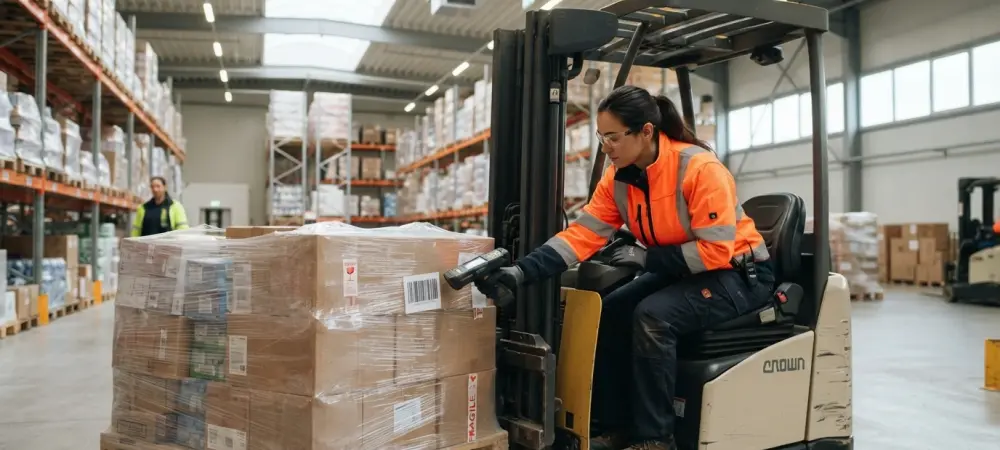
Walking into a high-volume distribution center often feels like stepping into a synchronized digital dance where every second saved translates directly into improved profit margins and customer satisfaction. Within this environment, a single barcode label on a wooden pallet might be the most critical piece of real estate in the building. Yet, if three different warehouse managers were asked to identify that label, the responses would likely vary between a Pallet ID, a License Plate Number (LPN), or a Handling Unit. While these terms are frequently used interchangeably on the shop floor, they represent distinct levels of data depth and functional capability within a modern digital inventory system. Understanding the nuance between a simple identification tag and a dynamic data record is the primary step toward transforming chaotic manual counts into a streamlined, one-scan operation.
The shift toward high-velocity fulfillment requires more than just knowing where a pallet is located; it requires an immediate, granular understanding of every item contained within that unit. A basic label might tell a worker that a pallet exists in a specific aisle, but a true digital identifier acts as a passport for the goods. As global supply chains move from 2026 to 2028, the ability to differentiate between these terms will define which warehouses can scale efficiently and which will remain bogged down by redundant data entry. Navigating this vocabulary is essential for anyone looking to bridge the gap between physical labor and digital accuracy.
More Than Just a Barcode: Navigating the Vocabulary of the Modern Warehouse
The linguistic confusion in the warehouse often stems from the fact that different industries and software providers have developed their own shorthand for similar concepts. For instance, in the food and beverage industry, workers might refer to a tracked unit as a container, whereas a logistics provider might use the term handling unit. Regardless of the specific word used, the underlying goal remains the consistent tracking of a group of items as they move through the supply chain. However, as organizations implement more sophisticated systems, the specific definitions of these terms start to matter more for system configuration and user training.
Terminology overlap is particularly prevalent when discussing the physical label attached to a pallet. To a person on a forklift, the label is simply the thing they scan to confirm a movement. To a database administrator, that label represents a unique key that must link to an array of attributes including batch numbers, expiration dates, and country-of-origin data. When the vocabulary is not standardized, it leads to friction between the technology team and the operations team. Clear communication ensures that when a new software extension is deployed, everyone understands whether they are tracking a static pallet or a dynamic, data-rich license plate.
Why Precise Identification Matters in Microsoft Dynamics 365 Business Central
In a fast-paced logistics environment, the “where” of an item is often less important than the “what” and “how many.” Standard Business Central setups are designed to track inventory by item, bin, and lot, but as volume grows, scanning every individual box becomes a major operational bottleneck. This is where the distinction between a Pallet ID and a License Plate (LPN) becomes critical. By grouping multiple items into a single scanable unit, a business can maintain the high level of detail required for lot tracking without sacrificing the speed needed for high-volume receiving and shipping.
As global standards like GS1 and the use of Serial Shipping Container Codes (SSCC) become the norm for EDI compliance, warehouse leaders must align their internal terminology with external shipping requirements. For a company growing its operations from 2026 to 2028, the cost of manual errors in lot recording can be staggering. Using a robust identification system within Business Central allows for a seamless flow of data from the moment goods arrive at the dock to the moment they are loaded onto a customer’s truck. This digital thread ensures that the warehouse remains a point of efficiency rather than a source of data discrepancies.
Breaking Down the Terminology: License Plates vs. Pallet IDs
The primary difference between a License Plate and a Pallet ID lies in the scope of information they carry and the versatility of the containers they represent. Historically, a Pallet ID has been treated as a static identifier. Its primary job is to tell the system that a specific pallet exists in a specific location. It is a label used for basic tracking, often limited to a single SKU or a specific location within the warehouse. In contrast, the License Plate (LPN) borrows its concept from the automotive world, where a plate points to a comprehensive digital record including the make, model, and history of the vehicle.
A single scan of an LPN reveals everything inside the container, such as mixed items, varying lot numbers, serial numbers, and exact quantities. Moreover, unlike a Pallet ID, which is typically specific to one type of equipment, a License Plate can be applied to boxes, crates, totes, or bins. One of the most significant functional differences is the ability to nest identifiers. A License Plate system allows a pallet to have its own parent barcode while each individual box on that pallet maintains its own unique child plate. This hierarchical detail is rarely supported by basic Pallet ID systems, yet it is vital for complex picking and sorting tasks.
Expert Insights into Industry Standards and Software Integration
According to logistics experts and organizations like GS1, the terms logistic unit or handling unit are the professional standards for what warehouse workers call a license plate. In the context of Microsoft Dynamics 365 Business Central, using an extension like Warehouse Insight with a dedicated License Plating add-on allows businesses to bridge the gap between internal tracking and external shipping requirements. These tools transform Business Central from a basic inventory ledger into a powerful warehouse management engine that can handle the complexities of modern commerce.
While an internal License Plate manages the movement within the four walls of a facility, it often acts as the precursor to the Serial Shipping Container Code (SSCC). Expert implementation usually involves tying the internal LPN to an electronic data interchange (EDI) provider. This ensures that the same one-scan efficiency enjoyed in the warehouse is passed along to the customer through an Advance Ship Notice (ASN). This integration prevents the need for the customer to manually check every item upon delivery, as the digital record created during the packing process provides all the necessary verification.
Implementing License Plating: A Practical Framework for Warehouse Efficiency
Transitioning from basic Pallet IDs to a robust License Plating system requires a structured approach to ensure data integrity and user adoption across the organization.
Step 1: Define Your Container Hierarchy. It is necessary to determine whether the warehouse will track at the pallet level, the box level, or both. For high-volume mixed-lot shipments, a nested hierarchy is recommended to allow for maximum flexibility during the picking process.
Step 2: Integrate with Mobile Hardware. Operations must ensure that the team is equipped with handheld scanners compatible with Business Central extensions. This hardware allows for real-time printing and scanning of LPN labels directly on the warehouse floor, reducing the walk-time to stationary printers.
Step 3: Map the Workflow. Clear protocols must be established for exactly when a plate is built in the system. This typically occurs during the receiving process or at the end of a production line where items are aggregated and prepared for storage or transit.
Step 4: Execute “One-Scan” Operations. Training staff to use the License Plate for all subsequent movements is vital. This includes bin-to-bin transfers and picking, which eliminates the need for redundant scanning of individual items and reduces the likelihood of human error.
Step 5: Align with EDI Requirements. If shipping to major retailers, the internal License Plate data must be mapped to SSCC standards. This automation ensures the creation of compliant shipping labels and notices that meet the strict requirements of global trading partners.
The implementation of these systems transformed the way managers viewed their inventory flow. They discovered that by centralizing data under a single license plate, the time required for month-end audits decreased by nearly half. It was observed that workers felt more confident in their accuracy when the system provided immediate feedback on the contents of a scanned container. Furthermore, the organizations that moved toward this model found themselves better prepared for the integration of future technologies, such as automated guided vehicles that rely on precise digital mapping. These steps provided a foundation for long-term scalability and operational excellence.