

The relentless surge in digital traffic is compelling data center operators to make decisive, high-stakes investments, and NorthC’s latest acquisition near Frankfurt exemplifies a calculated move to secure a strategic position in one of Europe’s most vital digital arenas. This expansion is not merely about adding capacity; it represents a sophisticated response to intense market demand, regulatory pressures, and the evolving technological landscape that defines the continent’s infrastructure backbone.
Frankfurt’s Magnetic Pull as Europe’s Digital Nexus
Frankfurt stands as a cornerstone of the European digital economy, forming a critical part of the FLAP (Frankfurt, London, Amsterdam, Paris) markets that handle the continent’s most significant data flows. Its strategic central location, coupled with an exceptionally dense fiber optic network, has cemented its status as a primary interconnection hub. The city is home to the DE-CIX, one of the world’s largest internet exchanges, making it an indispensable location for any organization seeking low-latency connectivity to global networks.
This powerful combination of robust infrastructure and unparalleled connectivity fuels intense demand for colocation and cloud services. Major cloud providers, financial institutions, and multinational enterprises all converge on the Frankfurt metro area, creating a highly competitive and dynamic market. Consequently, operators like NorthC are under constant pressure to expand their footprint simply to keep pace with the voracious appetite for digital real estate in this premier European nexus.
Charting Growth: Strategy and Projections for NorthC
An Aggressive Blueprint for Pan-European Presence
Since its formation in 2019 and subsequent acquisition by Antin Infrastructure Partners, NorthC has pursued an assertive growth strategy aimed at establishing a significant pan-European presence. The company’s approach is twofold, blending the strategic acquisition of existing facilities, such as the portfolio purchased from Colt Technology Services, with the development of new, purpose-built sites. This dual strategy allows for both immediate market entry and long-term, scalable growth.
The development of the “Frankfurt 2” facility is a clear manifestation of this overarching plan. By securing land in a top-tier market, NorthC is not just expanding its German portfolio, which already includes eight data centers; it is deepening its foothold in a critical hub essential for serving multinational clients. This move signals the company’s ambition to transition from a regional leader into a formidable pan-European operator capable of competing at the highest level.
Frankfurt 2 by the Numbers: A Look at the New Facility
The newly acquired 9,500 square meter site is strategically located in Neu-Isenburg, approximately 8km south of Frankfurt’s city center, offering proximity to key network routes while avoiding the most congested urban zones. NorthC’s development plan for this site, designated Frankfurt 2, is both ambitious and pragmatic, leveraging a phased, modular construction approach to align with market demand and manage capital expenditure effectively. The project will be executed in stages, beginning with an initial phase delivering 4.5MW of IT capacity across 1,830 square meters of technical space. This first stage is slated for launch in the first quarter of 2027, providing a timely injection of new capacity into the supply-constrained market. The design allows for a seamless expansion to a full build-out of 10.5MW and 4,270 square meters, ensuring the facility can scale to meet the future requirements of enterprise and hyperscale clients.
Overcoming Hurdles in a High-Stakes Market
Expanding in a market as mature and competitive as Frankfurt presents formidable challenges, most notably the scarcity of suitable land and the difficulty of securing large-scale power allocations. These two factors have become significant barriers to entry and growth for many operators, often leading to prolonged development timelines and inflated costs. NorthC is directly addressing these hurdles through its site selection and innovative construction methodology. To mitigate deployment risks and accelerate its time-to-market, NorthC is employing a modular, prefabricated construction approach for the Frankfurt 2 facility. This method allows for significant portions of the data center to be built off-site in a controlled environment, which not only speeds up the construction process but also enhances quality control and predictability. Furthermore, this expansion must be carefully managed to ensure operational continuity across its existing network, including the nearby Frankfurt 3 facility, adding a layer of complexity to its regional growth strategy.
The Green Imperative: Sustainability and Regulatory Pressures
The data center industry is increasingly under the microscope of regulators, particularly in Germany and across the European Union, where stringent energy efficiency laws are reshaping construction and operational standards. New legislation mandates greater transparency in energy consumption, promotes the use of renewable energy, and encourages the reuse of waste heat, compelling operators to embed sustainability into the core of their designs.
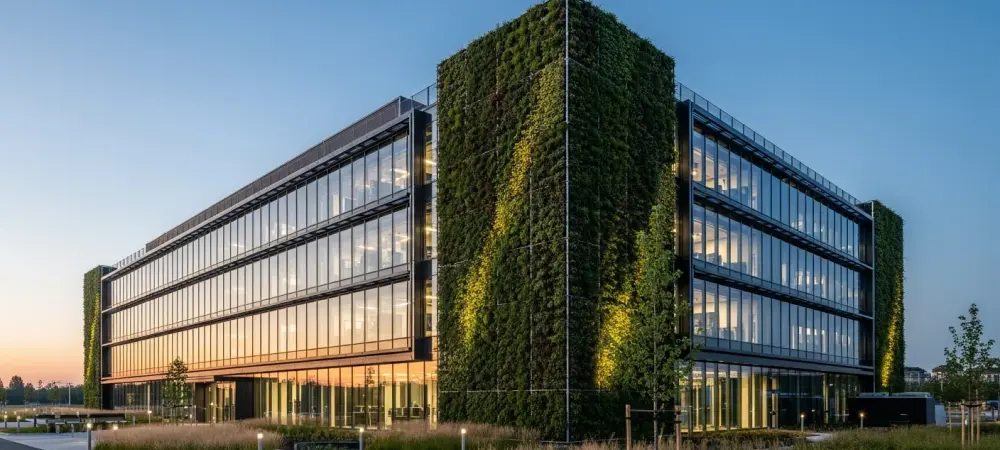
NorthC is positioning sustainability not just as a compliance requirement but as a key competitive differentiator for its Frankfurt 2 project. The facility’s design incorporates several forward-thinking green features, including green facades to support local biodiversity, advanced rainwater harvesting systems for cooling, and infrastructure to enable the capture and distribution of waste heat to local community networks. These initiatives are designed to minimize the facility’s environmental impact while also appealing to a growing base of environmentally conscious clients.
The Future Footprint: What This Expansion Signals
The development of Frankfurt 2 is a powerful statement of intent that significantly solidifies NorthC’s position as a major data center operator in both Germany and the wider European market. This new, scalable, and sustainable facility will enhance the company’s ability to attract a diverse client base, from large enterprises to hyperscale cloud providers looking for reliable and efficient infrastructure in a key global hub.
Looking ahead, this expansion provides NorthC with a crucial platform for future growth. The modular design ensures that the company can respond nimbly to evolving customer demands, while its focus on sustainability aligns with long-term industry trends. This project also reflects the broader shift toward building distributed, regional data center ecosystems that bring compute resources closer to end-users, strengthening the resilience and performance of Europe’s digital infrastructure.
A Calculated Move in Europe’s Data Center Chessboard
Ultimately, NorthC’s expansion in Frankfurt is a well-calculated and multifaceted investment driven by strategic ambition, market imperatives, and a forward-looking approach to technology and sustainability. The convergence of intense customer demand in a top-tier market, coupled with the operational challenges of land and power scarcity, created a clear opportunity for a differentiated approach. The Frankfurt 2 project addresses these dynamics directly through its strategic location, phased modular deployment, and integrated sustainable design. This development was not merely an addition of capacity but a decisive move to capture sustained demand in one of the world’s most critical digital markets. Through this investment, NorthC has demonstrably strengthened its competitive posture and reinforced its role as a key player in shaping the future of Europe’s digital foundation.