

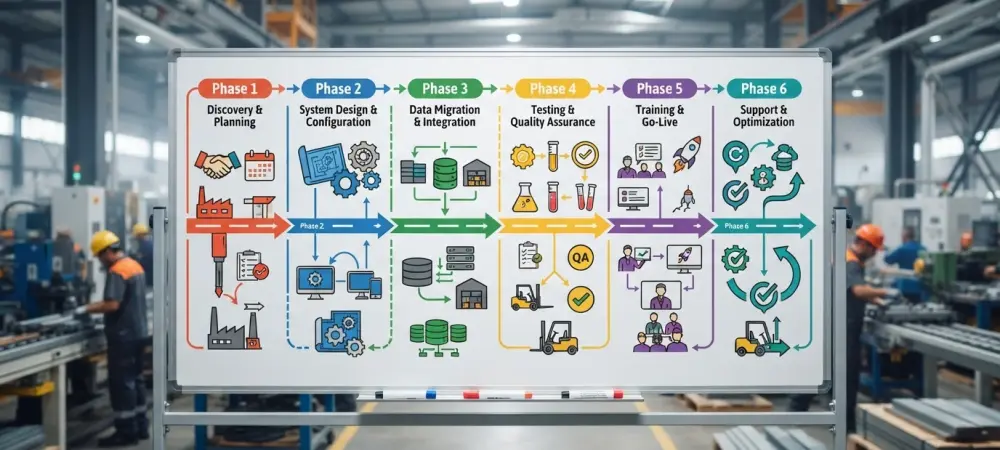
Navigating the complexities of a modern manufacturing software transition involves aligning production schedules, logistical requirements, and financial oversight into a unified digital ecosystem that functions seamlessly across all departments. The transition to a new Enterprise Resource Planning system is a transformative period that requires clear expectations regarding the timeline and the resource commitment involved. Every manufacturer must evaluate the scope of operations, from single-site boutique production to expansive multi-plant configurations, to determine a realistic path toward a successful go-live date in 2026.
Typical Duration for Manufacturing ERP Projects
The total time required to deploy an ERP solution in a manufacturing environment is dictated primarily by the complexity of the production processes rather than the software choice alone. While a distributor might focus only on the movement of finished goods, a manufacturer must account for the intricate layers of material transformation, capacity planning, and quality control. This complexity inherently extends the implementation lifecycle compared to simpler service or retail-oriented businesses.
How much time is typically required to complete a comprehensive manufacturing ERP implementation process for organizations of various sizes?
Project duration typically scales with the size and operational complexity of the organization involved; small businesses with a single plant and fewer than fifty users often complete their transition within a three-to-four-month window, especially when adopting a make-to-stock model. These projects usually focus on core functionality and utilize standard out-of-the-box features to accelerate the timeline and reduce the need for extensive process engineering. Mid-sized manufacturers generally require between six and nine months to move from initial kickoff to the final go-live stage. This expanded timeframe accounts for mixed-mode manufacturing strategies, such as a combination of make-to-stock and make-to-order, which require more sophisticated configuration. Large-scale enterprises with international footprints or highly regulated production environments may see projects spanning nine to eighteen months or more, depending on the volume of site-specific requirements.
What are the typical timelines for implementing Microsoft Dynamics 365 Business Central compared to the deployment schedules for Dynamics 365 Finance and Supply Chain Management?
Microsoft Dynamics 365 Business Central is optimized for small to mid-market manufacturers and typically follows a deployment schedule of twelve to sixteen weeks. Because the platform is designed for rapid configuration, organizations can often reach a functional state quickly if they adhere to standard features. However, adding multiple legal entities or complex third-party integrations can stretch this duration closer to twenty-two weeks to ensure all data pathways are secure. In contrast, Dynamics 365 Finance and Supply Chain Management is built for large, complex operations and usually follows a timeline of twenty-four to fifty-two weeks. The depth of this platform allows for process-specific customizations and advanced supply chain modeling that are essential for global manufacturers. Due to the advanced nature of its manufacturing execution and warehouse management modules, the design and testing phases are significantly more intensive than those found in smaller-scale deployments.
How many months are usually required for a single-plant mid-market company compared to multi-site operations?
A single-plant manufacturer operating in the mid-market space can realistically expect a six-month implementation cycle followed by a period of stabilization. This duration allows for a thorough discovery of local processes and the migration of existing production data without the added friction of coordinating between different regional management teams. The focus remains on optimizing one set of work centers and a single inventory location, which simplifies the overall testing and training burden. Multisite operations require an extended schedule, often ranging from nine months to several years for a full rollout. The initial months are typically spent creating a global template that defines standard processes across the entire organization, followed by localized sprints to handle regional tax, language, or logistical needs. Deploying to multiple plants sequentially helps mitigate risk, as lessons learned during the first site’s go-live can be applied to subsequent locations to improve efficiency and reduce downtime.
Month-by-Month Implementation Stages
The implementation journey is structured into distinct phases that transition from theoretical planning to physical configuration and active testing. Following a structured month-by-month approach prevents the project team from becoming overwhelmed by the sheer volume of tasks required for a manufacturing transition. Each stage builds upon the work completed in the previous month, ensuring that the system is fully vetted before any live production orders are processed.
Which essential preparation steps are typically undertaken during month 0 to ensure comprehensive team setup and operational readiness?
Month zero is dedicated to establishing the foundation of the project by identifying key stakeholders and defining the internal project team. An executive sponsor must be appointed to provide high-level guidance, while a full-time internal project lead is selected to manage daily activities and coordinate with the implementation partner. During this readiness phase, process owners for production, purchasing, inventory, and finance are identified to ensure every functional area is represented in the upcoming workshops.
The organization also freezes the initial scope during this period to prevent early scope creep from delaying the kickoff. Teams must agree on primary success metrics, such as improving inventory accuracy or reducing the time required for a month-end close, which will serve as the project’s guiding principles. This month is also the ideal time to conduct a preliminary data audit to understand the volume of records that will need to be cleaned and migrated from legacy spreadsheets or older software versions.
What specific activities and evaluations occur during the comprehensive discovery and fit-gap analysis in month 1?
The first official month of the project focuses on discovery workshops where the implementation partner analyzes how the plant functions in real-world scenarios. Current-state processes are mapped in detail, often revealing the informal workarounds and external spreadsheets that employees currently use to bypass existing system limitations. This deep dive covers core manufacturing flows, including plan-to-produce, procure-to-pay, and order-to-cash, to identify where the new ERP system will provide the most significant improvements. Following the discovery workshops, a fit-gap analysis is conducted to determine which business requirements can be met by standard software features and which require custom extensions. This document serves as the roadmap for the entire implementation, as it highlights critical gaps that must be addressed to keep the manufacturing line running. Final decisions regarding manufacturing strategies, such as whether to utilize assemble-to-order or discrete production methods, are finalized during this phase to inform the system configuration.
At what point in the product development lifecycle should a manufacturer begin the process of solution design and configuration?
Solution design begins in month two as the findings from the fit-gap analysis are translated into a functional system architecture. This is the stage where specific manufacturing parameters are defined, including the costing methods and replenishment policies for raw materials. Decisions made here regarding the chart of accounts and inventory posting groups will dictate how financial data is captured and reported throughout the life of the system.
Configuration of the base environment starts concurrently with the design sign-off to provide a sandbox where the team can begin visualizing the new workflows. The primary goal is to configure the software to match standard business processes whenever possible, reserving custom code only for unique requirements that offer a competitive advantage. This approach ensures that the system remains easy to update and maintain in the future while still meeting the essential operational needs of the shop floor.
What are the primary reasons that the initial data migration trial is typically scheduled to take place during the third month of a standard project implementation plan?
By month three, the implementation shifts toward building the system and conducting the first of several data migration trials. This initial trial is critical because it reveals how master data, such as item cards, bills of materials, and routings, interacts with the new system’s structure. Early testing allows the team to identify formatting errors or broken links in the data hierarchy before they become integrated into complex production scenarios.
Scheduling the first trial at this point provides sufficient time to correct errors in the legacy data before the more intensive testing phases begin. If items are missing scrap factors or if work centers are incorrectly defined, these issues can be resolved in the source system or during the transformation process. This proactive approach prevents data quality issues from stalling the project later in the timeline when the focus shifts to end-to-end process validation.
What are the specific procedures and activities involved in the conference room pilots and testing phases during month 4?
Month four is defined by conference room pilots where key users run through specific business scenarios to ensure the system behaves as expected. These pilots involve testing end-to-end flows, such as entering a sales order that triggers a production requirement and following that requirement through the planning and manufacturing cycles. This hands-on experience allows the project team to validate that the configuration supports the actual daily activities of the planners and shop floor supervisors.
System integration testing also occurs during this month to verify that data flows correctly between the ERP and other essential tools, such as warehouse management systems or electronic data interchange platforms. A second data migration trial is usually conducted to include open transactions, such as outstanding purchase orders and current inventory balances. This creates a realistic environment for testing reports and dashboards, ensuring that the information displayed to management is accurate and actionable.
Which specific performance criteria and evaluation standards must be satisfied during month 5 to facilitate formal user acceptance and comprehensive training protocols?
During month five, the business enters the final validation phase known as user acceptance testing, where the staff determines if the system is ready for live operations. Key users follow detailed testing scripts to sign off on every process, ensuring that no critical functionality is missing or broken. This phase is the ultimate gatekeeper for the project, as it confirms that the software can handle the actual volume and complexity of the manufacturer’s daily transactions. Training activities also reach their peak during this month, employing a train-the-trainer model to empower super users who will support their colleagues during the transition. Role-based training ensures that employees focus only on the features relevant to their specific jobs, which reduces confusion and improves adoption rates. A full mock cutover is typically executed toward the end of the month to time the final data migration and ensure the team can meet the window required for the actual go-live.
Could you please provide a detailed explanation regarding what the specific cutover window is expected to look like during the month 6 go-live phase?
The actual go-live event in month six usually centers on a strategic cutover window, often scheduled during a weekend or a planned production shutdown to minimize disruption. The process begins by freezing transactions in the legacy system and performing a final physical inventory count to establish accurate opening balances. This clean break ensures that the new system starts with precise data for all raw materials, work-in-progress, and finished goods.
Once the final balances and open transactions are migrated, the team reconciles the trial balance and inventory valuations to confirm that the financial data remains intact. The system is then opened for live production, and the first new production orders are released to the shop floor. During the initial days of live operations, a dedicated support team remains on-site to address immediate questions and ensure that the staff feels confident using the new interface in a high-pressure environment.
Post-Go-Live Support and Stabilization
The period immediately following the launch of an ERP system in manufacturing is often the most critical for long-term success. While the system may be functional, staff will likely encounter unique scenarios that were not covered during the testing phases. Continued support and a focus on stabilization ensure that the organization can navigate the initial learning curve without suffering significant production delays or data inaccuracies.
Hypercare is a period of elevated support that follows a system launch, but what does the phase specifically entail and how long does this intensive monitoring stage typically last in a professional setting?
Hypercare refers to the period of elevated support provided by the implementation partner immediately after the system goes live. This phase typically lasts between thirty and sixty days, providing a safety net for users as they transition from their old routines to the new digital workflows. During hypercare, support requests are prioritized to ensure that any issues affecting production, shipping, or invoicing are resolved with minimal delay.
The primary goal of hypercare is to achieve stabilization by refining configurations and addressing minor data issues that only surface under the pressure of full-scale operations. If a planner notices that lead times are slightly off or if a warehouse worker finds a bin logic error, these small adjustments are made quickly to maintain momentum. This intensive support period helps build user confidence and ensures that the system is correctly capturing the realities of the shop floor.
At what specific stage is a manufacturing enterprise resource planning project officially considered finished and fully integrated into a company’s standard operating procedures?
A project is rarely considered finished on the go-live date; instead, it is officially concluded after the first successful month-end close. This milestone proves that the system can accurately capture and report on a full cycle of manufacturing activities, from material consumption to financial reconciliation. Successfully closing the books without significant errors indicates that the data integrity is sound and the staff is proficient in using the new tools.
Once the financial reports for the first month are validated against historical benchmarks, the project team can transition the system to a standard support model. At this point, the implementation partner often hands over the reins to an internal support team or an ongoing managed services provider. The formal project closure involves reviewing the initial success metrics established in month zero to determine if the implementation met its primary business objectives.
What specific optimization tasks should be performed in the months following go-live to ensure that the newly implemented system maintains peak performance and operational stability?
After the initial stabilization period, the focus shifts toward optimizing the system to drive greater efficiency and higher returns on investment. One of the most important tasks is tuning the Material Requirements Planning parameters based on the actual production data collected during the first few weeks. This might involve adjusting safety stock levels, reorder points, or machine capacity settings to better reflect the true capabilities of the manufacturing facility.
Manufacturers also use the months following go-live to begin addressing the “phase two” list of features that were excluded from the initial launch to keep the timeline manageable. This might include implementing advanced quality management modules, integrating specialized shop floor equipment, or utilizing artificial intelligence for predictive maintenance. Optimization is a continuous process that ensures the ERP system evolves alongside the business, allowing the organization to take full advantage of new technologies as they become available.
Factors Influencing the Project Schedule
Despite careful planning, several variables can cause a manufacturing ERP project to deviate from its original timeline. Identifying these factors early in the process allows the project team to create contingency plans and set more accurate expectations for executive leadership. Most delays are not caused by technical failures but rather by challenges related to data quality, scope management, and resource availability.
What are the most common reasons that a manufacturing enterprise resource planning system go-live date frequently slips behind the original project schedule?
Project delays are frequently caused by underestimating the amount of effort required for data cleanup and migration, especially when legacy records are incomplete or formatted incorrectly. Such issues prevent data from being imported into the new system, forcing the team to pause other activities to fix the records manually. If these problems are discovered late in the testing cycle, they can push the go-live date back by several weeks or even months as the team struggles to reach a state of readiness. Scope creep is another major contributor to schedule slippage, occurring when new features or customizations are added after the design phase has been finalized. Each new request requires additional configuration, testing, and training, which cumulatively delays the progress of the core implementation. Finally, the lack of availability from key internal personnel can stall decision-making processes, as the implementation partner cannot move forward without sign-off from the individuals who understand the business best.
How does the overall complexity of various bills of materials (BOMs) and manufacturing routings significantly impact the project’s scheduling and final delivery timeline?
Bills of materials and routings represent the DNA of a manufacturing organization, and their complexity directly impacts how long it takes to configure the ERP system. A manufacturer with simple, single-level BOMs will have a much shorter setup time than an organization dealing with multilevel hierarchies and hundreds of subassemblies. Each level of a BOM requires its own set of planning parameters and inventory controls, which increases the volume of data that must be validated.
Routings add another layer of complexity because they define the sequence of operations and the specific work centers required to build a product. Mapping these processes accurately is essential for capacity planning and precise product costing, but it requires deep knowledge of shop floor operations. If a manufacturer has complex routings involving outside processing or specialized labor requirements, the configuration and testing phases will naturally take longer to ensure the system can handle these intricacies.
Why does the process of data cleansing consistently represent the most significant bottleneck during the implementation phase of a project?
Legacy systems are frequently filled with obsolete item numbers, inconsistent descriptions, and broken links between components and finished goods. When moving to a modern ERP in 2026, the new system expects a high level of data discipline that the old software might not have enforced. This results in a significant bottleneck where the implementation team must spend hundreds of hours verifying the accuracy of every record before it can be migrated.
The bottleneck is compounded by the fact that data cleanup is usually the responsibility of the manufacturer’s internal team, who must balance this intensive work with their regular daily responsibilities. If the team does not start this process on day one, the sheer volume of work becomes overwhelming as the go-live date approaches. Accurate data is the foundation of effective planning and costing; without it, the new ERP system will produce unreliable results, making cleanup the most critical path in the schedule.
How can a manufacturer shorten the implementation timeline without increasing the overall risk associated with the project?
One of the most effective ways to accelerate a timeline is to adopt a “fit-to-standard” approach, which involves changing business processes to match the software’s built-in best practices. This eliminates the time required for custom coding and reduces the complexity of the testing and training phases. By utilizing the software as it was designed, organizations can also benefit from easier future updates and a lower total cost of ownership over time. Another strategy is to phase the implementation by deploying core financial and inventory features first, while reserving more complex modules for a later date. This approach allows the organization to reach a go-live state more quickly and gain valuable operational experience.