

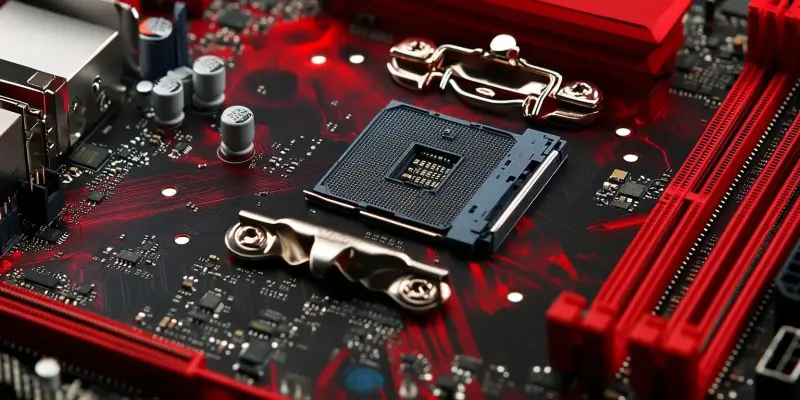
As the tech world gears up for the highly anticipated CES event, MSI is set to unveil its latest lineup of budget-friendly motherboards, targeting both Intel and AMD CPU platforms. These upcoming motherboards are particularly significant as they cater to users looking for high-quality yet cost-effective options. With Intel’s budget-focused Arrow Lake chips and AMD’s high-end Ryzen 9000X3D CPUs in the mix, the new MSI boards are expected to balance performance and affordability. Four distinct motherboard models have already been leaked, sparking interest and speculation among tech enthusiasts and potential buyers alike.
Intel-Compatible Motherboards: MAG B860 Tomahawk WiFi
For those inclined towards Intel processors, the MAG B860 Tomahawk WiFi motherboard is a standout. This motherboard boasts a robust set of features that include a classic black PCB design accented by greenish highlights. Among its key specifications are four DIMM slots, two PCI-E x16 slots, one PCI-E x1 slot, and at least three M.2 connectors. Additionally, the motherboard supports four SATA ports, ensuring ample storage capacity for various needs. Building on modern connectivity standards, it is equipped with built-in WiFi 7 and Thunderbolt 4 ports on the I/O panel, making it a versatile choice for a variety of connectivity requirements.
Moreover, the MAG B860 Tomahawk WiFi is designed to provide extra power where needed. It includes two 8-pin EPS connectors and an additional 8-pin PCI-E connector specifically to supply the GPU with additional power. These features combined make it an attractive option for users looking for reliable performance without breaking the bank. The integration of advanced technologies such as WiFi 7 and Thunderbolt 4 showcases MSI’s commitment to keeping up with current tech trends, even in their budget-friendly offerings.
AMD-Compatible Motherboards: PRO B850-P WiFi, B840 Gaming Plus WiFi, and PRO B840-P WiFi
When it comes to AMD processors, MSI has not held back, introducing three compelling models: the PRO B850-P WiFi, B840 Gaming Plus WiFi, and PRO B840-P WiFi. The PRO B850-P WiFi motherboard features a sleek black PCB with white and silver heatsinks. Among its standout specifications are four PCI-E x16 slots, three M.2 slots for versatile storage options, and four SATA ports. Notably, it incorporates an 8-pin connector at the bottom, indicative of its ability to manage high power requirements efficiently.
In contrast, the MSI B840 Gaming Plus WiFi is distinguished by its white heatsinks and grey-blue accents. This model stands out with five PCI-E x16 slots, suggesting ample room for expansion. However, it appears to omit the bottom 8-pin PCI-E connector, indicating that it might be positioned as an entry-level model. This motherboard is likely tailored for users looking for essential features without opting for high-end enhancements.
Similarly, the MSI PRO B840-P WiFi holds its own with five PCI-E x16 slots, four DIMM slots, two M.2 connectors, and four SATA ports. While it offers basic connectivity features, it is designed with versatility in mind, making it suitable for a variety of user needs. These AMD-compatible motherboards represent MSI’s commitment to providing flexible and cost-effective solutions, each catering to a different segment of the market.
Anticipated Impact and Industry Trends
As anticipation builds for the CES event, MSI is preparing to showcase its latest collection of budget-friendly motherboards for both Intel and AMD CPUs. These notable releases are designed to meet the needs of users seeking high-performance options without the hefty price tag. The new motherboards are especially exciting for tech enthusiasts and buyers on a budget, as they promise to deliver impressive performance while remaining affordable. Featuring compatibility with Intel’s cost-effective Arrow Lake chips and AMD’s top-tier Ryzen 9000X3D CPUs, MSI’s newest boards aim to strike a perfect balance between performance and price. Four distinct motherboard models have already been leaked, generating buzz and speculation within the tech community. This has led to heightened interest among potential consumers, who are eager to see how MSI’s offerings will stand against other budget options in the market. The CES event will undoubtedly be a critical platform for MSI to demonstrate the capabilities and appeal of these new motherboards to a wide audience.