
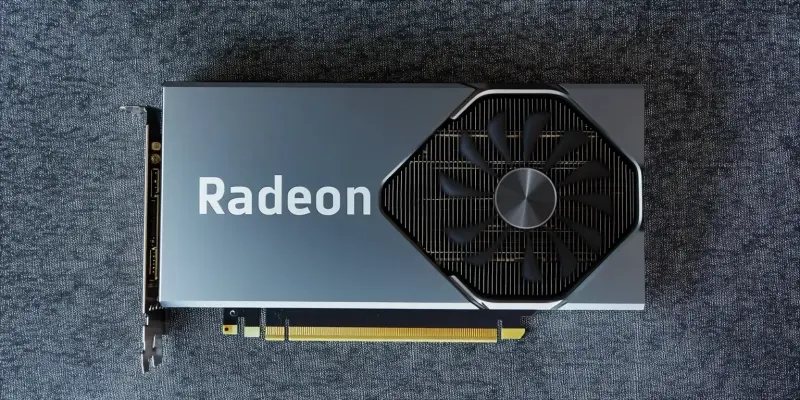
What Can We Expect from AMD’s Upcoming Radeon RX 9000 GPU Launch?

Article Highlights
Off On

As the launch of AMD’s next-generation Radeon RX 9000 series GPUs powered by the RDNA 4 architecture approaches, anticipation is palpable among the tech community and gaming enthusiasts alike. Set to be unveiled during a live event on AMD’s Gaming YouTube channel on February 28 at 8 AM EST, this launch promises to deliver crucial insights into the new graphics cards, covering everything from specification details to performance capabilities and pricing strategies.

Central to the excitement are the Radeon RX 9070 XT and RX 9070, which are expected to draw the majority of the spotlight. These GPUs primarily feature the Navi 48 die and come equipped with a substantial 16 GB of GDDR6 memory that operates on a 256-bit bus. Additionally, there are rumors hinting at a potential 32 GB edition, which could further elevate these GPUs’ appeal to high-end users and professionals who require hefty memory capacities for demanding applications.

Key Specifications and Expectations

The RX 9070 XT targets the enthusiast market, showcasing impressive specifications that highlight its power. It features 8,096 Shader Processors (SPs), a PCI-E 5.0 interface, and a boost clock of 3.1 GHz. Early performance hints from synthetic benchmarks suggest that the RX 9070 XT could rival NVIDIA’s RTX 4080 Super.

Pricing will play a key role in the RX 9070 series’ success in the competitive GPU market. AMD has hinted at competitive pricing strategies, potentially making it an attractive option for those seeking a cost-effective alternative to NVIDIA’s products.

The upcoming Radeon RX 9000 lineup will include models such as the RX 9060 XT and RX 9060, all using 4nm process technology. Detailed specs for the RX 9060 variants are yet to be revealed, but they are expected to feature Navi 44 dies and 8 GB of GDDR6 memory, making them appealing to mainstream gamers and users who don’t need the high power of the RX 9070 series.

Anticipation is high as we wait for the official unveiling. AMD has clearly invested heavily in the Radeon RX 9000 series to advance GPU performance and innovation. Early reviews, expected as pre-launch review embargoes lift, will offer deeper insights into these cutting-edge graphics cards, guiding consumer expectations and purchase decisions ahead of the official release in early March.

Explore more

Is Bad Data Architecture Stalling Your AI Ambitions?

The corporate landscape is littered with the wreckage of ambitious artificial intelligence projects that were doomed from the start because they were built upon the shifting sands of legacy data systems rather than a rock-solid architectural foundation. While the allure of generative models and autonomous agents captures the imagination of the executive suite, the practical reality of implementation often reveals

Enterprise Software Valuation – Review

The digital infrastructure underpinning the global economy has undergone a radical transformation as enterprise software moves beyond simple automation toward predictive, AI-integrated environments. This transition marks a departure from the legacy models of the past decade, placing a spotlight on how 191 US-listed firms with market capitalizations over $2 billion are being appraised. Current market sentiment focuses on the financial

Why Human Systems Are Essential for Successful AI Integration

The global rush to integrate artificial intelligence into every facet of business operations has led to a paradoxical situation where massive financial injections often result in stagnant growth and technical obsolescence. Across the globe, organizations are pouring billions into advanced algorithms, yet many find that these investments fail to deliver a measurable return. The prevailing assumption that a more powerful

The UN Establishes Global Framework for AI Governance

Secretary-General António Guterres has emphasized that while national actions are essential, global coordination remains indispensable to prevent a regulatory race to the bottom in AI development. This statement resonates deeply as the world faces a critical juncture where the speed of technological advancement consistently outpaces the slow-moving gears of traditional bureaucracy. In 2026, the proliferation of large-scale language models and

Can AI Balance Economic Growth With Global Risks?

The silence of a high-tech laboratory often masks the thunderous impact of its outputs, but today that impact is felt in every coffee shop and boardroom across the planet where silicon chips are redefining human capability. More than a billion individuals have now woven generative models into the fabric of their professional and personal existences, creating a momentum that moves