

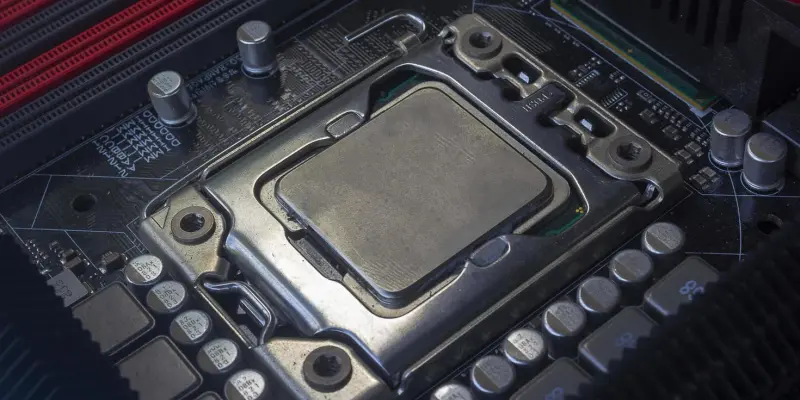
Overclocking has always been an integral part of the enthusiast community, representing the pursuit of extracting maximum performance out of a CPU beyond its factory limits. Starting from hardware hacks to sophisticated software solutions, overclocking has evolved tremendously. Some CPUs have become legendary in this realm for their exceptional capabilities to deliver impressive performance boosts. This article delves into the most overclocking-friendly CPUs in history that have left a profound impact on enthusiasts.
The Birth of Overclocking Enthusiasm
Early Overclocking Techniques
The origin of overclocking saw creative and daring methods involving soldering and crystal swaps. These primitive techniques laid the foundation for future advancements as enthusiasts pushed their hardware to the limits. Overclocking, at its inception, was a niche activity undertaken by a handful of daring tech enthusiasts. They relied on modifying existing hardware by soldering new components or swapping out crystal oscillators to change the processor’s operating frequency. These early enthusiasts faced considerable risks and challenges, often working without the support of software tools that modern overclockers take for granted. Their efforts were driven by a desire to push the boundaries of performance, often resulting in significant gains that set the stage for more sophisticated approaches in the years to come.
As overclocking gained popularity, manufacturers began to take notice. This led to the development of hardware specifically designed with overclocking in mind, albeit still rudimentary by today’s standards. Jumper settings on motherboards, introducing adjustable system bus speeds, provided a more accessible and less risky method of tweaking performance. These early innovations in motherboard design allowed more users to engage in overclocking without the need for intricate hardware modifications. The methodology gradually moved from physical alterations to more standardized, user-friendly approaches, laying the groundwork for the future of overclocking.
DIP Switches and System Bus Tweaks
With the advent of system bus speed adjustments through motherboard DIP switches, overclocking entered a new era, making it more accessible to a broader audience. The ability to change settings directly on the motherboard marked significant progress. This transition indicated a shift from the exclusive domain of technical experts to a wider range of computer enthusiasts. Motherboard manufacturers began incorporating DIP switches and jumpers that allowed users to adjust system parameters without the need for soldering or complex modifications. This innovation democratized overclocking, enabling a broader spectrum of users to experiment with their processors’ performance.
The inclusion of DIP switches provided a more manageable and safer way to overclock CPUs, further fueling the interest in performance tweaking. Enthusiasts could now change the system bus speed by simply flipping a few switches, resulting in immediate performance gains. This era saw a surge in overclocking guides and communities, as more people joined the ranks of those pushing their hardware to the limits. The improvements in accessibility and safety helped solidify overclocking as a mainstream activity, paving the way for even more sophisticated tools and techniques in the subsequent years.
Evolution of Overclocking Tools
Overclocking has evolved significantly over the years, with tools becoming increasingly sophisticated and user-friendly. Early overclocking methods required manual adjustments to hardware components, which often demanded a deep understanding of computer architecture and came with a high risk of hardware damage. As technology advanced, software solutions emerged that allowed users to tweak settings through their operating systems, reducing the need for physical modifications.
These software tools provide real-time monitoring, automated optimization, and dynamic adjustments, making overclocking accessible to a broader audience. The integration of safety features has also minimized the potential for hardware damage, encouraging more users to push their systems to higher performance levels. While overclocking was once the domain of enthusiasts and experts, modern tools have democratized the practice, enabling everyday users to enhance their computing experiences with relative ease and confidence.
From BIOS to Software Solutions
As BIOS-level overclocking became more common, software tools emerged, offering more refined and granular control over CPU parameters. This shift democratized overclocking, allowing even those with limited hardware knowledge to venture into it. The evolution of BIOS overclocking allowed users to make adjustments directly within their system firmware, eliminating the need for physical modifications altogether. Enthusiasts could now tweak voltage settings, multipliers, and memory timings with greater precision. This level of control enabled more sophisticated and stable overclocking outcomes, enhancing the performance gains achievable through this practice.
Software solutions built on this foundation provided user-friendly interfaces and advanced functionalities that catered to both novice and experienced overclockers. Utilities such as CPU-Z, Prime95, and others offered insights into system performance and stability, assisting users in optimizing their overclocking configurations. These tools collectively contributed to the standardization of overclocking practices, making it easier to achieve reliable performance enhancements. The synergy between BIOS-level adjustments and accompanying software marked a significant milestone in the overclocking landscape, further broadening its appeal and accessibility.
Managing Thermals and Silicon Lottery
Modern overclocking not only focuses on raw speed but also on managing temperatures and power consumption. Winning the “silicon lottery” – landing a CPU capable of high overclocks – adds a layer of excitement to the process. The progression of cooling solutions, from basic air coolers to advanced liquid cooling systems, reflects the critical role that thermal management plays in successful overclocking. Effective cooling is paramount in maintaining system stability and extending the longevity of components, especially when they operate beyond factory-set specifications.
The concept of the “silicon lottery” highlights the inherent variability in the performance potential of different CPU units, even within the same model. Some processors exhibit exceptional overclocking capabilities due to slight manufacturing variances, rewarding those lucky enough to acquire such units. This element of chance adds an intriguing competitive aspect to overclocking, as enthusiasts strive to identify and maximize the potential of their specific CPUs. Managing thermals and navigating the unpredictability of the silicon lottery continue to shape the strategies and experiences of overclockers, driving ongoing innovation in both hardware and techniques.
Landmark Overclocking CPUs
Pioneers of Overclocking
Intel Pentium MMX 166
Known for its cost-effectiveness, the Pentium MMX 166 became a popular choice for overclockers seeking to outperform pricier models like the MMX 233. Released in January 1997, the Pentium MMX 166 offered a factory clock speed of 166 MHz, but enthusiasts quickly discovered that it could be pushed beyond these limits. By increasing the bus frequency, users could achieve clock speeds ranging from 207 MHz to 266 MHz, yielding performance gains of up to 54%. This capacity to outperform its higher-priced counterparts made the Pentium MMX 166 a favorite among budget-conscious overclockers.
The Pentium MMX 166’s success demonstrated the potential for significant performance improvements through relatively simple modifications. Enthusiasts were able to leverage the processor’s architecture to extract more power without needing substantial investments in new hardware. This period also saw the rise of overclocking communities, where users shared their experiences and techniques, fostering a collaborative environment that accelerated the practice’s growth. As a result, the Pentium MMX 166 not only stood out for its overclocking prowess but also for its role in popularizing the pursuit of enhanced CPU performance within the enthusiast community.
Intel 486DX2-40
The 486DX2 series demonstrated high overclocking potential, setting a precedent for future CPUs with its ability to double system bus speeds without complex modifications. Introduced in March 1992, the 486DX2-40 featured a clock speed of 40 MHz, which could be overclocked to 66 MHz, achieving an impressive performance boost of around 65%. This era marked a significant milestone in overclocking history, as the use of clock multipliers enabled enthusiasts to obtain substantial speed increases without the need for intricate hardware alterations.
The simplicity of overclocking the 486DX2-40 generated widespread interest among users and laid the groundwork for future advancements in the field. By providing a clear example of how modifying system bus speeds could yield tangible performance benefits, the 486DX2-40 fostered a culture of experimentation and innovation. As more users ventured into overclocking, the collective knowledge and techniques improved, paving the way for subsequent generations of CPUs designed to accommodate and exploit these practices. Overall, the 486DX2 series not only showcased the potential of overclocking but also contributed to the evolution of the community and the methodologies employed.
AMD and Intel Clash
AMD K6-2 300 / 350
Despite its struggles, the K6-2 offered impressive overclocking capacity, allowing budget-conscious users to extract significant performance gains. Released in May 1998 for the 300 MHz variant and August 1998 for the 350 MHz version, the AMD K6-2 series faced stiff competition from Intel’s offerings. However, enthusiasts quickly recognized the processor’s potential for cost-effective performance enhancement. Capable of reaching clock speeds between 400 MHz and 450 MHz, these CPUs saw performance boosts of approximately 15% to 30%, providing a competitive edge for users seeking affordable upgrades.