

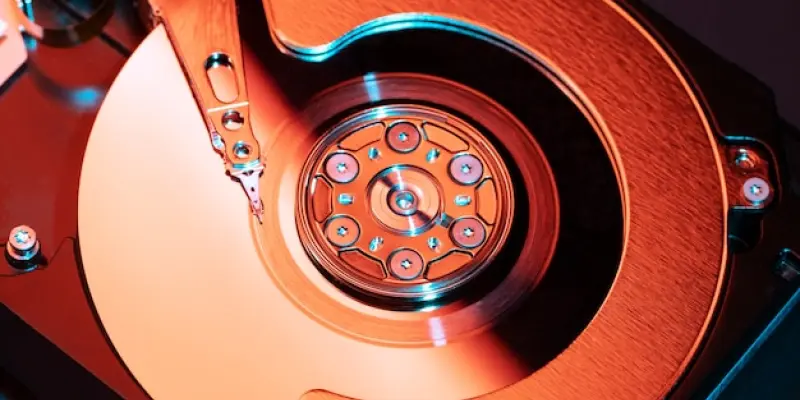
In an era where digital data is rapidly accumulating, Western Digital is paving the way for groundbreaking advancements in data storage solutions. The renowned company has recently announced its plans to enhance hard disk drives (HDD) by reaching a 40TB capacity by the end of 2026. This ambitious goal is part of a broader strategy aimed at developing 100TB HDDs in the foreseeable future. This trajectory towards higher storage capacities comes at a time of near-exponential growth in data generation across various sectors, driven by advancements in technology and the expansion of Artificial Intelligence (AI) applications.
Charting the Course for Future Storage
Western Digital’s vision for the future of storage technology is fueled by innovative approaches to HDD development, particularly through the introduction of Heat-Assisted Magnetic Recording (HAMR) technology. This emerging methodology promises increased data density by significantly enhancing the way data is written on the disk. By utilizing a laser to heat the disk, HAMR allows higher magnetization rates, which in turn facilitates greater storage capacities. The company foresees HAMR technology as a vital component in transforming data storage solutions, propelling HDD capacities from the current industry standards to impressive new heights.
The company’s strategic roadmap leading up to the introduction of 40TB HDDs reflects meticulous planning and anticipation of market trends. Western Digital seeks to ensure that HAMR’s integration into widespread HDD production arrives at an optimal cost-benefit junction, aligning perfectly with projected market demands. The gradual shift towards HAMR is seen as a substantial leap in technological evolution for the industry, offering future-proof solutions in anticipation of the increasing demand for storage driven by the proliferation of data-heavy enterprises and applications. Ultimately, Western Digital’s vision encapsulates a future where data storage adapts seamlessly to the burgeoning digital data landscape.
Incremental Advancements in HDD Technology
Acknowledging the substantial leap required for the full integration of HAMR technology, Western Digital has embraced interim solutions to expand its current storage capabilities. The company is leveraging current technologies, such as OptiNAND and UltraSMR, while HAMR becomes more economically viable. OptiNAND technology enhances HDD performance by integrating NAND flash to store metadata, improving both reliability and efficiency. Meanwhile, UltraSMR, or Shingled Magnetic Recording, adds storage capacity by overlapping data tracks on the disk, resembling the way shingles overlap on a roof. These existing technologies act as a bridge, facilitating incremental increases in storage capacity while preparing for the adoption of HAMR.
The strategic use of OptiNAND and UltraSMR underscores Western Digital’s commitment to innovation and optimized interim solutions. As the company advances towards its targets, these technologies are serving as crucial components in bolstering storage densities over limited spaces until the technology landscape fully opens up to HAMR integration. This approach illustrates Western Digital’s adaptability and resourcefulness in aligning existing technological frameworks with future goals, thereby maintaining its competitive edge while on the path to higher storage thresholds.
The AI Demand Surge
A significant driver for Western Digital’s ambition to achieve higher HDD capacities is the anticipated surge in storage demand prompted by the rapid evolution and implementation of AI applications. AI is expected to substantially amplify data generation, necessitating robust storage systems capable of handling vast volumes of information effectively. As these applications proliferate, Western Digital aims to address the expansive storage needs predicted for the latter half of 2026 and beyond. The company anticipates that the rise in data storage demand will create a lucrative opportunity for larger-capacity hard drives and positions itself to maximize this foreseeable surge. The synergy between AI development and data storage capabilities highlights the importance of preparing for the future. By strategically planning towards 40TB and eventually 100TB HDDs, Western Digital intends not only to meet immediate expectations but also to secure a foundation for realizing longer-term solutions with far-reaching implications. This foresight provides a compelling narrative around the importance of innovating storage technologies to accommodate the inevitable expansion of data-driven enterprises and their growing reliance on AI. As data proliferates within AI frameworks, Western Digital’s approach showcases the company’s dedication to fostering advancements that resonate with far-reaching industry demands.
Competitive Dynamics in the HDD Market
In the competitive realm of storage technology, Western Digital faces intense competition, notably from Seagate, a major player continually innovating its own HDD capacities. Seagate has made significant advances, revealing a 36TB HAMR drive and setting plans for a 60TB release, showcasing its proactive approach to the same challenges confronting Western Digital. Additionally, Seagate’s acquisition of Intevac—a company recognized for its specialized HAMR manufacturing equipment—could further intensify competitive dynamics. Intevac’s expertise plays a crucial role in HDD production worldwide, highlighting the strategic importance of HAMR manufacturing technology in the race towards realizing 100TB drives. The competitive landscape underscores the urgency for Western Digital to maintain its momentum in pioneering future storage technologies. As each company vies to establish dominance, the push for higher HDD capacities becomes a focal point, accompanied by strategic acquisitions and technological advancements that shape the industry’s future trajectory. Notwithstanding the rivalry, Western Digital remains steadfast in its dedication to innovation, embracing cutting-edge technologies and strategies to secure its position as a leader in the sector. This robust competitive framework catalyzes an accelerated pace of advancement, driven by Western Digital’s commitment to exceeding industry expectations.
Pioneering Beyond Conventional HDDs
Beyond advancing traditional HDD capacities, Western Digital is exploring uncharted territory with innovative storage solutions that transcend conventional methodologies. In its quest to revolutionize data storage, the company is investigating next-generation mediums like DNA-based and ceramic-based technologies. These emerging solutions promise extraordinarily high storage densities and durability, primarily aimed at preserving data over extended periods, serving essential functions for archival purposes within institutions specializing in scientific exploration and data retention. Such pioneering efforts demonstrate Western Digital’s proactive stance in preparing for the expansive possibilities of future storage solutions. DNA-based storage leverages the natural ability of DNA molecules to store complex information, while ceramic-based technologies emphasize endurance and resistance to deterioration. These innovative approaches offer groundbreaking potential for long-term data retention, forming an integral part of Western Digital’s vision to future-proof storage capacities. In effect, Western Digital is positioning itself not only to accommodate burgeoning data demands but also to elevate storage solutions for long-term viability across diverse settings.
A Strategic Approach to Future-Proofing Data Storage
In our current digital age, where data is accumulating at an unprecedented rate, Western Digital is setting the stage for significant advancements in data storage technology. The well-known company has revealed ambitious plans to upgrade hard disk drives (HDD) by achieving a capacity of 40TB by the end of 2026. This bold endeavor is part of a larger vision to eventually develop HDDs with an astounding 100TB capacity.
This push towards higher storage capacities aligns perfectly with the explosive growth in data creation across numerous industries. This surge is largely propelled by technological advancements and the increasing integration of Artificial Intelligence (AI) in various applications. As digital data continues to grow exponentially, the demand for more efficient and expansive storage solutions becomes critical.
Western Digital’s roadmap for these powerful storage solutions not only reflects its innovative drive but also addresses the pressing need for enhanced data management in today’s digital landscape. By focusing on expanding the horizons of storage capacity, the company is positioning itself to meet the data demands of the future effectively. These developments promise to support the ever-growing data storage needs that are integral to businesses and individuals alike, as the world becomes increasingly digital and data-driven.