

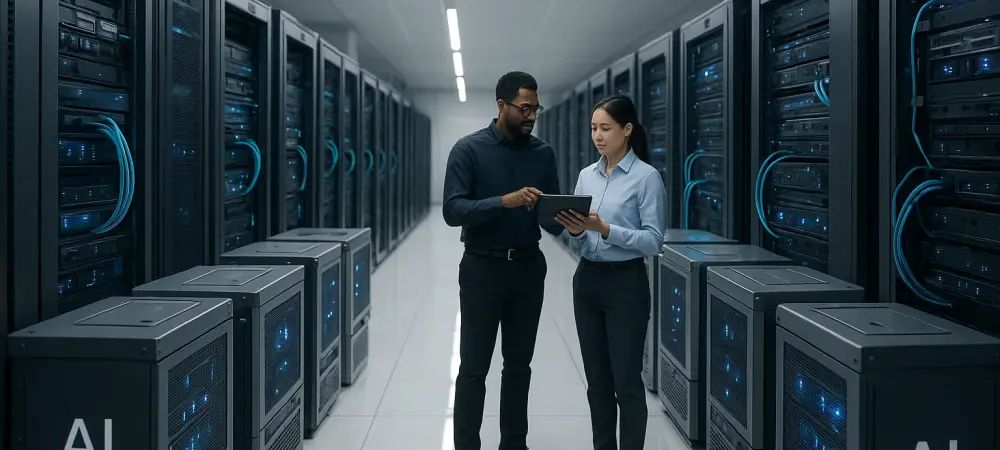
Validating memory tiering in VCF 9.1 allows companies to use a mix of memory types to double virtual machine density while maintaining high performance levels. This technological breakthrough arrived at a moment when enterprises were seeking ways to move their artificial intelligence initiatives from the laboratory into the core of their daily operations. The current landscape of corporate technology is defined by a shift toward private cloud environments that offer the same agility as public platforms but with the control and security necessary for handling sensitive proprietary data. As global organizations integrate autonomous agents and large-scale language models into their primary workflows, the underlying infrastructure must evolve beyond basic virtualization. Decisions regarding compute and storage are now linked to broader strategic goals, including data sovereignty, regulatory compliance, and the long-term sustainability of high-performance computing resources. This transformation signifies a critical juncture where the private cloud is no longer just a hosting environment but a fundamental engine for AI-driven business innovation. By establishing a robust and scalable foundation, companies can ensure that their digital transformation efforts are truly production-ready, providing a resilient platform for the next generation of applications.
Strategic Architecture and Hardware Autonomy
Prioritizing Software Over Infrastructure
For several years, the standard approach to technological upgrades involved a hardware-first philosophy where organizations would procure the latest servers and accelerators before determining the software stack that would manage them. In the current climate, this methodology has proven to be a significant liability, often leading to restrictive vendor lock-in and orphaned hardware that cannot adapt to the rapid pace of AI development. Modern enterprises have recognized that software architecture must lead every infrastructure investment to ensure long-term flexibility. By adopting a software-defined strategy, IT leaders can decouple their operational capabilities from specific hardware vendors, allowing for a more modular and responsive environment. This shift enables organizations to deploy various AI models—whether they are locally hosted for security or cloud-based for bursting capacity—without needing to overhaul their entire physical footprint. The focus has moved toward creating a unified control plane that treats hardware as a fungible resource, ensuring that new accelerators can be integrated seamlessly.
The autonomy provided by a software-led approach is particularly crucial as the diversity of AI-specific hardware continues to expand across the industry. With a consistent software layer like VMware Cloud Foundation, businesses can maintain a steady operational environment even as they experiment with different silicon options, ranging from traditional GPUs to more specialized neural processing units. This independence allows for a more strategic procurement process, where hardware is selected based on specific performance-to-cost ratios for particular tasks, such as inference at the edge or massive training clusters in the data center. Furthermore, this architectural independence protects the organization against supply chain fluctuations and the rapid obsolescence of specialized chips. When the software defines the network, storage, and compute parameters, the enterprise gains the ability to pivot its strategy almost instantaneously. This level of agility is essential for maintaining a competitive edge in a market where the leading AI models and their corresponding hardware requirements can change within a single fiscal quarter.
Managing the Rise of Agentic AI
As enterprises modernize, the focus is shifting toward the management of agentic AI—autonomous applications capable of executing complex business processes with minimal human intervention. Unlike traditional software that follows a rigid set of pre-defined instructions, these agents can reason, plan, and execute tasks across multiple corporate systems. Securing these agents requires a move away from traditional black box methods toward a framework of curated access involving sophisticated identity management and role-based access control. This shift is necessary because an autonomous agent might require access to sensitive financial data, customer records, and internal communications to perform its function. Without a robust management framework, these agents could become a significant security risk, potentially performing actions that exceed their intended scope. By implementing curated access, organizations can ensure that agents interact with enterprise data sets on the terms of the organization, maintaining strict security boundaries while still allowing the AI to function effectively and efficiently.
The deployment of agentic AI also necessitates a change in how IT departments monitor and audit application behavior. Traditional monitoring tools designed for human users often fail to capture the high-frequency, automated interactions that characterize agent-driven workflows. To manage this effectively, private cloud environments must incorporate advanced telemetry that provides deep visibility into the decision-making processes of these autonomous entities. This allows administrators to track not only what an agent did, but why it chose a particular course of action, which is essential for troubleshooting and compliance. Furthermore, the ability to rapidly throttle or revoke access for specific agents becomes a critical safety mechanism. As these autonomous applications become more integrated into the enterprise, the management platform must treat them as first-class citizens with their own set of permissions, resource quotas, and performance benchmarks. This level of oversight ensures that the rise of agentic AI enhances corporate productivity without introducing unmanaged operational risks.
Security, Visibility, and Workload Mobility
Bridging the Identity Gap
While identity management for human users has been perfected over decades, equivalent systems for AI agents are still in their infancy. Because these agents possess increasing autonomy, the risk of unauthorized activity at the API level is significantly high. Modern private cloud infrastructure must now incorporate built-in network visibility and signed machine identities to monitor and police the interactions between AI components and the broader corporate network. This gap represents a significant vulnerability, as traditional credentials are often too static for the dynamic nature of AI workloads. Organizations are now turning to cryptographic identities that are automatically issued, renewed, and revoked based on the lifecycle of the AI agent. This ensures that only verified and authorized software components can communicate with one another, effectively neutralizing many common attack vectors. By treating machine identity with the same rigor as human identity, enterprises can build a more resilient security posture that scales alongside their growing AI deployments.
The implementation of signed machine identities also facilitates a much higher level of logging and accountability within the digital ecosystem. When every action taken by an AI agent is tied to a unique and verifiable identity, it becomes much easier to reconstruct events during a security audit or a system failure. This level of transparency is vital for organizations operating in highly regulated industries, such as finance or healthcare, where the ability to explain AI-driven decisions is often a legal requirement. Moreover, these identity frameworks allow for the creation of micro-segments within the network, ensuring that even if one agent is compromised, the breach cannot easily spread to other parts of the infrastructure. As the complexity of AI interactions grows, the ability to maintain a clear and secure identity map will be the difference between a secure production environment and a fragmented, vulnerable one. Bridging this identity gap is not just a technical necessity but a prerequisite for trust in autonomous systems.
Embracing Hybrid Reality and Placement Flexibility
A modern enterprise operates in a hybrid reality, making placement flexibility a necessity for operational efficiency. Collaborations between Broadcom and providers like AWS allow customers to maintain control over their VCF environments while leveraging massive public infrastructure for disaster recovery or data center exits. This ability to move workloads seamlessly across different environments ensures that organizations can optimize their spending and performance based on real-time needs. For instance, an organization might choose to train a large model in the public cloud to take advantage of its vast compute resources but then bring the model back to a private environment for inference to reduce latency and enhance data privacy. This bidirectional mobility is essential for maintaining a balanced infrastructure strategy that avoids the pitfalls of being locked into a single environment. The cloud is no longer a destination but a set of capabilities that can be utilized as needed, providing a versatile menu of options for the modern enterprise.
The ability to migrate workloads without expensive application refactoring allows organizations to treat the cloud as a strategic asset. Traditional migration projects often stalled due to the immense cost and complexity of rewriting applications for different cloud architectures. However, with a unified foundation like VCF, the underlying environment remains consistent regardless of the physical location of the hardware. This consistency ensures that security policies, networking configurations, and management tools remain intact as workloads move from the on-premises data center to the public cloud and back. This flexibility is particularly valuable for handling seasonal spikes in demand or for rapidly deploying new services in different geographic regions to meet data residency requirements. By decoupling the application from its physical location, businesses can focus on delivering value rather than managing the intricacies of infrastructure migration. This hybrid approach provides the ultimate safety net, allowing for rapid scaling while maintaining the core benefits of the private cloud.
Ecosystem Collaboration and Economic Sustainability
Simplifying the Journey: From Metal to Model
The complexity of setting up GPUs, Kubernetes clusters, and AI software stacks is often too high for many IT departments to manage manually. Strategic partners like AMD, Lenovo, and Cisco are filling this gap by offering validated hardware configurations that are pre-integrated with VCF. This ecosystem approach eliminates the manual and complex process of building AI infrastructure, allowing traditional applications and AI models to coexist seamlessly on the same hardware. By providing pre-tested and certified stacks, these partners reduce the time to value from months to days, enabling organizations to start their AI projects almost immediately. This collaboration ensures that the hardware and software layers are perfectly tuned for high-performance workloads, minimizing the risk of performance bottlenecks or compatibility issues. For many businesses, this turnkey approach is the most viable path toward achieving production-ready AI without the need for a massive team of specialized infrastructure engineers.
Furthermore, this unified infrastructure approach allows for a more efficient use of existing data center resources. Instead of building separate silos for traditional enterprise applications and new AI workloads, organizations can run everything on a single, flexible platform. This not only reduces capital expenditure but also simplifies day-to-day operations by providing a single pane of glass for management. As the hardware manufacturers continue to innovate, these pre-integrated solutions will incorporate the latest advancements in cooling, power efficiency, and data throughput, ensuring that the infrastructure remains at the cutting edge. The shift from manual assembly to integrated systems represents a significant maturation of the AI market, where the focus is moving from the “how” of infrastructure to the “what” of business outcomes. By simplifying the journey from metal to model, the ecosystem enables a much broader range of companies to participate in the AI revolution, regardless of their internal technical expertise.
Scaling Through Specialized AI Factories
The move toward AI Factories illustrates a shift toward specialized, pre-configured infrastructure pods sized for specific workloads, from edge inference to heavy data center training. By shipping fully built and configured systems, these partnerships allow IT departments to transition from being infrastructure architects to AI consumers. This ensures that enterprises can be operational on day one, bypassing months of testing and focusing instead on deriving actual value from their data. These factories are designed to be modular, allowing organizations to start small and scale their capacity as their needs grow. This “pod-based” approach to infrastructure provides a predictable cost model and performance profile, making it easier for finance departments to approve and manage AI investments. As memory tiering and other efficiency technologies are integrated into these pods, the cost per virtual machine continues to drop, making large-scale AI projects more economically sustainable.
In addition to physical hardware, AI Factories often include a pre-loaded suite of software tools and libraries that are optimized for the specific hardware configuration. This provides data scientists with a ready-to-use environment where they can immediately begin developing and deploying models. The integration of these software stacks ensures that the underlying infrastructure is utilized to its maximum potential, providing the high throughput and low latency required for modern AI applications. By standardizing the deployment environment, AI Factories also make it easier to maintain consistency across different locations, from central data centers to remote edge sites. This consistency is vital for maintaining the accuracy and reliability of AI models as they are deployed across the enterprise. Ultimately, the AI Factory model represents the industrialization of artificial intelligence infrastructure, providing the scale and reliability needed to support the next generation of intelligent business processes.
Strategic Resilience and Economic Viability
The organizations that succeeded in this transition were those that recognized the importance of balancing technological ambition with economic reality. They discovered that by implementing memory tiering and high-density virtualization, they could significantly reduce the physical footprint of their data centers while increasing their total compute capacity. This historical shift allowed firms to navigate the period between 2026 and 2028 with a much leaner operational profile than their competitors. These leaders also invested heavily in machine identity frameworks, which proved to be a decisive advantage when agentic AI became the standard for corporate automation. By preparing their infrastructure to handle the unique security demands of autonomous software, they avoided the costly breaches and downtime that plagued less prepared organizations. The move toward a software-defined private cloud provided the necessary foundation for these successes, ensuring that technology served as a catalyst for growth rather than a bottleneck for innovation.
Looking back, the adoption of specialized AI pods and hybrid mobility was the primary driver of enterprise agility during this era of rapid change. Companies found that the ability to treat infrastructure as a menu of options allowed them to pivot their strategies in response to new market demands without incurring massive technical debt. They embraced the concept of the AI factory as a way to industrialize their data processing capabilities, turning speculative projects into reliable revenue streams. This period marked the end of the experimental phase of artificial intelligence, as the focus turned toward the practicalities of governance, cost control, and performance at scale. The strategic decisions made during these years solidified the role of the private cloud as the central theater for digital transformation. Consequently, the lessons learned from this era continued to inform infrastructure strategy, proving that a unified and resilient foundation was the most critical asset for any data-driven organization.