

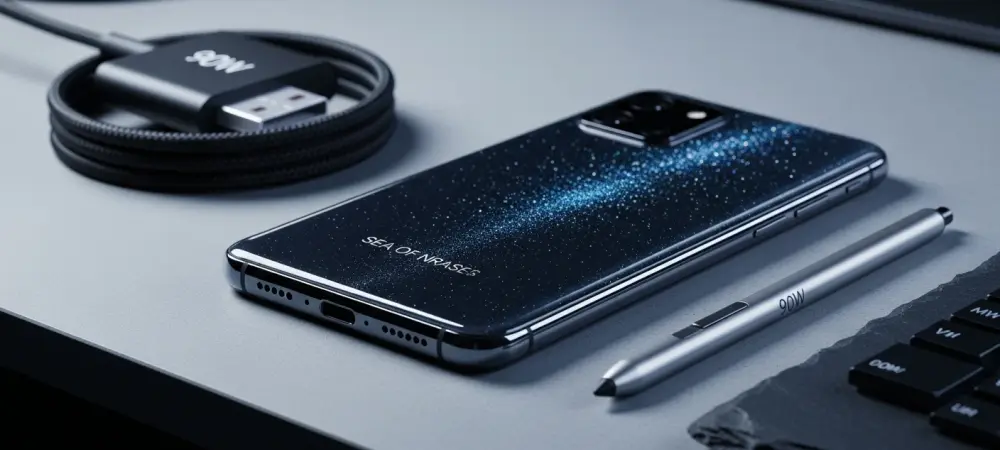
The modern smartphone industry has reached a threshold where incremental updates no longer suffice to capture the fleeting attention of a saturated global market. With the introduction of the Vivo S60, a paradigm shift occurs in the mid-to-high-tier segment, moving away from mere aesthetic refinement toward a philosophy of extreme utility and hardware resilience. This device does not simply iterate on its predecessor; it redefines the expectations for battery life and structural durability in a mobile ecosystem that has long prioritized slimness over substance. By integrating flagship-grade security and unprecedented power capacities, this handset attempts to bridge the gap between consumer fashion and industrial-grade reliability.
The Evolution of the Vivo S-Series Ecosystem
Initially recognized for its focus on portrait photography and sleek profiles, the S-series has undergone a profound transformation to meet the demands of a more mobile-centric society. The evolution represents a pivot toward a holistic user experience where the internal components are as sophisticated as the external finish. This shift is evident in how the technology integrates advanced power management and biometric systems that were previously exclusive to the most expensive flagship models. The context of this emergence is a market where users increasingly demand devices that can withstand the rigors of travel and intensive media consumption without constant tethering to a wall outlet.
This technological maturation reflects a broader trend in the industry where the “mid-range” label is becoming obsolete. Instead of cutting corners to meet a price point, the focus has shifted toward specific “super-features” that provide a tangible advantage over competitors. The S60 stands as the pinnacle of this strategy, positioning itself as a specialized tool for those who value endurance and security above all else. Its relevance in the current landscape is defined by its ability to offer a professional-grade experience within a form factor that remains accessible to a wider demographic of tech enthusiasts.
Technical Specifications and Hardware Innovations
Advanced Power Management and Battery Longevity
At the heart of the hardware configuration lies a massive 7,200mAh battery, a capacity that dwarfs most contemporary rivals. This is not merely a larger cell but a complete rethinking of how energy is stored and distributed through the “Global Direct Drive Power Supply 2.0” system. This technology functions by intelligently bypassing traditional charging circuits when the device is under heavy load, reducing heat generation and preserving the chemical integrity of the battery over thousands of cycles. Such an innovation is critical because high-capacity batteries often suffer from thermal throttling, a hurdle this system effectively clears.
The significance of this power architecture extends beyond simple runtimes. It allows the device to maintain peak performance during demanding tasks, such as high-definition video rendering or prolonged gaming sessions, without the erratic battery drain typical of smaller units. By ensuring a stable voltage flow, the system enhances the lifespan of other internal components, making the device a long-term investment rather than a disposable gadget. This implementation proves that sheer capacity must be matched by sophisticated regulation to be truly effective in a modern mobile environment.
Biometric Security and Haptic Feedback Systems
Security is handled by a 3D ultrasonic fingerprint scanner, a choice that distinguishes the hardware from the standard optical sensors found in most competing devices. Unlike optical versions that rely on a 2D image of the finger, the ultrasonic system maps the ridges and pores of the skin in three dimensions using sound waves. This technical leap allows for near-instantaneous recognition in just 0.1 seconds, even if the user’s hands are wet or oily. It represents a significant upgrade in both speed and accuracy, providing a layer of hardware-level security that is much harder to deceive.
Complementing this secure interface is the X-linear vibration motor, which provides a sophisticated haptic feedback loop. Instead of the muddy, imprecise buzzing of cheaper motors, this component offers sharp, nuanced clicks that mimic the feel of physical buttons. Whether it is the subtle “thud” of a shutter button or the rhythmic pulses during a notification, the haptics create a more tactile and intuitive interaction with the software. This focus on sensory detail demonstrates a commitment to a premium user experience that goes beyond the specifications listed on a box.
Emerging Trends in Mobile Hardware Design
The aesthetic trajectory of high-end mobile devices has moved toward a “unibody cold-carved glass” construction, a manufacturing process that emphasizes structural continuity. This design philosophy abandons the fragmented assembly of the past in favor of a singular, sculpted piece of glass that wraps around the chassis. Not only does this provide a more luxurious hand-feel, but it also aids in thermal dissipation by creating a larger surface area for heat to escape. This trend reflects a shift in consumer behavior where the device is seen as both a fashion statement and a high-performance tool.
Visual themes have also evolved to incorporate more complex, celestial-inspired textures. The “Sea of Stars” finish, for instance, utilizes microscopic decorative elements to create a shimmering effect that changes depending on the light. This move toward intricate, textured glass is a response to a market that has grown weary of generic, glossy plastics. By blending nature-inspired palettes with industrial precision, the design language seeks to evoke an emotional connection with the user while maintaining the functional benefits of modern materials.
Real-World Applications and Environmental Resilience
Durability is no longer a niche requirement for ruggedized phones but a core expectation for any versatile mobile device. The IP68 and IP69 ratings of the S60 allow it to be deployed in environments that would destroy a standard smartphone, from dusty construction sites to high-pressure cleaning facilities. The IP69 certification is particularly rare, indicating that the device can survive high-temperature water jets. This level of protection makes it an ideal candidate for outdoor professionals, field researchers, and adventurers who require their primary communication tool to be as resilient as their specialized equipment.
Beyond physical toughness, the inclusion of an IR Blaster and the “Micro Electric Wizard” system provides unique utility in smart home and professional settings. The IR Blaster allows the phone to serve as a universal interface for legacy appliances, streamlining the management of diverse hardware environments. Meanwhile, the data preservation capabilities of the power wizard ensure that critical work is not lost when the battery finally depletes. These features transform the device into a central hub for both personal productivity and environmental control, proving its worth in a variety of practical, real-world scenarios.
Technical Hurdles and Market Obstacles
Despite the impressive capacity, managing the physical weight and volume of a 7,200mAh battery remains a significant technical challenge. Large batteries often result in a bulky profile that can alienate users who prefer ergonomic, lightweight designs. Engineers must balance the desire for endless power with the necessity of a comfortable grip, a trade-off that requires constant innovation in materials science. Furthermore, while the 90W fast-charging protocol is efficient, charging such a massive cell still takes longer than traditional 4,500mAh units, creating a potential bottleneck for users in a constant hurry.
Market adoption also faces hurdles in the form of regulatory standards and consumer perceptions regarding battery safety. High-density energy storage requires rigorous testing to ensure stability under extreme conditions, which can delay product launches or increase manufacturing costs. To mitigate these limitations, ongoing development focuses on refining charging algorithms and exploring “super-capacity” chemistries that offer higher energy density without the added weight. Overcoming these obstacles is essential for the technology to move from a specialized feature to an industry-wide standard.
The Future Trajectory of High-Capacity Smart Devices
The trajectory of mobile technology is clearly pointing toward a future where “battery anxiety” is a relic of the past. Future developments will likely involve the transition from liquid electrolytes to solid-state or silicon-carbon anode chemistries, which promise even greater capacities in smaller footprints. These breakthroughs will enable devices to power more demanding artificial intelligence and augmented reality applications without needing a recharge for several days. The long-term impact on society will be a more seamless integration of digital tools into our daily lives, as the hardware becomes more reliable and less dependent on the power grid.
As these “super-capacity” systems become more common, we can expect a shift in how mobile software is designed. Developers will no longer need to aggressively throttle background processes to save energy, leading to more responsive and capable applications. This evolution will likely lead to smartphones becoming the primary computing platform for an even broader range of professional tasks, further displacing traditional laptops. The S60 is a precursor to this era, setting a high bar for what a truly “independent” mobile device should be able to achieve in terms of endurance and performance.
Assessment of the Vivo S60’s Market Impact
The evaluation of the Vivo S60 revealed a device that successfully prioritized long-term utility over fleeting trends. Its massive battery and industrial-grade durability ratings provided a clear answer to the most common complaints of modern smartphone users. By integrating premium features like 3D ultrasonic security and sophisticated haptics into a mid-to-high-tier device, the manufacturer effectively disrupted the traditional hierarchy of mobile hardware. This strategy ensured that the technology remained competitive in a crowded market by offering a unique value proposition centered on endurance and reliability.
The overall impact on the industry was observed through an increased emphasis on hardware resilience among competitors. The transition toward high-capacity cells and advanced power management protocols became a blueprint for future devices seeking to balance performance with longevity. As a result, the market moved toward a more mature phase where technical innovation was measured by how well it served the practical needs of the user. The Vivo S60 stood as a significant milestone that proved a smartphone could be both a stylish accessory and a rugged, high-performance tool for the demanding modern world.