

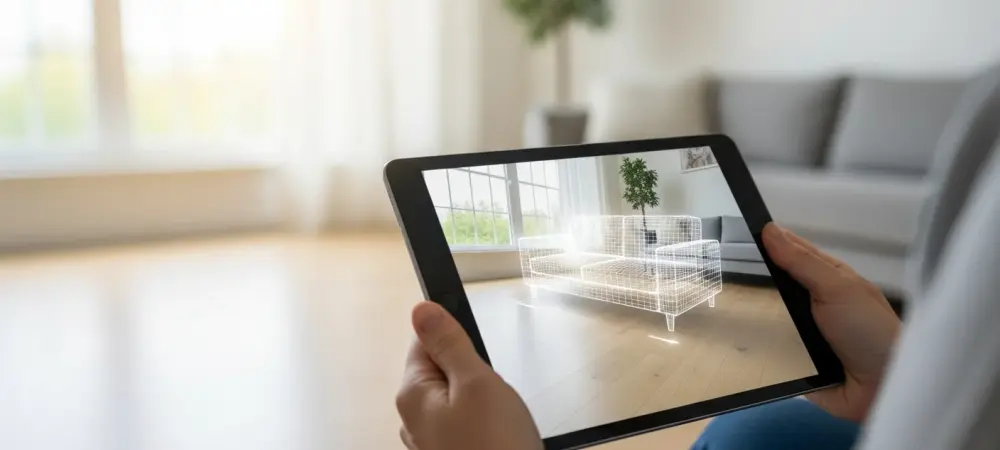
The once-complex process of visualizing a new home interior has been fundamentally reshaped by digital tools that place the power of a design studio directly into the hands of consumers and professionals alike. Virtual interior design technology represents a significant advancement in the home planning and decor sector, moving beyond simple mood boards to offer immersive, interactive experiences. This review explores the evolution of these digital tools, their key features through an analysis of the top applications of 2026, and the impact they have had on both consumers and professionals. The purpose of this review is to provide a thorough understanding of the technology’s current capabilities and its potential for future development, empowering users to design their spaces more effectively.
The Evolution of Digital Home Planning
The journey of digital home planning began with rudimentary desktop software that required technical skill and patience, largely confining its use to professional architects and designers. Over the years, this technology has undergone a profound transformation, migrating to sophisticated and intuitive mobile applications. This shift has been powered by exponential increases in processing power, cloud computing, and advanced sensor technology integrated into everyday devices. Consequently, what was once a niche professional tool has become a mainstream consumer utility.
At the core of this revolution are three key technological components: 3D visualization, augmented reality (AR), and virtual reality (VR). 3D visualization allows users to build and view a digital replica of their space, experimenting with layouts and finishes in a risk-free environment. Augmented reality overlays digital information onto the real world, enabling users to place virtual furniture in their actual rooms through a phone’s camera. Virtual reality takes this a step further, offering a fully immersive walkthrough of a designed space. Together, these technologies have democratized the design process, making sophisticated planning accessible to a broader audience.
A Showcase of Leading Design Applications
Homestyler for User-Friendly and Realistic 3D Rendering
Homestyler has established itself as a leader in creating lifelike 3D room designs with minimal effort. The application’s primary function allows users to upload a photograph of their space, digitally erase existing furniture, and then populate the room with new items from an extensive catalog of real-world products. This streamlined process removes the guesswork from redecorating, providing a clear visual representation of proposed changes.
The platform’s true strength, however, lies in its advanced rendering capabilities. Homestyler incorporates sophisticated lighting simulations that realistically depict how natural and artificial light will interact with different materials and colors. This attention to detail results in high-quality, photorealistic images that offer an incredibly accurate preview of potential decor choices, making it an invaluable tool for users focused on aesthetic visualization.
Houzz: The Integrated Hub for Inspiration and Implementation
Houzz functions less like a single tool and more like a comprehensive ecosystem for home improvement. It masterfully blends a massive, searchable library of inspirational images with practical design tools and an e-commerce marketplace, creating a seamless journey from idea to execution. Users can browse millions of high-resolution photos, save ideas, and then transition directly to planning and purchasing within the same platform.
Its standout feature, the AR-powered ‘View in My Room,’ addresses a critical pain point in online shopping for home goods. This tool allows users to virtually place true-to-scale 3D models of furniture and decor items in their own homes using their device’s camera. By bridging the gap between digital browsing and real-world application, Houzz provides a powerful sense of confidence before a purchase is made.
Planner 5D for Detailed 2D and 3D Floor Plan Creation
Aimed at users undertaking more comprehensive projects, Planner 5D offers a robust suite of tools for creating detailed 2D and 3D floor plans from the ground up. The platform provides granular control over customizing structural elements like walls, doors, and windows, as well as an extensive library of furniture and finishes. This makes it an ideal choice for new builds, major renovations, or anyone needing to visualize a space from scratch.
Moreover, Planner 5D enhances the design verification process with an integrated VR mode. This feature allows users to take an immersive virtual walk-through of their completed floor plan, offering a true-to-life perspective on scale, flow, and spatial relationships. This capability enables a thorough evaluation of the design before any physical work begins, preventing costly mistakes and ensuring the final result aligns with the user’s vision.
MagicPlan for Precision Measurement and Renovation Planning
MagicPlan carves out a unique niche by specializing in the creation of highly accurate, measurement-ready floor plans. Leveraging a device’s camera and AR technology, the app can scan a room and generate a precise layout with dimensions in seconds, eliminating the need for manual measurement with a tape measure. This rapid and accurate data capture is its core differentiator.
This precision makes MagicPlan an indispensable tool for renovations and any project where exact dimensions are critical. The generated plans can be used for accurate material estimation, furniture placement planning, and effective communication with contractors and other professionals. The ability to export plans in various formats further streamlines the workflow from initial concept to project execution.
Room Planner by IKEA for a Seamless Design-to-Purchase Experience
This application is tailored specifically for the IKEA ecosystem, designed to create a frictionless path from inspiration to ownership. It enables users to design entire rooms and layouts using products exclusively from the extensive IKEA catalog. This focused approach ensures that every item placed in the virtual design is available for purchase, eliminating the disappointment of falling in love with a design that is impractical to source.
The key advantage of the Room Planner is its seamless integration of design, pricing, and purchasing. As users add items to their virtual room, the application generates a comprehensive shopping list with real-time pricing. Once the design is finalized, the entire list can be added to a shopping cart for online purchase or in-store pickup, making it a highly practical and actionable tool for those committed to furnishing their space with IKEA products.
Current Trends Shaping Digital Design
The virtual interior design landscape is continuously evolving, driven by several key trends. A significant development is the shift toward powerful, mobile-first platforms that offer robust functionality on smartphones and tablets, untethering the design process from the desktop. This makes design more spontaneous and accessible, allowing users to plan on the go.
Furthermore, the integration of artificial intelligence is becoming increasingly sophisticated. AI algorithms now offer personalized style and layout suggestions based on user preferences, image analysis, and popular design principles. Concurrently, the use of AR to create more realistic and interactive shopping experiences directly within design apps is on the rise, blurring the lines between visualization and e-commerce.
Real-World Applications for Every User
The practical utility of virtual interior design technology spans a wide range of users and scenarios. For homeowners, these apps are perfect for planning minor room refreshes, such as testing a new paint color or seeing how a new sofa would fit in the living room. This ability to visualize changes before making a commitment reduces the risk of expensive design mistakes and buyer’s remorse.
Renters also benefit significantly, using these tools to plan furniture layouts for new apartments before moving in, ensuring their existing belongings will fit and function within the new space. For professional designers, these applications streamline their workflow by facilitating rapid prototyping, creating compelling client presentations, and enabling clearer communication of their design intent.
Navigating the Challenges and Limitations
Despite their advancements, virtual interior design technologies still face notable hurdles. Technical challenges persist, such as the varying accuracy of AR measurements across different devices, which can impact the reliability of plans for precision-dependent projects. Additionally, the learning curve for more complex software can be steep for casual users, creating a barrier to entry.
The freemium business model, common in this sector, also presents limitations, as many of the most advanced features are often locked behind a paywall. This can restrict the functionality for users who are not prepared to commit to a subscription. Ongoing efforts in the industry are focused on improving the realism of renderings and simplifying user interfaces to make these powerful tools even more intuitive and accessible.
The Future of Home Design
Looking ahead, the trajectory of virtual interior design technology points toward even greater integration and intelligence. Potential breakthroughs include the widespread availability of photorealistic, real-time rendering on mobile devices, which would eliminate wait times and provide instant visual feedback. The evolution of AI could lead to generative design tools capable of creating complete, personalized room concepts based on a few simple user inputs.
Further integration with adjacent technologies is also expected. This includes connections with smart home ecosystems, allowing users to plan the placement and function of smart devices within their virtual designs. There is also growing potential for linkage with sustainable material sourcing databases, enabling users to make more environmentally conscious design choices directly within the planning phase.
Conclusion: A New Era of Empowered Design
The evolution of virtual interior design applications has successfully transformed home planning from a specialized, often intimidating task into an accessible, creative, and efficient process for everyone. These powerful digital tools have effectively bridged the gap between imagination and reality, offering users the clarity and confidence needed to make informed decisions about their living spaces.
By providing realistic previews, intelligent layout suggestions, and seamless integration with e-commerce, these platforms have demonstrably reduced the risk of costly mistakes. They have empowered homeowners, renters, and designers alike to experiment freely and execute their visions with greater precision. Ultimately, the adoption of this technology has saved users significant time and money, marking a fundamental shift toward a smarter, more effective way to design.