

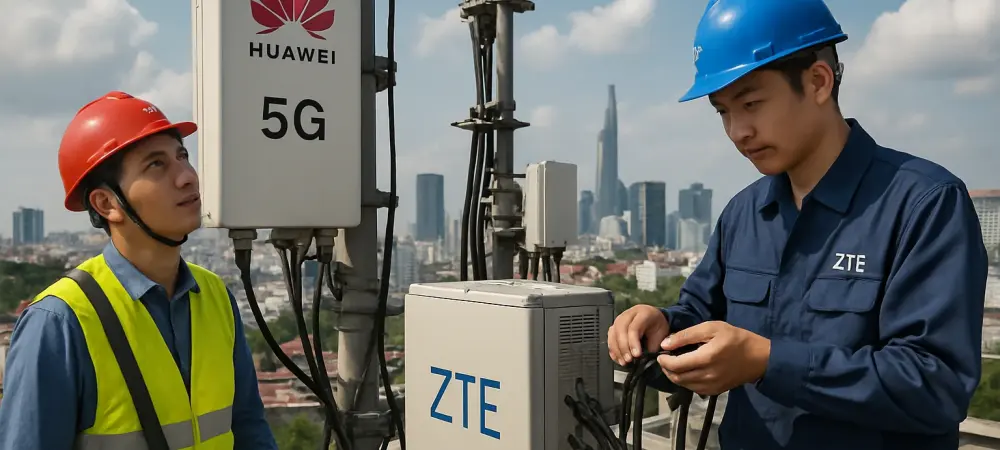
Imagine a nation at the crossroads of technological innovation and geopolitical chess, where the decision to build a cutting-edge 5G network could redefine its global standing. Vietnam finds itself in this exact position, making waves in the telecommunications market by partnering with Chinese tech giants Huawei and ZTE for its 5G infrastructure rollout. This strategic pivot, driven by economic imperatives and geopolitical recalibrations, signals a transformative moment in Vietnam’s digital journey. The move not only challenges Western dominance in the sector but also raises critical questions about security and market dynamics. This analysis dives into the forces shaping Vietnam’s 5G market, explores current trends and data, and projects the future implications of this bold decision for stakeholders across the telecom landscape.
Market Context: Vietnam’s Telecom Ambitions in a Polarized World
Vietnam’s telecommunications market has long been a battleground for influence between Western and Eastern tech powers, reflecting broader global tensions. Historically, the country leaned toward European and American providers like Ericsson and Nokia for critical infrastructure, aligning with Western cautions about security risks tied to Chinese firms. However, economic pressures and shifting diplomatic ties have prompted a rethink, positioning Vietnam as a key player in the evolving 5G market. With a rapidly growing digital economy and a push for nationwide connectivity, the stakes for a swift and affordable 5G rollout are higher than ever.
This market shift is not merely about technology adoption but about Vietnam asserting strategic autonomy in a polarized world. The decision to award contracts worth $23 million to Huawei for 5G equipment and over $20 million to ZTE for antennas highlights a pragmatic approach to meeting ambitious connectivity goals. As Vietnam balances cost with capability, this analysis seeks to unpack how these partnerships reshape market dynamics, influence competitive landscapes, and challenge conventional security narratives in the telecom sector.
Deep Dive: Trends, Data, and Projections in Vietnam’s 5G Market
Cost-Driven Strategy: The Economic Pull of Chinese Tech
At the heart of Vietnam’s 5G market transformation lies a compelling economic narrative. The affordability of Huawei and ZTE’s offerings provides a significant edge over Western alternatives, a crucial factor for a developing economy aiming to bridge digital divides swiftly. Industry insights reveal that Chinese tech solutions are often priced competitively lower, enabling faster deployment across urban and rural regions. This cost advantage aligns with Vietnam’s broader economic ties to China, particularly in supply chains supporting global manufacturers like Apple and Samsung, which rely on cross-border components.
However, this economic bet is not without trade-offs. While cheaper equipment accelerates market penetration, it raises concerns about long-term reliability and potential cybersecurity gaps. Market analysts note that Vietnam’s telecom sector must invest heavily in safeguards to mitigate risks associated with integrating Chinese technology. If managed effectively, this cost-driven strategy could position Vietnam as a regional leader in 5G accessibility, though it demands careful navigation of quality and security challenges.
Competitive Landscape: Balancing Western and Eastern Players
The competitive dynamics of Vietnam’s 5G market are shifting with the inclusion of Huawei and ZTE alongside established Western players like Ericsson and Nokia. This hybrid approach creates a unique market structure where no single provider dominates, fostering a blend of innovation and pricing competition. Data indicates that Western firms still hold a significant share of core infrastructure contracts, suggesting Vietnam’s intent to diversify rather than pivot entirely toward Chinese tech. This balance could spur innovation as vendors vie to offer cutting-edge solutions tailored to local needs.
Yet, this multi-vendor model introduces complexities in integration and compatibility. Market projections suggest that interoperability issues may slow deployment timelines by up to 18 months if not addressed through standardized protocols. Additionally, Western unease over security risks tied to Chinese equipment could influence market access for Vietnamese telecom firms in international partnerships. The competitive landscape thus hinges on Vietnam’s ability to harmonize disparate technologies while maintaining trust across global markets.
Future Growth: Geopolitical Impacts and Market Expansion
Looking ahead, Vietnam’s 5G market is poised for robust growth, with projections estimating a doubling of connected devices by 2027. The integration of Huawei and ZTE could accelerate this expansion, particularly in underserved rural areas, where low-cost infrastructure is a game-changer. However, geopolitical tensions remain a wildcard, with potential Western pushback possibly leading to stricter international regulations on tech partnerships. Such developments could constrain Vietnam’s market access or force costly adjustments to comply with evolving standards.
Emerging trends also point to increased regional collaboration, as Southeast Asian nations like Thailand explore similar hybrid 5G models. Vietnam’s success in leveraging Chinese tech while retaining Western involvement may set a precedent, influencing market strategies across the region. Analysts predict that sustained investment in local tech expertise—evidenced by recent technology transfer agreements with firms like Viettel—will be critical to reducing dependency and ensuring market resilience. The trajectory of Vietnam’s 5G sector thus depends on balancing rapid growth with strategic foresight amid global scrutiny.
Reflecting on the Path Forward: Strategic Implications and Actions
Looking back, Vietnam’s strategic embrace of Huawei and ZTE for its 5G rollout marked a pivotal chapter in its telecom market history, driven by a blend of economic pragmatism and geopolitical recalibration. The analysis revealed how cost advantages and competitive dynamics shaped this shift, while highlighting the lingering challenges of security and integration. These findings underscored the delicate balance Vietnam struck between affordability and global trust, offering a nuanced perspective on mid-tier nations navigating tech rivalries.
The implications of this market shift urged stakeholders to adopt adaptive strategies. Telecom firms were encouraged to prioritize interoperability solutions, investing in frameworks that seamlessly blend diverse technologies. Policymakers needed to champion robust cybersecurity measures to address Western concerns, ensuring Vietnam’s digital infrastructure remained a trusted asset. For businesses eyeing the Vietnamese market, staying agile amid potential regulatory changes became paramount, as did fostering partnerships that aligned with local priorities. Ultimately, Vietnam’s 5G journey offered a blueprint for balancing innovation with caution, paving the way for other markets to learn from its calculated risks and bold vision.