

Redefining the Matchday Experience Through High-Speed Digital Infrastructure
Professional sports venues have rapidly transitioned from mere physical structures into intricate digital hubs where the quality of the wireless connection is now as vital as the action on the pitch itself. Vantage Towers has initiated a transformative partnership with Liga Portugal to overhaul the digital backbone of football facilities nationwide. This project encompasses not only primary stadiums but also extends to training grounds and youth academies, reflecting a broader market shift toward total connectivity. As attendees demand more immersive environments, this alliance aims to treat high-speed data as a fundamental utility, ensuring every moment of the game is shared globally without delay. This initiative signals a new era where technology and physical entertainment are permanently intertwined.
The Evolution of the Stadium: From Concrete Shell to Connected Arena
Historically, the success of a stadium was measured by seating capacity and physical sightlines for the spectators. However, the surge in smartphone usage and social media engagement has forced a rethink of venue design and operational priorities. In previous years, traditional mobile networks often failed during peak moments, leaving fans frustrated by localized dead zones and high latency. This historical congestion represents a significant business risk for modern clubs seeking to maintain engagement. Understanding this shift is essential, as it clarifies why infrastructure providers are moving from city peripheries into the center of sports cathedrals to manage the massive data loads of the digital age.
Strategic Pillars: Building Next-Generation Connectivity
Efficiency: The Shared Infrastructure Model
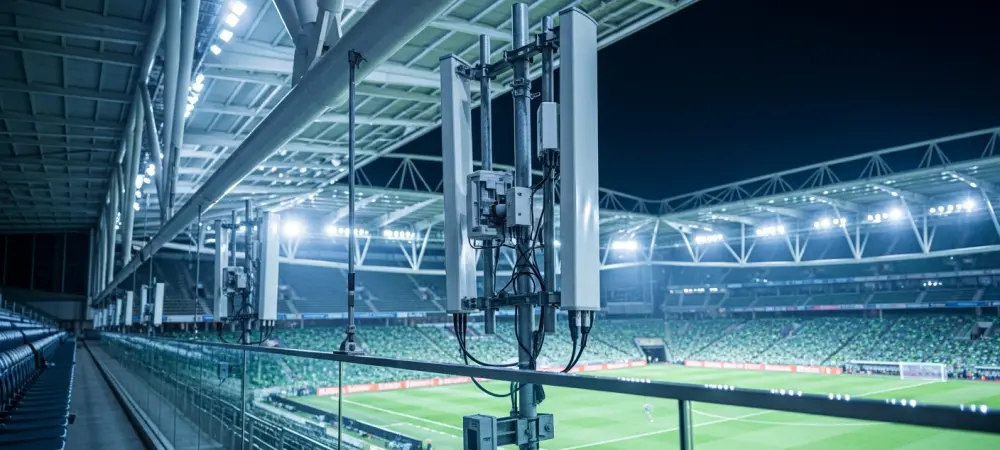
At the core of the Vantage Towers and Liga Portugal collaboration is the neutral host model, which represents a major departure from legacy installations. Rather than each carrier installing separate hardware, multiple operators now share a single physical platform to provide coverage. This approach significantly reduces the aesthetic clutter of antennas and cables, which is particularly beneficial for venues with architectural significance. By centralizing the deployment of 5G and high-capacity backhaul links, the partnership achieves a lower total cost of ownership while maximizing performance during high-traffic events.
Consumer Demand: Meeting Sky-High Expectations
Modern spectators view high-speed mobile access as an essential part of the ticket price rather than an optional perk. This trend is driven by the integration of digital ticketing systems, real-time betting platforms, and the constant desire for high-definition video sharing. When a goal is scored, thousands of users simultaneously attempt to upload content, creating a massive spike in data demand that standard networks cannot handle. By providing robust infrastructure, clubs can support advanced features like augmented reality and live statistics, keeping the in-person experience competitive with the convenience of home streaming.
Technical Hurdles: Overcoming Architecture and Safety Constraints
Implementing advanced wireless solutions in older venues requires significant engineering to overcome the signal-blocking effects of heavy concrete and steel. These upgrades serve an operational purpose beyond fan entertainment, acting as a critical tool for venue staff and emergency services. Enhanced connectivity allows for sophisticated crowd management techniques and real-time security monitoring across the entire facility. By treating digital access as a primary facility on par with lighting and seating, organizers have acknowledged that a smart stadium is inherently a more secure and efficient environment.
Future Trends: Intelligent Digital Ecosystems
Looking forward, the integration of the Internet of Things will turn stadiums into intelligent entities capable of monitoring everything from turf moisture to bathroom occupancy in real-time. Market analysts anticipate that the next phase of evolution will involve Artificial Intelligence providing personalized fan journeys, such as tailored food delivery and location-based merchandise offers. As 5G becomes the standard baseline for all professional venues, the research focus will shift toward even higher frequencies and the total automation of facility management. This trend points toward a future where the physical venue and its digital twin operate in perfect synchronization.
Strategic Insights: Navigating Digital Transformation
For organizations aiming to replicate this digital success, a multi-year strategy focused on scalability is required. Decisions made today must account for the exponential growth of data consumption expected over the next several seasons. Adopting a shared-resource mindset can help clubs accelerate their deployment timelines while keeping capital expenditures manageable. Furthermore, stakeholders should view this connectivity as a platform for new revenue streams, including digital loyalty programs and targeted advertising. Those who treat infrastructure as a tool for innovation rather than a static cost will likely lead the market in fan engagement and operational efficiency.
Long-Term Outlook: Strengthening the Fan-Sport Bond
The partnership between Vantage Towers and Liga Portugal established a new benchmark for how sports organizations approached digital modernization. This collaboration demonstrated that robust, shared infrastructure was the only sustainable path for supporting the data-heavy habits of modern audiences. Connectivity ceased being a background concern and became a primary driver of fan satisfaction and commercial viability. By investing in these invisible networks, the stakeholders ensured that the sport remained vibrant and accessible to a global audience, proving that the future of the game existed both on the grass and within the airwaves. This digital foundation paved the way for unprecedented levels of interactivity and safety.