

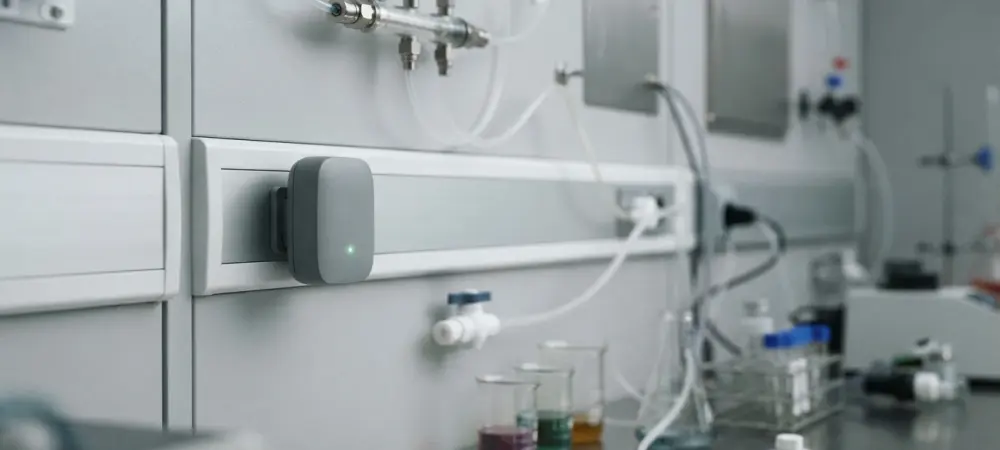
The transition toward cloud-native environmental monitoring has fundamentally redefined how life sciences organizations balance the necessity of data integrity with the practicalities of modern IT infrastructure. For decades, the industry relied on cumbersome local application servers that demanded constant maintenance, manual updates, and significant on-site resources. The Vaisala viewLinc Cloud Suite emerged as a direct response to these inefficiencies, signaling a move toward Software-as-a-Service (SaaS) models that prioritize accessibility without sacrificing the rigorous precision required for sensitive measurements. This platform does not merely store data; it provides a managed ecosystem where environmental variables like temperature, humidity, and CO2 levels are tracked with medical-grade accuracy.
Evolution of Environmental Monitoring: From Local Servers to SaaS
Environmental monitoring has historically been tethered to physical hardware located within the facility it serves. This architecture created significant barriers for expanding organizations, as every new site required a redundant set of servers and dedicated IT support to ensure uptime and data security. By moving these core functions to a cloud environment, the technological landscape has shifted from reactive hardware management to proactive data oversight. This evolution is particularly relevant in the current climate of decentralized clinical trials and global logistics, where stakeholders require immediate access to environmental data regardless of their physical location. The core principle behind this shift is the elimination of the local application server. Instead of a lab manager worrying about server cooling or database backups, those responsibilities are offloaded to the service provider. This transition allows for a more agile deployment strategy, enabling facilities to scale their monitoring points up or down based on current research needs. Moreover, the integration of real-time alerts through mobile and web interfaces ensures that the response to a refrigerator failure or a climate shift happens in seconds rather than hours, potentially saving millions of dollars in compromised biological samples or pharmaceutical stock.
Technical Architecture and Tiered Software Capabilities
The architecture of the suite is built upon a tiered approach, recognizing that the needs of a strictly regulated pharmaceutical plant differ significantly from those of a public archive or museum. This structural flexibility ensures that users are not forced into a one-size-fits-all solution that might be either too complex or insufficiently robust for their specific operational context.
The GxP Edition: Specialized Compliance for Life Sciences
The GxP Edition is specifically designed to navigate the labyrinthine world of “Good Practice” regulations, providing the high-fidelity audit trails and automated documentation necessary for FDA and EMA compliance. Unlike standard software, this edition incorporates continuous validation protocols, ensuring that every data point is recorded in a manner that is tamper-proof and fully traceable. This matter because, in the life sciences, data that cannot be verified is as good as data that does not exist. The system provides a unified narrative of a product’s environmental history, which is vital during regulatory audits or quality control reviews.
Furthermore, this edition provides specialized support through automated reporting and system health checks. It addresses the unique performance requirements of biotechnology and pharmaceutical manufacturing by maintaining a permanent, “compliance-ready” state. The significance of this implementation lies in its ability to protect the intellectual property and regulatory standing of research entities, from fledgling startups to established global giants. By providing a secure, validated environment in the cloud, Vaisala has successfully lowered the entry barrier for small labs that previously could not afford the infrastructure required for high-level regulatory compliance.
The Professional Edition: Versatile Monitoring for Diverse Industries
In contrast, the Professional Edition caters to sectors where precision is a requirement but strict GxP regulatory oversight is not the primary driver. This version finds its strength in its versatility, serving healthcare facilities, museums, and even power infrastructure projects. While it maintains the same high-precision sensor integration as its counterpart, it focuses more on operational efficiency and ease of use. It allows facility managers to monitor diverse environments through a single pane of glass, streamlining the oversight of complex building systems.
The performance of the Professional Edition is optimized for real-time visibility across multi-site operations. For instance, a museum with artifacts spread across several galleries and storage warehouses can use this system to ensure that delicate materials are preserved within narrow humidity ranges. The real-world usage of this edition demonstrates that the need for reliable environmental data is universal. By stripping away the more intensive validation requirements of the GxP version, the Professional Edition provides a streamlined, highly functional tool for maintaining environmental stability in any professional setting.
The Shift Toward Digital Transformation and Data-as-a-Service
Modern industry is moving rapidly toward a Data-as-a-Service (DaaS) model, where the value lies not in the ownership of the tool but in the insights derived from the information it collects. The viewLinc Cloud Suite represents this shift by providing an integrated service ecosystem known as Vaisala Care. This package includes technical support, remote training, and system health checks, ensuring that the software remains a functional asset rather than a technical burden. The trend toward digital transformation means that laboratories are no longer isolated silos; they are now interconnected nodes in a global data network.
This transformation is influenced by the increasing demand for transparency and the need for data that can be accessed and analyzed remotely. As more organizations adopt hybrid work models, the ability to oversee a laboratory’s environmental status from a different continent has become a necessity rather than a luxury. This shift influences the technology’s trajectory toward greater integration with other cloud-based laboratory information management systems (LIMS), creating a cohesive digital thread throughout the research and production lifecycle.
Real-World Applications Across Global Sectors
Deployment of the viewLinc Cloud Suite has reached across various global sectors, proving its efficacy in both high-stakes research and commercial logistics. In the pharmaceutical sector, it is used to monitor cold chain storage, ensuring that temperature-sensitive vaccines remain viable from the point of manufacture to the point of administration. Notable implementations include large-scale warehouses where thousands of sensors must report back to a single, central database without latency. The system’s ability to handle such high-density data streams makes it a preferred choice for companies managing global supply chains.
Beyond pharmaceuticals, the technology is finding unique use cases in the preservation of cultural heritage. High-end archives use these sensors to monitor the micro-climates surrounding rare manuscripts and historical artifacts. In these scenarios, the cloud suite provides the necessary alerts to prevent mold growth or material degradation. This diversity of application highlights the platform’s adaptability; whether it is a medical cleanroom or a dusty archive, the underlying need for reliable, remote environmental oversight remains the same across the globe.
Navigating Implementation Hurdles and Regulatory Constraints
Despite its advantages, the technology faces certain hurdles, particularly regarding data sovereignty and regional regulations. In some jurisdictions, the storage of sensitive clinical data on cloud servers remains a point of contention, requiring Vaisala to navigate complex legal frameworks. Moreover, the reliance on a stable internet connection for real-time cloud reporting introduces a point of failure that must be mitigated by robust local data buffering within the sensors themselves. These technical hurdles require ongoing innovation to ensure that data is never lost, even during prolonged network outages.
Market adoption is also influenced by the skepticism of traditional IT departments that are accustomed to having physical control over their servers. To counter this, development efforts have focused on enhancing encryption and security protocols to meet or exceed the standards of on-premise systems. Addressing these constraints involves a continuous cycle of updates and security audits to prove that the cloud is not just a convenient option, but a safer one. As organizations move toward 2026 and 2027, the focus will likely remain on refining these security measures to satisfy even the most cautious regulatory bodies.
Future Outlook: Scalability and the Global Monitoring Landscape
The future of environmental monitoring is clearly defined by its scalability and the integration of more intelligent analytics. From 2026 to 2028, the industry expects to see the viewLinc Cloud Suite incorporate more advanced predictive models that can identify potential equipment failures before they occur. For example, by analyzing subtle patterns in temperature fluctuations, the system could alert a technician that a compressor is starting to fail, allowing for maintenance before the internal environment is compromised. This proactive approach will redefine the standard for risk mitigation in the life sciences.
The long-term impact of this technology will likely be a more democratized access to high-level monitoring tools. As the global monitoring landscape becomes more interconnected, the cost of high-quality data oversight will continue to decrease, allowing even small research groups to operate at the same level of precision as large corporations. This scalability ensures that as a startup grows, its monitoring system can grow with it, providing a consistent and unbroken record of environmental data from the earliest stages of research to full-scale commercial production.
Conclusion: Assessing the Impact of the viewLinc Cloud Suite
The Vaisala viewLinc Cloud Suite effectively bridged the gap between complex regulatory demands and the modern need for cloud-based flexibility. By offering tiered editions, the platform addressed the specific needs of both the life sciences and broader commercial industries, ensuring that data integrity was never compromised for the sake of convenience. The introduction of the managed service ecosystem shifted the burden of technical maintenance away from the user, allowing organizations to focus on their primary operational goals. This transition validated the industry’s move toward a more agile, data-driven approach to environmental safety. Organizations looking to modernize their infrastructure should have prioritized the migration of their legacy monitoring systems to this more robust cloud architecture. The shift demonstrated that maintaining on-site servers was increasingly becoming a liability rather than an asset. Future considerations involved the integration of these data streams into broader enterprise resource planning systems to create a more holistic view of operational health. Ultimately, the suite’s success proved that the cloud is the most viable path forward for maintaining the high standards of accuracy and transparency required in the modern global market.