

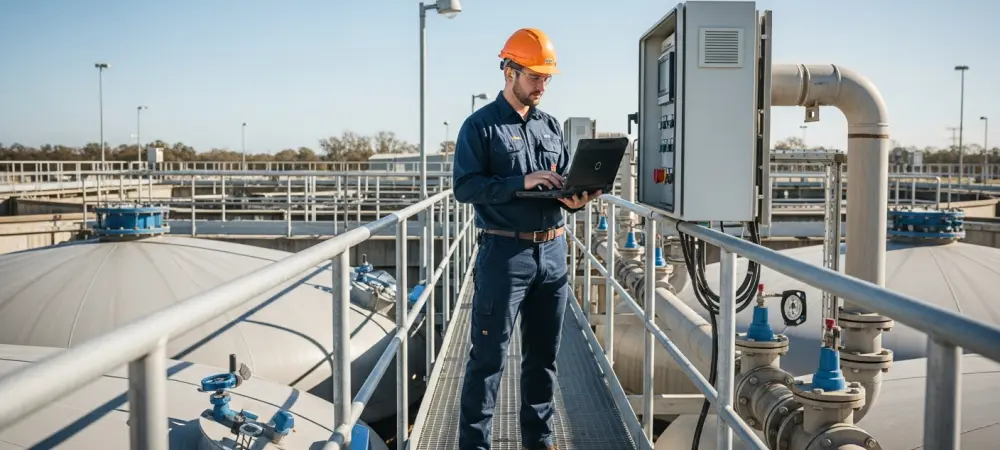
The silent flow of potable water into millions of American homes depends on an intricate web of digital sensors and automated valves that are increasingly coming under fire from foreign adversaries. While traditional infrastructure protection once focused on physical perimeter fencing and onsite security personnel, the modern battlefield has shifted toward the intangible realm of industrial control systems and supervisory control and data acquisition networks. Municipalities across the United States are discovering that their essential services are no longer isolated from the geopolitical tensions of the global stage, making every small-town water treatment plant a potential pawn in international conflict. This reality demands a fundamental reassessment of how critical utilities are managed, as the convenience of digital connectivity brings with it a set of vulnerabilities that can bypass physical barriers entirely. Protecting these systems requires more than just reactive software patching; it necessitates a comprehensive overhaul.
The New Landscape: Confronting Sophisticated Adversaries
The landscape of digital threats has evolved rapidly from disorganized individual actors to highly coordinated groups backed by well-funded foreign intelligence agencies and nation-states. In recent operations, units linked to adversarial governments have demonstrated a sophisticated ability to infiltrate small-scale utilities, often choosing targets with limited cybersecurity budgets to maximize the psychological impact on the public. These actors do not merely seek financial gain through ransomware; instead, they focus on establishing a persistent presence within the control systems to maintain the capability for future disruption. This shift forces local water authorities to acknowledge that they are now operating in a theater of global warfare where technical expertise is as vital as the chemical treatment of the water itself. Identifying these threats requires a level of intelligence gathering that was previously reserved for national defense agencies, yet local plant operators are now forced to sit on the front lines. When digital defenses fail and unauthorized access is gained to a treatment facility, the immediate response often involves transitioning to manual operations as a desperate fail-safe measure. This pivot to physical controls is intended to prevent hazardous chemical overflows or pressure surges that could physically damage the distribution network or contaminate the local supply. However, the reliance on manual overrides assumes that onsite staff can identify the breach before the automated systems are manipulated to a catastrophic degree. Many modern facilities have become so reliant on digital automation that the institutional knowledge required to operate the plant manually is beginning to erode, creating a dangerous gap in emergency readiness. Furthermore, if a cyberattack manages to corrupt the firmware of industrial controllers, the physical hardware might become permanently inoperable regardless of manual intervention efforts. This realization highlights the precarious nature of the current infrastructure.
Economic Realities: The Intersection of Connectivity and Cost
The economic pressures facing local governments make it nearly impossible to abandon the internet-connected systems that provide significant operational efficiencies and cost savings. Remote monitoring technologies allow utilities to manage multiple pump stations with a skeleton crew, significantly reducing the financial burden on taxpayers while maintaining high service standards. Returning to a completely disconnected, analog system would require a massive influx of capital to hire round-the-clock personnel and replace modern telemetry with manual reading stations. Consequently, city leaders find themselves trapped in a difficult paradox where they must utilize the very connectivity that exposes them to global risks to keep the water affordable and accessible. This financial reality means that total air-gapping is rarely a feasible strategy for most municipalities in the current economic climate, requiring instead a focus on hardening existing digital interfaces. The goal is no longer isolation but building a resilient architecture.
Integrating cybersecurity into the daily lifecycle of utility management requires a shift away from viewing digital defense as a one-off capital expenditure or a software update. Modern best practices emphasize a philosophy of perpetual readiness, where threat reviews and vulnerability assessments are performed with the same regularity as physical inspections of water mains and storage tanks. This approach involves the implementation of zero-trust architectures, where every device and user on the network must be continuously verified, rather than being granted broad access by default. By treating cybersecurity as an ongoing operational cost rather than a secondary concern, utilities can better anticipate the evolving tactics of digital attackers. This cultural transformation within municipal government is essential for ensuring that security protocols do not become stagnant or obsolete. Building this level of internal expertise requires a long-term commitment to workforce training and specialists.
National Security: Building Collective Defensive Networks
Since local municipalities lack the resources to combat global adversaries independently, the establishment of a collective defense network involving state and federal partners is critical. The Cybersecurity and Infrastructure Security Agency provides a vital link between intelligence communities and local utility operators, offering technical guidance and threat alerts that would be otherwise unattainable. Shared information platforms allow a breach discovered in one region to serve as a warning for others, creating a nationwide early-warning system that strengthens the entire country’s infrastructure. However, for this collaboration to be effective, there must be a consistent flow of federal funding specifically earmarked for the modernization of aging control systems in rural and underserved areas. Without this financial support, the gap between well-funded metropolitan utilities and smaller systems will continue to widen, leaving many communities vulnerable to sophisticated actors.
Effective solutions were implemented when local governments transitioned their focus toward modular system design and decentralized control protocols to limit the impact of potential breaches. Federal agencies recognized the urgency and shifted toward providing direct technical grants that allowed for the installation of hardened industrial controllers and advanced encryption standards across the country. These actions moved the industry toward a standard of proactive resilience, where the primary objective was the rapid isolation of compromised segments to maintain overall service integrity. Future considerations included the development of standardized cybersecurity audits for water utilities, ensuring that every facility met a minimum baseline of defensive capability regardless of its size. The emphasis was placed on creating a sustainable pipeline of cybersecurity talent dedicated to the protection of public works, bridging the gap between digital security and physical engineering.