

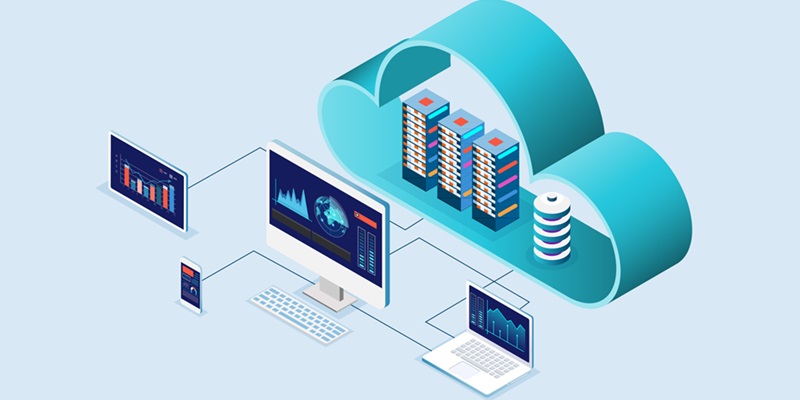
Cloud-native environments have revolutionized the way businesses operate, offering unparalleled scalability and flexibility. However, ensuring optimal performance and security in these complex environments requires a comprehensive strategy to improve infrastructure visibility. In this article, we will explore various strategies and tools that businesses can leverage to enhance infrastructure visibility in cloud-native environments.
The Importance of Improving Infrastructure Visibility in Cloud-Native Environments
Gaining visibility into a cloud-native infrastructure is crucial for businesses to effectively manage and optimize their resources. Without proper visibility, organizations risk encountering performance bottlenecks, security vulnerabilities, and operational inefficiencies. By improving infrastructure visibility, businesses can proactively address issues, maximize resource utilization, and deliver a seamless user experience.
Establishing a comprehensive monitoring strategy
The first step in improving infrastructure visibility in cloud-native environments is to establish a comprehensive monitoring strategy. Monitoring tools play a vital role in tracking the performance and health of various components within the infrastructure. Open-source tools like Prometheus and Grafana provide powerful monitoring capabilities, allowing businesses to collect and analyze real-time data on resource utilization, application performance, and system metrics. Additionally, commercial tools like Datadog and New Relic offer advanced features such as customizable dashboards and intelligent alerting systems.
Implementing a centralized logging solution
In addition to a monitoring strategy, implementing a centralized logging solution enhances infrastructure visibility. Centralized logging solutions, such as ELK Stack (Elasticsearch, Logstash, Kibana) and Splunk, enable businesses to aggregate and analyze log data from multiple sources, including applications, servers, and containers. These solutions offer powerful search capabilities, allowing organizations to quickly identify and troubleshoot issues across their entire infrastructure. By centralizing logs, businesses gain valuable insights into system behavior, application performance, and potential security threats.
Enhancing infrastructure visibility through a comprehensive security strategy
An integral part of improving infrastructure visibility is implementing a comprehensive security strategy. Cloud-native environments expose businesses to various security risks, and it is essential to protect sensitive data and systems from unauthorized access. Network segmentation, access controls, and encryption are some of the key security tools and strategies available. Network segmentation segregates different parts of the infrastructure, minimizing the impact of potential breaches. Access controls ensure that only authorized individuals can access sensitive resources. Encryption protects data by rendering it unreadable to unauthorized parties, both at rest and in transit. By implementing these measures, businesses can mitigate security risks and maintain complete visibility into potential threats and vulnerabilities.
Ensuring Infrastructure Security and Identifying Potential Threats
A comprehensive security strategy not only safeguards the infrastructure but also enables businesses to effectively identify and address potential threats. Regular security audits, vulnerability scanning, and penetration testing are essential for assessing the security posture of the cloud-native environment. By proactively identifying vulnerabilities, businesses can take necessary measures to strengthen their defenses and protect against potential breaches. Additionally, real-time threat intelligence and continuous monitoring enable businesses to swiftly detect and respond to security incidents.
Implementing a comprehensive automation strategy
To further enhance infrastructure visibility, businesses should implement a comprehensive automation strategy. Manual processes are error-prone and can lead to inconsistencies across the infrastructure. By automating tasks like provisioning, scaling, and configuration management, businesses reduce the risk of human error and ensure that their infrastructure is always up to date and running smoothly. Automation also enables businesses to enforce standardized configurations, enhancing security and simplifying troubleshooting.
In conclusion, improving infrastructure visibility in cloud-native environments is critical for businesses that want to capitalize on the scalability and flexibility offered by cloud computing. By establishing a comprehensive monitoring strategy, implementing a centralized logging solution, adopting a comprehensive security strategy, and leveraging automation, businesses can enhance visibility, maximize performance, and maintain robust security across their cloud-native infrastructure. With improved visibility, organizations can proactively address issues, optimize resource utilization, and deliver superior user experiences, ultimately driving business success in the cloud-native era.