

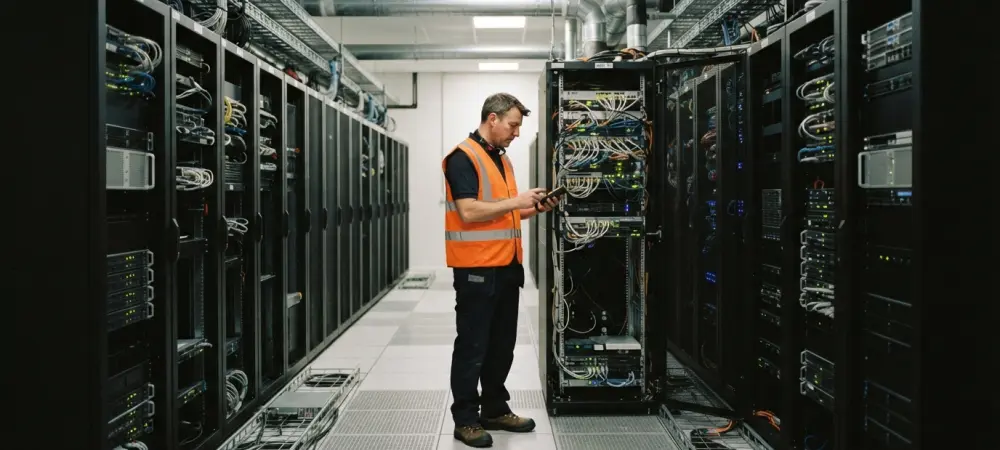
Integration of silicon, software, and cloud infrastructure has transformed from a competitive advantage into a fundamental survival requirement for hyperscalers navigating the $2.7 trillion AI economy. The current landscape in 2026 proves that the era of generic cloud computing has ended, replaced by a “co-engineered” philosophy where every layer of the stack is tuned to serve specific generative models. This shift toward a unified ecosystem allows for a level of efficiency that was previously unattainable, especially as enterprises move beyond simple chatbots to complex multi-agent systems that require massive parallel processing power.
Evolution of the Co-Engineered Azure Landscape
The transition to a co-engineered environment reflects a deep understanding of the physical limitations of legacy hardware. Rather than treating silicon as a separate commodity, this approach integrates specialized chips directly into the software fabric. This evolution is driven by the need to support next-generation multi-agent AI systems, which operate by breaking down complex problems into smaller tasks handled by specialized autonomous entities. Such systems demand low latency and high bandwidth, which can only be achieved if the infrastructure and the models are designed in tandem.
This shift marks a departure from the modular cloud architecture that defined the last decade. By treating the data center as a single unit of computation, the ecosystem eliminates traditional bottlenecks. This synergy matters because it allows for “context-aware” computing at scale, ensuring that the infrastructure can dynamically allocate resources based on the specific intent and urgency of an AI agent’s request. It is a unique implementation that prioritizes systemic harmony over individual component flexibility.
Core Pillars of the Unified AI Infrastructure
Azure Catalyst and Automated Migration
Azure Catalyst addresses the most significant hurdle in current digital transformation: the technical debt inherent in legacy enterprise technology. By utilizing a swarm of AI agents to map technical dependencies and analyze outdated codebases, Catalyst generates comprehensive migration plans that were once the work of human-led consulting teams. This implementation is unique because it does not just move data; it reimagines how that data fits into a cloud-native, AI-first environment.
Azure Cobalt 200 and Custom Silicon
The Cobalt 200 processors represent a major leap in performance, delivering a 50% increase in efficiency over earlier iterations. These chips are designed specifically for the ARM architecture, allowing for higher density in data centers without the traditional heat and power consumption penalties. This performance gain is critical for businesses running persistent AI workloads, as it directly translates to lower operational costs and faster inference times for real-time applications.
Microsoft IQ and Enterprise Context Management
Enterprise data often remains siloed and disorganized, making it difficult for AI models to provide accurate, relevant outputs. Microsoft IQ solves this by acting as a context management platform that feeds business-specific data into AI agents in real time. This system ensures that an agent working on a financial report has the same contextual awareness as a senior human analyst, effectively bridging the gap between general intelligence and specialized corporate knowledge.
Verticalization Trends Among Hyperscale Providers
The broader industry is witnessing a trend where cloud providers are transforming into vertically integrated powerhouses. By manufacturing their own chips and developing proprietary models, companies like Microsoft, Google, and Amazon are reducing their dependence on third-party vendors. This verticalization allows them to capture a larger share of the global AI spending market by offering more specialized and cost-effective solutions than those built on generic, multi-purpose hardware.
Real-World Applications and Enterprise Deployment
In practice, this unified ecosystem is being deployed in sectors like logistics and manufacturing through the Azure Kubernetes Service. Multi-agent systems can now orchestrate entire supply chains by predicting disruptions and automatically rerouting assets. This level of automation is supported by Microsoft Foundry, which provides the high-performance infrastructure needed to manage thousands of simultaneous AI interactions without sacrificing stability or security.
Strategic Challenges: Market Hurdles
Despite these advancements, the strategic pivot away from third-party providers like Nvidia creates significant friction. Many enterprises are deeply invested in existing hardware ecosystems, and moving to a proprietary stack requires a massive leap of faith in the provider’s long-term silicon roadmap. Additionally, scaling the production of Maia 200 chips to meet global demand remains a technical and logistical challenge that could slow the pace of widespread adoption.
Future Outlook for Unified AI Environments
From 2026 to 2028, the trajectory of this technology points toward the full-scale deployment of Maia 200 chips for all primary inference tasks. We will likely see breakthroughs in autonomous agent coordination that allow for decentralized decision-making across different geographic regions. This evolution will further cement the role of the integrated stack as the backbone of the global digital economy, potentially leading to even more specialized silicon for niche industrial tasks.
Assessment of the Azure AI Strategic Shift
The evaluation of the Azure AI strategic shift demonstrated that the synergy between custom silicon and software models was the decisive factor in modernizing the $2.7 trillion AI economy. The successful implementation of Azure Cobalt 200 and Microsoft IQ provided a blueprint for how enterprises could achieve high-performance autonomy. This integration proved that moving away from generic hardware was a necessary step for organizations seeking to maintain a competitive edge in a saturated market. Future considerations must focus on maintaining ecosystem openness while continuing to push the boundaries of vertical integration. The ability to coordinate millions of agents across a proprietary stack effectively redefined the standard for enterprise cloud services. Overall, the transition established a new benchmark for infrastructure reliability and specialized AI performance.