

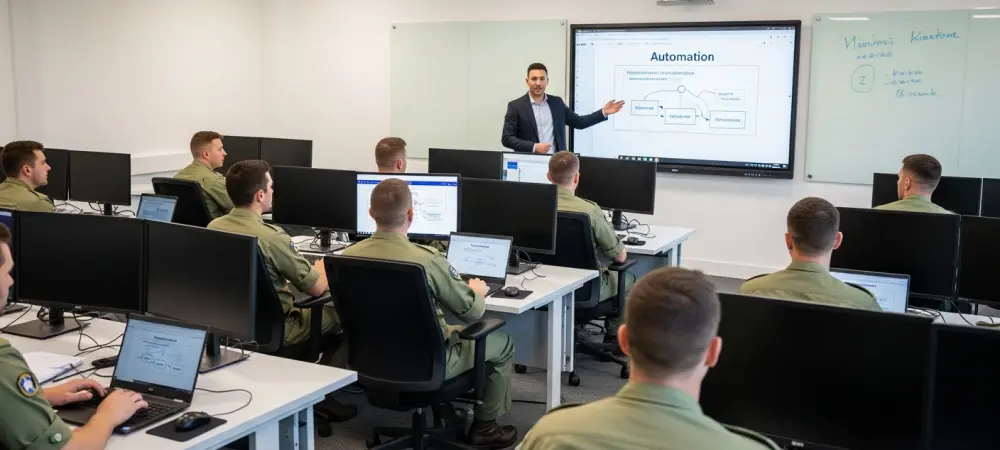
The United Kingdom’s Ministry of Defence (MoD) has embarked on a sweeping modernization initiative by formalizing a strategic enterprise agreement with open-source software provider Red Hat, a move designed to overhaul its vast and traditionally fragmented IT infrastructure. This landmark partnership establishes a standardized, modern foundation rooted in hybrid cloud, automation, and artificial intelligence technologies. Representing a significant leap forward in the MoD’s digital transformation journey, the agreement aims to forge a more cohesive, secure, and agile digital backbone to support all branches of the UK’s armed forces in an increasingly complex global landscape. The collaboration signals a definitive shift toward open standards and platform-based strategies, positioning the MoD to better harness emerging technologies and enhance its operational effectiveness for years to come.
Driving Unification Across Defence
A central objective of the partnership is to dismantle the technological silos that have historically existed across the MoD’s various branches, including the Royal Navy, British Army, and Royal Air Force. The organization has long grappled with a fragmented technology landscape, where numerous internal teams and a wide ecosystem of third-party suppliers operated with disparate systems, leading to operational inefficiencies and potential security vulnerabilities. The new agreement directly confronts this challenge by providing a common, standardized set of platforms that can be used consistently across the entire defence organization. By adopting Red Hat Enterprise Linux as a stable operating system and the Red Hat Ansible Automation Platform for streamlining IT processes, the MoD seeks to eliminate the duplication of effort, simplify the management of complex networks, and foster seamless collaboration between its internal commands and external partners, creating a more integrated and resilient digital environment.
This unified framework is expected to yield substantial benefits beyond mere operational efficiency, fundamentally enhancing the MoD’s security posture and its capacity for innovation. Standardizing on a common technological foundation allows for the consistent application of security controls and governance policies, reducing the attack surface that arises from a patchwork of different systems. Furthermore, it creates a simplified and more predictable environment for third-party suppliers and developers, accelerating the delivery of new applications and mission-critical digital services. This approach is managed through the Defence Digital Foundry, which acts as a central hub for shared digital services, ensuring that implementation and governance are applied uniformly. By establishing this common ground, the MoD is not only streamlining its current operations but also building a more robust and secure software supply chain, a critical consideration for any modern defence organization.
A Strategic Shift to Hybrid Cloud
Recognizing the unique constraints of military operations, the MoD has strategically embraced a hybrid cloud architecture rather than pursuing a complete migration to the public cloud. The sensitivity of certain workloads, dependencies on legacy systems, and the need for deployments at the tactical edge make a one-size-fits-all public cloud solution impractical. The Red Hat platforms selected under this agreement are specifically designed to function seamlessly across a diverse range of environments, from on-premises data centers and private clouds to multiple public cloud providers. This inherent flexibility allows the MoD to modernize incrementally, placing applications and data where they are most effective and secure without compromising operational integrity. The core of this strategy is Red Hat OpenShift, a leading container platform based on Kubernetes, which provides a uniform abstraction layer for developing, deploying, and managing applications regardless of the underlying infrastructure. The adoption of Red Hat OpenShift Platform Plus is pivotal in bridging the gap between legacy systems and modern, cloud-native applications, ensuring a smooth and non-disruptive transition. The platform includes OpenShift Virtualization, a powerful feature that allows the MoD to run and manage traditional virtual machines alongside modern containerized workloads on the same unified platform. This capability is crucial for an organization with a significant investment in legacy applications that cannot be immediately re-architected. It provides a pragmatic pathway to modernization, enabling teams to containerize new applications while continuing to support essential legacy services within a consistent management framework. This approach de-risks the transformation process, facilitates a phased modernization timeline, and ensures that the MoD can continue to leverage its existing IT investments while simultaneously building for the future.
Forging a Path for Artificial Intelligence
This partnership is fundamentally geared toward future-proofing the MoD’s technological capabilities, with a pronounced emphasis on establishing a robust foundation for artificial intelligence. A key component of the agreement is the inclusion of Red Hat AI, a platform designed to create a unified base for developing, training, and deploying AI and machine learning models across the entire department. In the past, AI initiatives risked becoming fragmented, with different teams and commands pursuing separate projects on disparate technologies. This new strategy is explicitly designed to prevent such siloes, promoting the rapid adoption of new AI-driven capabilities by providing a common set of tools and a consistent workflow. By standardizing its AI infrastructure, the MoD aims to facilitate the sharing of data, models, and best practices, allowing successful pilot projects to be scaled efficiently and securely across the organization. The strategic importance of this unified approach to artificial intelligence was underscored by the MoD’s leadership, who identified the ability to rapidly develop and deploy AI as critical to maintaining a strategic advantage. A common platform not only streamlines the technical aspects of AI development but also fosters a culture of innovation and collaboration. It allows data scientists and developers from different branches of the armed forces to work from a shared technological base, accelerating the journey from concept to operational deployment. Whether for predictive maintenance, intelligence analysis, or autonomous systems, this foundational platform will enable the MoD to harness the transformative power of AI more effectively. This forward-looking strategy positions the organization to not only keep pace with technological advancements but to become a leader in applying AI to solve complex defence and security challenges.
Implementing a Vision for a Modern Military
The successful execution of this ambitious strategy rested on more than just technology; it required a clear plan for implementation and a commitment to workforce development. The practical rollout of the software was entrusted to systems integrator Computacenter, which was tasked with managing the onboarding process and ensuring that all MoD staff and approved third-party suppliers gained seamless access to the Red Hat portfolio. Beyond initial access, the agreement granted the MoD comprehensive access to Red Hat Services. This included expert consulting to guide architectural decisions, dedicated technical support to resolve complex issues, and extensive training programs designed to upskill internal teams. This focus on empowering personnel was a critical component of the MoD’s long-term vision. This commitment to upskilling reflected a strategic understanding that sustainable transformation is driven by people, not just platforms. By investing in training and fostering consistent engineering practices, the MoD ensured that its teams could fully leverage the capabilities of the new open-source tools. This holistic approach, combining a powerful technology stack with robust implementation support and a dedicated focus on skills development, laid a solid foundation for the long-term success of the initiative. The partnership was structured not as a simple procurement of software, but as a collaborative effort to build a more agile, secure, and innovative digital core for the future of UK defence.