

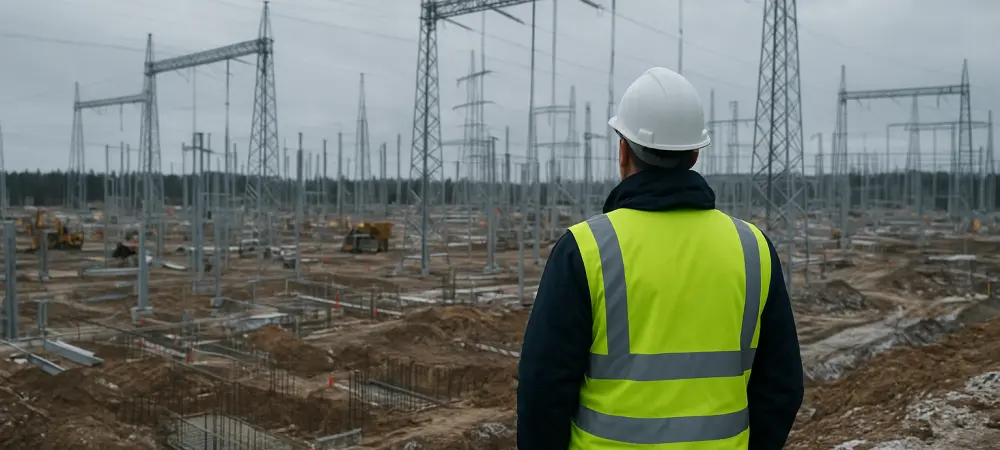
The landscape of British digital infrastructure is currently undergoing a radical geographical reorganization as power availability supersedes proximity to the capital as the primary metric for strategic site selection and long-term facility investment. This evolution represents a significant departure from the traditional clustering of assets around the South East, moving toward a more decentralized national network. As of late 2026, the United Kingdom stands at a critical juncture, balancing a modest existing footprint with an enormous development pipeline that threatens to outpace historical growth by orders of magnitude. This analysis explores how the industry is pivoting toward northern regions and Scotland to bypass the grid constraints of London, effectively remapping the nation’s technological heartland and infrastructure priorities.
Historical Dominance of the London-M4 Corridor
To appreciate the scale of this northern migration, one must first examine the historical pillars that have supported the digital economy for decades. Traditionally, data centers were established where fiber optic density was highest and latency was lowest, factors that heavily favored London and the M4 corridor. Historically, this region served as the heartbeat of the British internet, driven by the immediate demands of the global financial sector and major enterprise headquarters. As of late 2026, operational capacity sits at approximately 1.6 gigawatts (GW), with nearly 75% of that stock located within these southern hubs. This concentration was once a strategic necessity for high-frequency trading and low-latency consumer services, but the industry has matured to a point where these old priorities are being re-evaluated.
This southern dominance led to the development of massive campuses in Slough and East London, managed by major global players. However, the saturation of these markets has introduced significant friction into the development process. As land prices in the South East reached record highs and the electrical grid began to face severe congestion, the feasibility of building new, large-scale facilities started to diminish. The industry is now witnessing the limits of this London-centric model, as the scarcity of both space and power forces a search for more sustainable growth elsewhere. This shift marks the beginning of a new chapter where proximity to the financial heart of the country is less important than proximity to reliable, high-capacity power sources.
The Scaling of the National Infrastructure Pipeline
The Transition: From 1.6GW to a 14.6GW Future
The most striking revelation in the current data is the sheer disparity between existing operational stock and the “committed pipeline” of upcoming projects. While the United Kingdom currently manages approximately 88 facilities, there are now 173 projects in various stages of planning and construction that represent a staggering 14.6GW of future capacity. This indicates that the nation is preparing to expand its digital footprint to nearly nine times its current size. This expansion is not a gradual progression but a rapid surge; within only the first six months of 2026, the volume of pipeline projects increased by 60%. Such escalation reflects an urgent industrial push to support the high-density requirements of generative artificial intelligence and expansive cloud computing services that require immense scale.
Grid Access: The New Strategic Currency
As the industry attempts to realize this 14.6GW vision, grid access has emerged as the most valuable commodity in the market, often outweighing other logistical factors. The traditional London-M4 axis is increasingly hindered by a congested electrical grid, making it difficult for new, high-capacity projects to secure timely and cost-effective connections. Consequently, developers are looking toward the North, where decommissioned power stations and former heavy-industrial sites offer existing high-capacity transmission connections. These locations provide a logistical fast track that the South can no longer guarantee, as they leverage existing infrastructure to meet modern technological demands. This transition essentially turns power availability into the primary driver for the next phase of national infrastructure development.
Regional Variances: The Rise of Mega-Projects
The northern migration is characterized not only by the number of projects but by their unprecedented scale and density. In London and the M4 corridor, the average project size remains around 77 megawatts (MW), constrained by the physical limits of urban environments. In contrast, the North East is seeing a trend of mega-projects averaging 228MW, while the pipeline projects in Scotland average 184MW. These massive developments leverage large brownfield spaces to accommodate the sprawling footprints required for modern high-performance computing clusters. However, this rapid regional expansion has not been without its challenges; in Scotland, the tripling of the pipeline led to recent legislative pauses, highlighting a growing tension between industrial ambition and local land-use concerns that must be navigated carefully.
Emerging Trends: The AI-Driven Future
Looking ahead, the evolution of the market will be shaped by the convergence of energy policy and technological demand. The granting of “Nationally Significant” status to major projects, such as those planned on former industrial sites in Buckinghamshire, indicates that the government views data infrastructure as a critical pillar of sovereign capability. This classification puts data centers on the same level as major transport or energy networks, streamlining the path for large-scale developments. We can expect to see further innovations in how these facilities integrate with the local environment, such as utilizing waste heat for district heating schemes or investing in dedicated renewable energy sources to offset their massive power consumption. The future landscape will likely favor grid-adjacent development, where facilities are built specifically where the national grid has the most headroom.
Strategies: Navigating the New Digital Landscape
For businesses and investors, this geographic shift necessitates a fundamental change in strategy that moves beyond the traditional London-only mindset. Organizations must recognize the northern regions as superior locations for high-density workloads that prioritize raw power and cooling efficiency over low-latency connection to the capital. For professionals in the sector, the focus should shift toward mastering the complexities of regional grid interconnection and navigating the regulatory hurdles of large-scale brownfield developments. Stakeholders should also prioritize early and transparent engagement with local communities to mitigate the political and social opposition that often accompanies such massive infrastructure projects. As the nation moves toward this distributed model, geographical flexibility and a deep understanding of energy logistics will become the most significant competitive advantages for long-term success.
Final Analysis: A New Era for British Data Sovereignty
The preceding analysis illustrated how the British data center market transitioned from a localized, southern-focused sector into a massive national infrastructure project. The industry successfully identified the North and Scotland as the keys to unlocking the 14.6GW pipeline, moving beyond the physical and electrical constraints that previously limited growth in the London-M4 corridor. It was clear that the future of digital geography was defined by grid-adjacent development, making electricity the primary driver of site selection. This shift ensured that the country could meet the processing demands of the next decade while revitalizing industrial heartlands. Decision-makers who embraced this regional diversification provided the necessary foundation for robust digital sovereignty. Ultimately, the successful integration of these northern mega-projects established a more balanced and resilient technological backbone for the entire national economy.