

The insatiable computational appetite of artificial intelligence is quietly forging a new industrial revolution, but behind the dazzling algorithms lies a dangerous and often overlooked reality: a growing chasm between the colossal power data centers now consume and the antiquated electrical philosophies used to design them. A dangerous gap is emerging between the utility-scale energy modern data centers command and their often outdated, commercial-grade electrical design philosophies, posing significant risks to both safety and uptime. This analysis will explore the data driving this critical shift, its real-world applications, expert perspectives on the inherent risks, and the future-forward solutions required to power the next generation of computing safely and reliably.
The Rise of the Utility-Grade Model
The Data Driving the Shift
The raw numbers paint a startling picture of a landscape being reshaped by immense energy demands. Not long ago, data center rack power density was measured in kilowatts; now, the advent of AI and high-performance computing has pushed this metric into the megawatts per rack. This exponential increase is not merely a matter of scale but a fundamental change in character. To service these densities, data centers are increasingly bypassing traditional low-voltage distribution and operating their own medium- and high-voltage systems, with infrastructure running at 15kV, 25kV, and even 34.5kV—a domain historically exclusive to specialized power utilities.
This migration into utility-grade power management introduces a profound human-factors challenge. The responsibility for managing these complex electrical fleets has shifted from a small, highly trained cadre of utility workers to a much larger population of non-utility personnel. These data center operators, while trained, often interact with this high-stakes equipment infrequently. This lack of daily, hands-on experience dramatically increases the probability of human error during critical maintenance or fault response, elevating the risk of equipment failure, arc-flash incidents, and catastrophic outages.
From Theory to Practice: Real-World Implementations
Forward-thinking organizations are already responding to these challenges with tangible design changes that prioritize safety and resilience. One of the most impactful strategies has been the physical relocation of medium-voltage switchgear. Instead of housing this high-risk equipment inside the main data hall, it is being moved to purpose-built, outdoor-rated enclosures. This simple move significantly enhances personnel safety by limiting proximity to energized gear and simultaneously frees up valuable, climate-controlled indoor space for revenue-generating servers.
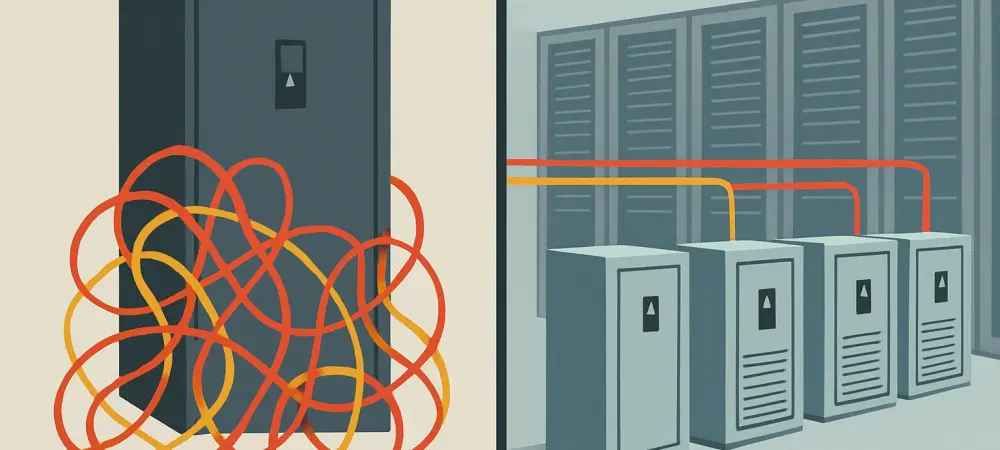
Beyond physical placement, the core electrical architecture is undergoing a revolution. The conventional model, which relies on a single, centralized block of switchgear, is being abandoned for its inherent fragility as a single point of failure. In its place, leading data centers are adopting distributed architectures that mirror modern utility grid design. By creating interconnected loops and moving protective devices closer to the server loads, these systems can isolate faults locally. This prevents a minor issue from cascading into a facility-wide blackout, creating a far more resilient and manageable power infrastructure.
To navigate an increasingly volatile global supply chain, major operators are also standardizing their electrical infrastructure. By creating a pre-approved, repeatable portfolio of utility-grade equipment, they can purchase components in bulk and maintain their own inventory. This decouples individual project timelines from unpredictable factory lead times, allowing for more agile and consistent deployment across a global fleet of data centers while ensuring that design integrity is never compromised for the sake of expediency.
Expert Perspectives on the Design Gap
Industry experts widely agree that traditional data center electrical design has created a “maintenance trap.” Conventional centralized, metal-clad switchgear necessitates high-risk manual procedures, such as the physical “racking out” of enormous circuit breakers for routine service. This task often forces personnel to work in close proximity to adjacent components that remain energized at medium voltage, where a single mistake can have devastating consequences. Each manual interaction, or “touch,” on the equipment exponentially multiplies the risk to both the operator and the system’s overall reliability. This has led to a powerful consensus that risk must be engineered out of the system, not merely managed through procedure and personal protective equipment. The core argument is that human error is inevitable, and therefore the system itself should be designed to be inherently safe. This paradigm shift involves selecting equipment and designing architectures that minimize or entirely eliminate the need for human interaction in hazardous, energized environments. The goal is to make the safest action the only possible action.
This philosophical evolution culminates in the imperative to “think like a utility.” For decades, utilities have understood that preventing an initial outage is impossible; the true measure of a system is its ability to respond. Instead of focusing solely on upstream prevention, the utility mindset prioritizes system-wide resilience, rapid fault isolation, and automated power restoration. For data centers, this means shifting focus from a single, fortified wall to a resilient, self-healing web of interconnected power paths.
The Future of Data Center Power Infrastructure
The logical endpoint of this trend is the move toward comprehensive automation, creating self-healing power systems. By leveraging high-speed fiber optic communication networks, intelligent electrical gear can communicate with itself to detect, isolate, and reroute power around a fault in seconds, all without human intervention. This automated response not only restores power faster than any human team could but also keeps technicians out of harm’s way during the most dangerous moments of a power anomaly.
Adopting the utility-grade model promises profound long-term benefits that extend far beyond simple reliability. This approach is projected to cause a dramatic reduction in catastrophic arc-flash incidents, which are a primary cause of injury and equipment loss. Furthermore, the enhanced resilience and automated restoration capabilities will be essential for fulfilling the stringent uptime service-level agreements (SLAs) that customers demand. Ultimately, this robust power foundation is what will enable the sustainable and scalable growth of artificial intelligence for years to come.
However, the path to adoption is not without its challenges. The primary obstacle is overcoming industry inertia and the traditional mindsets that have governed data center design for decades. Additionally, operators must resist short-term supply chain pressures that encourage compromising on superior distributed designs in favor of more readily available but inferior centralized components. Fostering a new culture that prioritizes electrical safety and deep system expertise is the final, crucial hurdle to building the data centers of tomorrow.
Conclusion: Powering the Future, Safely and Reliably
This analysis demonstrated that the artificial intelligence boom has fundamentally redefined the data center, pushing it from a commercial building into the operational domain of a power utility. It showed that failing to evolve electrical design philosophies in parallel with this shift introduced unacceptable risks to both personnel and operational continuity. The investigation affirmed that robust, intelligent power infrastructure was the true, unglamorous foundation upon which the entire digital economy was built. It therefore became imperative for data center designers, operators, and investors to proactively close the growing design gap, which required embracing a utility-first philosophy as a core principle for all future builds.