

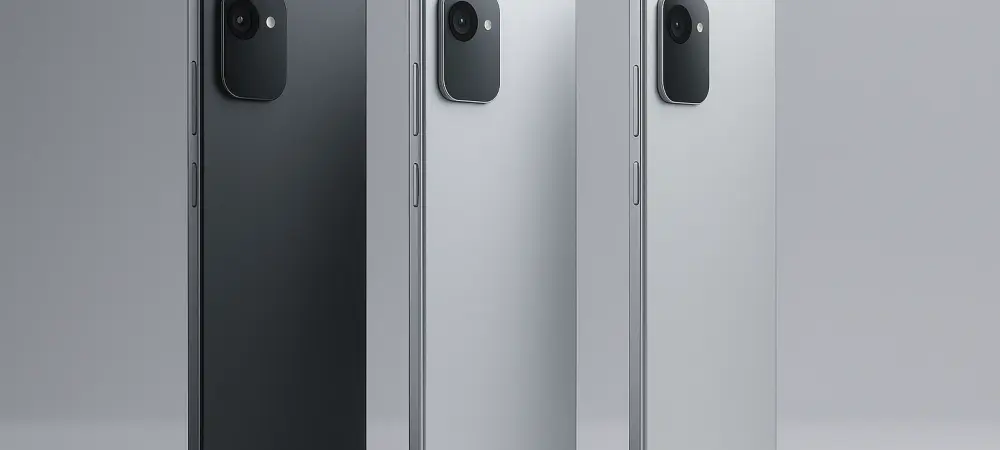
The release of the iPhone Air 2 marks a pivotal moment where the industry definitively chooses architectural elegance over the bulky dimensions that defined the past decade of mobile hardware. This transition signals a fundamental recalibration of premium aesthetics. The engineering race for thickness reduction represents the next frontier, balancing minimalism with power through advanced logic board stacking and refined materials. Current market shifts indicate that consumers now prioritize sophisticated portability over sheer volume.
The Evolution of the Slim Aesthetic in Mobile Hardware
Market Trajectory and the Push for Extreme Portability
The transition from the thinness race of the past decade to the modern era of ultra-slim flagships reflects a maturing market focused on ergonomic efficiency. Recent growth trends showed demand for lighter devices that do not compromise on screen real estate. “Air” branding moved from tablets into the smartphone sector, signaling a shift toward hardware that feels weightless yet remains robust during daily use.
Case Study: The iPhone Air 2 as a Technical Benchmark
Reaching a 5.2mm chassis required a 0.4mm reduction from earlier iterations, setting a new industry record. Designers integrated the A20 Pro chip and 12GB of RAM within this highly constrained physical envelope. Moreover, the inclusion of a 48MP ultrawide lens solved the camera limitations that previously hindered slim devices, ensuring that a sleek profile no longer required a sacrifice in photographic versatility.
Expert Perspectives on Engineering Hurdles and Innovation
Hardware engineers identified high-density battery cells as the key to solving the paradox of endurance versus thickness. These cells provide sufficient capacity without the bulk found in traditional packs. This breakthrough allowed for a device that maintains its signature thinness while remaining competitive in battery life throughout the 2026-2028 cycle.
Thermal management experts noted that the titanium frame and the efficiency of the A20 Pro chip effectively managed heat dissipation. The implementation of the C2 modem and N2 wireless chips enabled a reduced-volume housing while maintaining top-tier connectivity. This synergy of components proved that professional-grade performance could thrive in a 5.2mm body.
The Future of Form Factor: Performance Without Bulk
The technological trajectory suggests that high-density power cells and stacked logic boards will soon influence competitors like Samsung and Google. It is likely that the ultra-slim category will eventually replace standard models as the industry default. This shift represents a permanent move toward balancing internal power with a more refined and minimalist industrial design.
However, structural integrity and physical space for complex optical zoom sensors remained significant hurdles. The premium pricing of specialized components also restricted these designs to the high-end market segments initially. Despite these risks, the industry continued to push the boundaries of what was physically possible in mobile hardware.
Strategic Summary: The New Standard for Premium Design
The introduction of the ultra-slim flagship successfully rectified earlier concerns regarding battery life and camera performance. This development demonstrated that extreme portability and high performance could coexist through persistent innovation in materials science. Manufacturers realized that a more refined industrial design offered a distinct competitive advantage in a saturated market. The transition established a foundation for future devices that valued elegance as much as raw power.