

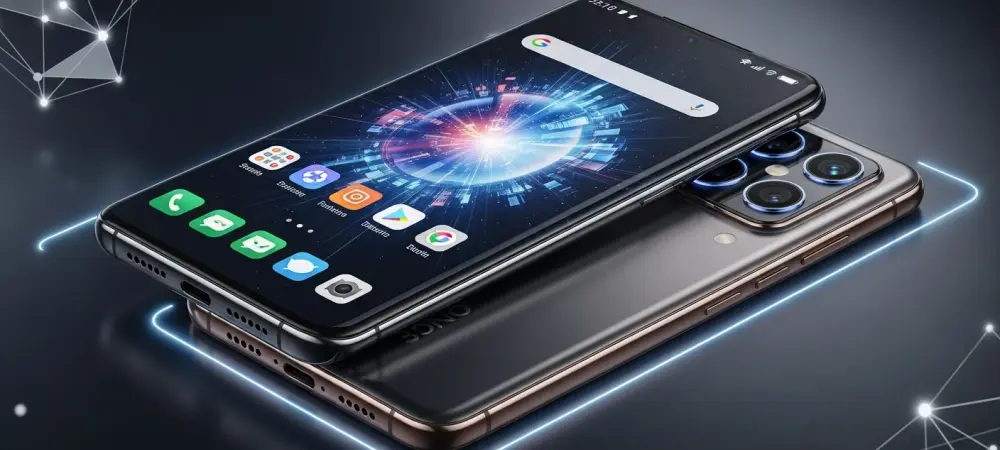
The contemporary smartphone landscape has moved far beyond basic utility, evolving into a high-stakes race for technological prestige where thousand-dollar devices serve as the definitive benchmark for global innovation. As consumer demand shifts toward prosumer-grade hardware, manufacturers are accelerating their release cycles and pushing the boundaries of silicon performance and optical engineering to capture the elite market segment. This shift examines the rise of “Extreme Flagships,” focusing on upcoming hardware benchmarks and a strategic transition toward luxury-tier mobile devices.
The Evolution of High-End Hardware and Market Dynamics
Market Acceleration: The Compressed Release Cycle
Recent industry data and certification leaks, such as the SRRC filing for Xiaomi’s model “2605EPN8EC,” indicate that the gap between flagship launches is narrowing significantly. This rapid pace is necessary to maintain a competitive edge in a crowded field. Market reports show a growing consumer appetite for “Ultra” and “Max” variants, with the premium segment currently outperforming mid-range growth as users prioritize longevity and top-tier specifications.
Real-World Application: The Rise of the Extreme Spec Flagship
Manufacturers are moving beyond incremental updates to create super-flagships, exemplified by rumored devices like the Xiaomi 17 Max featuring the unreleased Snapdragon 8 Elite Gen 5 chipset. Practical applications of this trend include the integration of 200 MP camera systems and massive 6.9-inch displays. These units are specifically designed to bridge the gap between mobile devices, professional cameras, and tablet-class productivity tools.
Expert Perspectives on Brand Positioning and Technical Superiority
Industry analysts suggest that the push for “Max” or “S Plus” branding is a calculated move to challenge established leaders like Samsung’s Ultra series and Apple’s Pro Max lineup. Thought leaders in mobile engineering emphasize that the early integration of next-generation silicon allows brands to secure a performance halo that boosts long-term brand equity. However, experts note that while 200 MP thresholds are impressive, the true challenge lies in software optimization and thermal management.
Future Implications: Scaling the Limits of Mobile Engineering
The future of the ultra-premium segment points toward a convergence of extreme hardware and specialized AI processing, likely leading to even larger form factors. While performance dominance is currently the primary goal, manufacturers must soon face challenges regarding global market fragmentation and the sustainability of yearly hardware upgrades. Potential developments include the normalization of 7-inch displays and the transition of professional optics into standard consumer gear.
Navigating the Next Frontier of Luxury Mobile Tech
The transition toward ultra-premium innovation reflected a new era where raw performance became the ultimate industry currency. As brands vied for dominance through “Max” and “Ultra” iterations, the consumer gained access to unprecedented mobile power and creative potential. Moving forward, stakeholders should prioritize sustainable cooling solutions and intuitive AI integration to ensure these massive hardware leaps remain functional for the average user. The next stage of development will likely focus on foldability or modularity to balance screen size with pocketability.