

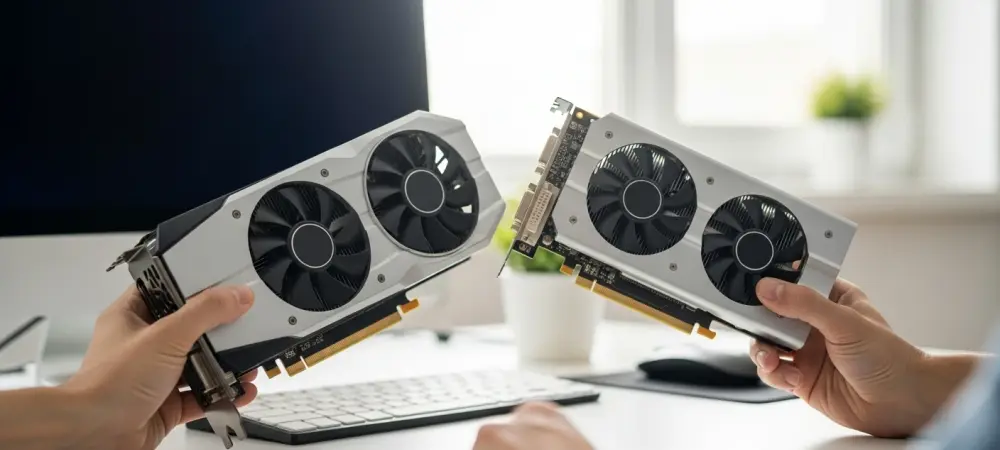
The long-held dream of building a high-performance PC on a modest budget is facing its most significant challenge yet, as a perfect storm of market forces threatens to rewrite the rules of hardware affordability. Graphics Processing Units (GPUs), the powerful engines driving everything from immersive gaming and professional content creation to the frontiers of artificial intelligence, have become a critical barometer for the health of the entire PC market. Their price dictates accessibility and innovation for millions. This analysis will dissect the factors inflating GPU costs, explore the strategic reactions of major manufacturers, and forecast what these shifts mean for consumers navigating this new and challenging landscape.
The Squeeze on Supply Dissecting the Cost Crisis
The Ripple Effect of Soaring Component Costs
The foundation of modern GPUs is being shaken by a dramatic surge in the cost of essential components. At the forefront of this crisis is the price of DRAM, a critical type of memory, which has reportedly quadrupled. This spike directly translates to higher manufacturing expenses, creating immense pressure on the final retail price of every graphics card that rolls off the assembly line.
This pressure is now visibly trickling down the supply chain. Reports indicate that AMD’s board partners are implementing a second price hike, following an initial 5-10% increase earlier in the year. This latest adjustment is strategically designed to bring their pricing more in line with competitor NVIDIA, effectively erasing any previous cost advantage. Consequently, the rising material costs are making it nearly impossible for manufacturers to produce GPUs, particularly models with higher VRAM, at their originally intended suggested retail prices.
A Strategic Pivot in Production
In response to these unrelenting market pressures, manufacturers are making significant adjustments to their production roadmaps. AMD is reportedly shifting its focus toward GPUs with lower memory configurations to mitigate the impact of high DRAM costs. This strategy appears to prioritize the production of 8 GB graphics cards, not only for the upcoming RDNA 4 generation but also for existing RDNA 3 models.
This strategic pivot is exemplified by an increased emphasis on specific models like the rumored Radeon RX 9060 XT 8 GB. Furthermore, AMD is reportedly reintroducing the Radeon RX 7650 GRE, a former China-exclusive card, to bolster its lower-VRAM offerings globally. Whispers in the industry suggest a similar approach is being considered for NVIDIA’s forthcoming RTX 50 series, signaling a potential market-wide trend that favors profitability over memory capacity.
Industry Insights Decoding Manufacturer Motives
The decision by AMD to align its pricing with NVIDIA is less a competitive maneuver and more a direct reaction to the economic realities of the supply chain. With component costs creating an unsustainable financial model at lower price points, raising prices becomes a necessary step to protect operational viability. This move reflects a market where external cost pressures, rather than direct competition, are the primary drivers of pricing strategy.
Prioritizing the production of lower-VRAM cards is a clear defensive measure aimed at preserving profit margins. By reducing the most expensive components in their budget and mid-range offerings, manufacturers can absorb some of the rising costs without passing the full burden onto the consumer, though price increases remain inevitable. The industry-wide consensus points to a significant shift in market dynamics, where ensuring profitability has taken precedence over maintaining affordability for entry-level products.
Future Outlook What This Means for Consumers
The road ahead for PC builders, especially those on a tight budget, appears increasingly challenging. A direct consequence of these industry shifts will be a growing scarcity of affordable, high-VRAM GPUs. This trend is set to recalibrate consumer expectations, as the price points for what are considered “entry-level” and “mid-range” cards are likely to climb higher than ever before.
This new reality presents a difficult choice for consumers. They may need to spend more money for a graphics card with less VRAM than previous generations offered at a similar price. Alternatively, they might settle for older-generation cards to find a balance between performance and cost. The broader implication is stark: the budget-oriented gaming segment, long a cornerstone of the PC building community, may be shrinking, making it harder for new enthusiasts to enter the hobby.
Conclusion Adapting to the New GPU Landscape
The graphics card market has been fundamentally reshaped by a confluence of rising component costs and subsequent manufacturer price hikes. This environment has led to a strategic pivot toward lower-VRAM cards, a move designed to protect profitability in a volatile economic climate. For anyone looking to build or upgrade a PC, understanding these interconnected trends was essential. Consumers navigated a market where affordability was no longer guaranteed, requiring careful planning and adjusted expectations to secure the performance they needed.