

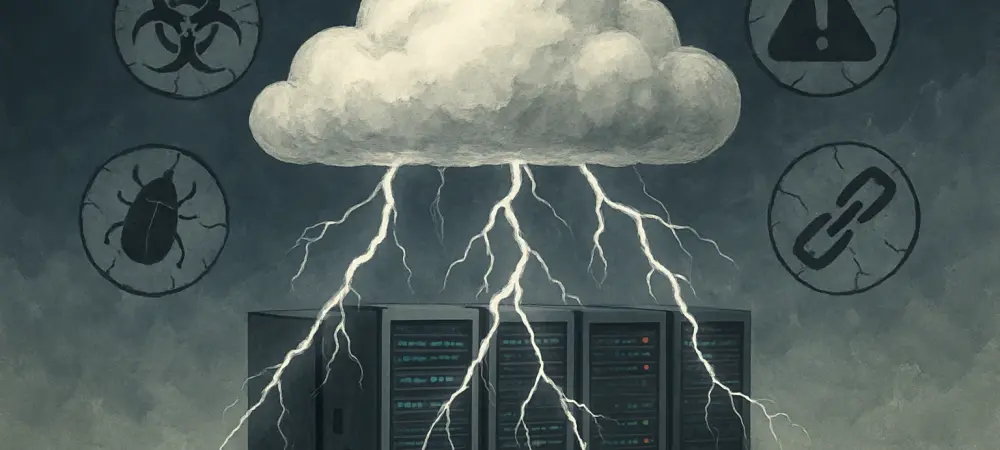
A massive disruption in global web services recently brought the digital world to a standstill, as a configuration error at Cloudflare, a leading internet infrastructure provider, triggered widespread 5xx errors across countless websites, overloading the traffic engine and causing significant downtime. This outage served as a stark reminder of how deeply intertwined the modern economy is with cloud infrastructure. From eCommerce platforms to critical business operations, the ripple effects were felt worldwide, exposing the fragility of over-reliance on key providers. This analysis delves into the growing trend of systemic risks within cloud systems, exploring the implications of such disruptions, expert insights on vulnerabilities, and strategies to bolster resilience in an increasingly connected digital landscape.
The Cloudflare Outage: A Signal of Cloud Dependence
Magnitude and Reach of the Incident
The Cloudflare outage was a pivotal event, stemming from a misconfiguration that overwhelmed the traffic engine, leading to extensive web downtime. Reports indicated that the disruption impacted a substantial portion of global internet traffic, affecting multiple regions and lasting for several critical hours. This incident highlighted a troubling trend: the growing dependence on a handful of major cloud providers, where a single point of failure can cascade into widespread chaos. Data from industry sources revealed that millions of websites and services were rendered inaccessible, underscoring the scale of reliance on centralized infrastructure. Businesses across sectors faced operational halts, with many unable to process transactions or communicate with clients. This event serves as a case study in how concentrated dependencies amplify risks in the digital ecosystem.
Consequences for Businesses and End Users
The real-world fallout from the outage was particularly severe for industries like eCommerce, where timing is everything. Transaction delays led to significant financial losses as merchants struggled with backlogs and frustrated customers. Beyond immediate revenue impacts, the downtime disrupted supply chain coordination, further compounding operational challenges. Security concerns also spiked during the disruption, as critical tools like firewalls and fraud detection systems were compromised. This created windows of opportunity for cybercriminals, with reports of increased fraud attempts targeting vulnerable merchants. For users, the outage meant interrupted access to essential services, eroding trust in digital platforms and highlighting the broader societal stakes of cloud stability.
Expert Perspectives on Underlying Weaknesses
Industry leaders have weighed in on the systemic vulnerabilities exposed by such outages, offering critical insights into the trend of growing risk. Xavi Sheikrojan, Director of Risk at Signifyd, pointed out the cascading effects on business continuity, especially in sectors handling high transaction volumes like eCommerce. Sheikrojan emphasized that disruptions often lead to heightened cybersecurity threats, as protective measures falter, leaving systems exposed to exploitation.
Sheikrojan advocated for robust contingency planning, including the adoption of enhanced security protocols such as Multi-Factor Authentication (MFA). Additionally, post-outage audits were recommended to identify any suspicious activity that may have occurred during the disruption. These measures, while resource-intensive, are seen as essential to mitigating the fallout from inevitable breakdowns.
Complementing this view, Dolores Saiz, CEO of The Server Labs, argued that outages are no longer rare exceptions but expected challenges in a hyperconnected world. Saiz called for architectural resilience through multi-cloud strategies, alongside a cultural shift that empowers teams to proactively manage risks. Collaboration was also highlighted as a key pillar, with Saiz urging companies to share threat intelligence with peers and government entities to build a collective defense against digital threats.
Future Directions: Crafting a Robust Digital Framework
Looking ahead, the trend of systemic risks in cloud infrastructure points toward the need for innovative solutions to prevent single-point failures. Diversifying reliance across multiple providers and integrating advanced backup systems are emerging as critical strategies to ensure continuity during disruptions. Such approaches aim to distribute risk, reducing the likelihood of widespread impact from a single incident.
However, building resilience comes with trade-offs, including the cost and complexity of implementing multi-cloud architectures. While the benefits—such as reduced downtime and fortified security—are clear, smaller organizations may struggle with the financial burden of these systems. Balancing affordability with the need for robust infrastructure remains a key challenge for the industry. On a broader scale, industry-wide collaboration could redefine digital stability over the long term. Shared responsibility, through initiatives like joint threat intelligence platforms, has the potential to create a more resilient ecosystem. As businesses and policymakers align on these goals, the focus shifts from reactive fixes to proactive frameworks that anticipate and neutralize risks before they escalate.
Key Takeaways and Steps Ahead
Reflecting on the Cloudflare outage, it became evident that systemic risks tied to over-reliance on single cloud providers had far-reaching consequences. The incident exposed critical weaknesses in the digital infrastructure, from operational delays to amplified security threats, prompting a reevaluation of risk management practices. Experts underscored the urgency of addressing these vulnerabilities through strategic planning and collective action. Moving forward, businesses were encouraged to adopt holistic approaches, integrating technological diversification with cultural readiness to handle disruptions. Implementing multi-cloud systems, enhancing security with measures like MFA, and fostering industry collaboration emerged as actionable next steps. These strategies aimed to transform resilience into a foundational principle, equipping organizations to navigate future challenges.
Ultimately, the lessons from this disruption paved the way for a renewed focus on innovation in cloud architecture. By prioritizing proactive defenses and shared responsibility, the digital landscape could evolve into a more stable environment. The path ahead demanded commitment from all stakeholders to safeguard global services against the growing trend of systemic risks.