

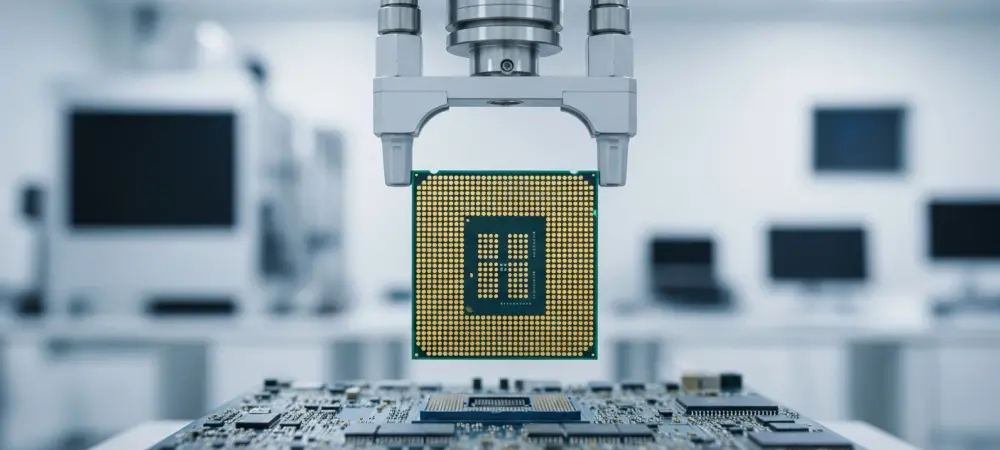
The traditional boundaries separating cloud hosting services from artificial intelligence software development have dissolved into a multi-billion-dollar architecture of mutual dependency where specialized silicon, rather than generic software, dictates the future of global industry dominance and enterprise strategy. As artificial intelligence moves from the experimental fringes to a mission-critical core, the relationship between hyperscalers and frontier labs is shifting toward infrastructure-first models. These arrangements redefine how enterprises procure, deploy, and scale intelligence by emphasizing the physical layer of the stack. This analysis explores the transition from the absorption of AI models into cloud ecosystems to a more flexible federated model, examining the alliance between Amazon and Anthropic and the decision-making framework for modern technology leaders.
The Evolving Architecture of Cloud-AI Integration
Market Momentum and the Shift to Infrastructure-First Models
Recent data reveals a massive pivot toward long-term capital commitments, highlighted by the landmark agreement where Anthropic pledged $100 billion to AWS infrastructure from 2026 through the next decade. This trend signals a departure from transactional compute purchasing toward deep, structural alignment. Statistics indicate a growing reliance on silicon-based lock-in, as AI labs move away from generic hardware to proprietary chips like Trainium and Graviton to optimize performance and control spiraling operational costs. By anchoring software development to specific hardware architectures, providers ensure that the most advanced models remain tethered to their specific data center ecosystems.
Adoption trends further reveal that enterprises are increasingly seeking native platform experiences that bypass traditional managed service boundaries. This shift allows organizations to gain earlier access to beta features and specialized tools that were previously delayed by the time required for full cloud integration. Consequently, the cloud provider is no longer just a landlord for software but a strategic partner in the co-evolution of hardware and algorithms. This infrastructure-first approach prioritizes the underlying compute efficiency, making the choice of silicon as important as the choice of the model itself.
Divergent Models: Absorption vs. Native Federation
The market currently reflects a tension between the absorption model and the native federation model. In the absorption model, seen in the deep integration between Microsoft and OpenAI, models are folded directly into the cloud provider’s perimeter, often rebranded as native cloud services. In contrast, the federated model, exemplified by the Claude Platform on AWS, allows the AI lab to maintain a first-party relationship with the user while utilizing the hyperscaler for the heavy lifting of identity management, billing, and auditing. This approach preserves the independent brand identity of the lab while offering the enterprise the security of a known cloud environment.
Workload scenarios dictate which of these models a company might choose for its specific needs. Regulated industries, such as healthcare and finance, often favor integrated services like Amazon Bedrock because they offer high-governance environments where data remains strictly within the cloud’s existing security boundary. However, feature-hungry developers and agile startups frequently opt for direct platform access through the federated model to utilize the newest capabilities, such as managed agents or advanced web search, as soon as they are released. This dual-path strategy provides a degree of flexibility that the older, monolithic integration models lacked.
Strategic Perspectives on Technical Sovereignty and Governance
Industry experts emphasize that the front door model, where the hyperscaler acts as the procurement gateway, serves a dual purpose by protecting the autonomy of AI labs while anchoring them to the provider’s hardware roadmap. This arrangement allows the lab to focus on frontier research while the cloud provider manages the massive complexity of global data center operations. Moreover, procurement simplification has emerged as a primary driver for this shift. Chief Information Officers are now able to consolidate fragmented AI spending under existing enterprise discount programs, turning what was once a complex set of separate contracts into a single, manageable billing environment.
The success of these massive strategic alliances depends heavily on the timely delivery of next-generation hardware. For instance, the transition toward Trainium3 and Trainium4 chips represents a critical juncture where any delay in silicon development could stall the training of future frontier models. Furthermore, regulatory scrutiny has intensified, with the Federal Trade Commission monitoring these billion-dollar investments to determine if they constitute a new form of anti-competitive market concentration. Enterprises must therefore weigh the benefits of deep integration against the risks of being caught in a hardware roadmap that might be subject to external regulatory interventions or technical delays.
The Long-Term Trajectory of Hyperscaler Dynamics
Reflecting on the current landscape suggests a gradual decoupling of cloud loyalty from specific model providers. As interoperability standards improve, enterprises are beginning to maintain their primary infrastructure provider while switching between various frontier models based on price and performance. Cloud providers are effectively becoming indispensable utilities, where dominance is measured by data center capacity and the efficiency of custom silicon rather than the ownership of proprietary software APIs. This utility-based competition favors the providers who can offer the most reliable and cost-effective compute at an astronomical scale.
Despite the move toward native platform models, challenges regarding data sovereignty remain a persistent hurdle for global organizations. Organizations with strict regional data residency requirements often find that native platform access does not yet match the granular control offered by fully integrated cloud services. However, massive compute clusters like Project Rainier demonstrate that the sheer scale of available compute will soon be the primary differentiator in the race for Artificial General Intelligence. As clusters grow to include millions of specialized chips, the ability to orchestrate this hardware becomes the ultimate competitive advantage for the hyperscaler.
Conclusion: Navigating the New Era of AI Procurement
The fundamental shift from platform-based lock-in to silicon-based dependency redefined the strategic priorities of the modern enterprise. By moving away from simple hosting toward deep infrastructure integration, cloud providers ensured their continued relevance in an era where software was increasingly commoditized. The rise of dual-path strategies allowed organizations to balance the competing demands of strict governance and rapid innovation. This evolution proved that the strategic value of hyperscalers was no longer found in the models they hosted, but in the specialized hardware and unified billing environments they provided to both labs and customers.
As organizations moved forward, the decision-making process for AI procurement became as much about the data center as it was about the algorithm. Success was found by those who successfully audited their AI pipelines to distinguish between workloads that required integrated security and those that demanded the latest native features. The transition toward federated models and proprietary silicon established a new baseline for technical sovereignty, where the infrastructure provider acted as the foundational utility for all intelligence. For the modern enterprise, the optimal path involved a deliberate choice between governance, feature parity, and fiscal efficiency within these increasingly complex alliances.