

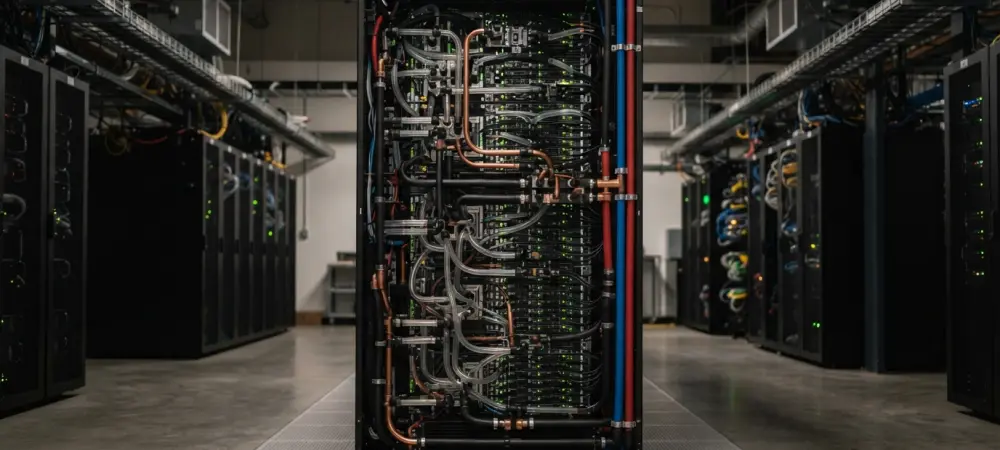
The silicon landscape has shifted from a race for raw speed to a precision-driven quest for architectural efficiency that can sustain the explosive growth of autonomous digital agents. As artificial intelligence transitions from reactive chatbots to proactive, agentic entities, the underlying infrastructure is undergoing a radical metamorphosis. This transformation is not merely about adding more transistors; it is about fundamentally rethinking how data moves through a system. The era of the “Swiss Army knife” processor is ending, replaced by a new generation of workload-optimized silicon designed to handle the specific bottlenecks of modern machine learning.
The significance of this pivot cannot be overstated, as the scalability of the next decade of innovation depends on breaking current limits regarding memory latency and energy consumption. Enterprises are no longer satisfied with general-purpose GPUs that, while powerful, often leave massive amounts of computational potential untapped due to data movement constraints. Consequently, the industry is moving toward a more fragmented but efficient hardware market where the success of an AI deployment is increasingly determined by how well the hardware architecture mirrors the mathematical structure of the model it serves.
The Shift Toward Workload-Specific Hardware
Data-Driven Evolution: The Rise of Specialized Silicon
Recent industry data indicates a decisive move away from a “one-size-fits-all” hardware approach in favor of architectures that prioritize the specific demands of large-scale inference. Adoption statistics across major cloud providers show that frontier AI labs and large enterprises are increasingly prioritizing price-performance and energy efficiency over raw theoretical throughput. Reports suggest that as inference workloads grow to represent a larger share of the total compute budget, the demand for specialized chips—such as those optimized for high memory bandwidth rather than just peak processing speed—has surged across the global market. This trend is driven by a maturing understanding that data movement and memory latency, rather than peak floating-point operations, are the primary hurdles in modern AI deployment. From 2026 to 2028, the industry anticipates a deeper integration of high-bandwidth memory directly into the processor architecture to mitigate these bottlenecks. This evolution reflects a shift in priority where the efficiency of the data pipeline is considered just as valuable as the speed of the calculation itself, leading to a more sustainable model for scaling autonomous systems in data centers worldwide.
Real-World Implementation: Google’s Eighth-Generation TPU Ecosystem
Google’s expansion of its Tensor Processing Unit portfolio serves as a primary case study for this specialization trend, illustrating how targeted hardware can solve specific industrial challenges. The introduction of the TPU 8i Max specifically targets agentic computing, where AI agents perform multi-step, autonomous tasks requiring massive context windows that traditional hardware cannot easily sustain. By utilizing a multi-chip package with 17.2 terabytes per second of memory bandwidth, this hardware enables large-scale parallel operations that allow multiple agents to coordinate in real time without being hindered by memory limits.
Simultaneously, the introduction of the TPU 8tx addresses the urgent needs of the healthcare and financial sectors by providing robust hardware-level encryption for sensitive data. These deployments at organizations like Anthropic and the California Institute of Technology demonstrate that specialized hardware is no longer an experimental luxury but a prerequisite for industrial-grade AI operations. By tailoring hardware to specific security and performance requirements, these organizations can run complex models on sensitive datasets while maintaining near-zero performance penalties—a feat that was previously difficult to achieve with general-purpose clusters.
Insights from the Field: Expert Perspectives on Infrastructure
Industry leaders and market analysts emphasize that the AI hardware landscape is currently undergoing a fundamental restructuring that moves beyond the chip itself. The consensus among thought leaders is that a “rack-level” design philosophy—where networking, memory, and security are integrated into a single cohesive unit—is the only way to sustain the next generation of autonomous models.
This shift highlights a growing challenge: the need for infrastructure that can handle complex data management without sacrificing the speed required for real-time interaction. Moreover, analysts point out that the software layer is becoming just as critical as the silicon, as new orchestration tools are required to manage the specialized memory hierarchies of these advanced units. This holistic approach suggests that the most successful infrastructure providers will be those who can offer a seamless integration of custom silicon and intelligent software, reducing the complexity of deploying specialized clusters for enterprise clients.
The Road Ahead: Future Implications and Challenges
The future of AI infrastructure lies in the continued bifurcation of hardware paths, creating a divide between massive training clusters and high-density inference units. We can expect a continued split between the centralized clusters designed for foundation model training and the highly efficient units designed for localized inference and autonomous agents. The integration of confidential AI will likely become a standard requirement for all enterprise hardware, making secure, encrypted processing the norm for government and financial sectors rather than a premium feature reserved for high-end deployments.
While specialization offers significant gains in efficiency and cost-effectiveness, it also introduces substantial complexity in software orchestration and the potential for increased vendor lock-in. Across various industries, this trend will likely lower the barrier to entry for sensitive sectors, allowing them to leverage AI without compromising data sovereignty or privacy. However, the energy demands of these specialized data centers will remain a critical hurdle that the industry must overcome through further innovations in cooling technology and power management. Balancing the need for extreme performance with the limitations of global energy infrastructure will be the defining technical challenge for the remainder of this decade.
Summary of Key Trends in AI Specialization
The transition toward specialized AI infrastructure represented a fundamental departure from the era of general-purpose silicon. Architects realized that the integration of networking, memory, and security at the hardware level was the only viable path to sustaining agentic workflows and protecting sensitive data. This evolution forced a reevaluation of data center design, moving the priority from peak floating-point operations to holistic system throughput. By embracing this specialized path, the industry established a framework for secure, autonomous computing that balanced immense energy requirements with unprecedented operational efficiency.
The industry recognized that the next logical step involved the standardization of confidential computing protocols across all hardware tiers to ensure universal data privacy. Organizations that moved quickly to adopt workload-specific architectures found they could scale their autonomous agents more effectively than those who relied on legacy hardware. These developments suggested that future success in the AI sector depended on a company’s ability to match its computational resources to the unique architectural needs of its models. Ultimately, the move toward specialized silicon provided the necessary foundation for a more diverse and secure digital landscape, marking a turning point in the maturity of artificial intelligence technology.