

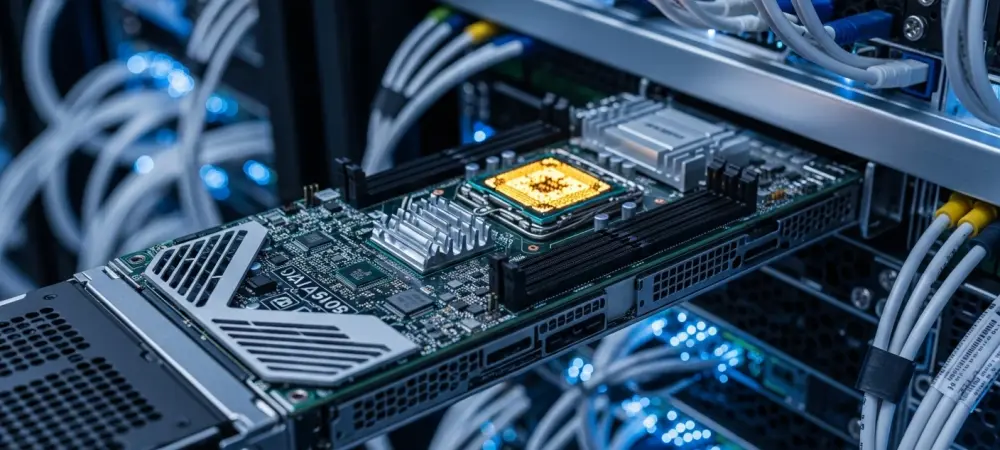
The immense computational power required to train and deploy advanced artificial intelligence has pushed the world’s general-purpose cloud infrastructure to its breaking point. The artificial intelligence revolution is running on the engines of cloud computing, but these engines are starting to strain. As AI models grow in complexity, a new trend is emerging: specialized AI clouds built from the ground up for the unique demands of AI workloads. This analysis will explore this pivotal shift, examine a landmark merger creating a full-stack AI cloud, and discuss the future of AI development.
The Rise of Purpose-Built AI Infrastructure
Market Dynamics Shifting from General-Purpose to AI-Native
Traditional cloud services, architected primarily for web hosting and general business applications, are proving inefficient for the massively parallel, GPU-intensive workloads that generative AI demands. The current AI development landscape is fragmented, forcing technical teams to stitch together a complex patchwork of single-use tools. This ad-hoc approach not only increases complexity and drives up costs but also creates significant bottlenecks in the innovation pipeline.
This “significant gap in the market” is the primary driver behind the evolution toward specialized platforms. The industry is witnessing a clear and accelerating demand for integrated, purpose-built environments. These AI-native clouds combine specialized software with dedicated compute infrastructure, aiming to streamline the entire lifecycle of large-scale model training and inference into a single, cohesive workflow.
Case in Point: The Lightning AI and Voltage Park Merger
In a definitive move that validates this trend, New York-based software platform Lightning AI and San Francisco-based GPU provider Voltage Park have merged to create the first full-stack, specialized AI cloud. The new entity, which will operate under the Lightning AI name, is valued at over $2.5 billion and boasts more than $500 million in annual recurring revenue, positioning it as a major new force in the cloud computing landscape. This strategic fusion provides Lightning AI’s expansive user base of 400,000 with direct access to over 35,000 advanced Nvidia GPUs, including the #00, B200, and GB300 series, distributed across six U.S. data centers. This creates a unique “software-first and infrastructure-native” offering. Consequently, the company distinguishes itself from both raw GPU providers and software platforms that remain reliant on third-party clouds for their computational power.
Expert Insights: The Rationale for a Unified AI Stack
According to Lightning AI’s CEO, William Falcon, the merger’s core objective was to solve the deep-seated problems of fragmentation and inefficiency that plague modern AI development. He emphasized that the current ecosystem forces developers to juggle too many disparate tools on infrastructure that was never designed for their highly specialized needs, hindering progress and inflating operational overhead. The overarching vision is to provide a single, unified platform that offers purpose-built AI software with enterprise-grade reliability running on its own dedicated hardware. For customers, this translates into expanded functionality that is seamlessly integrated at no additional cost. Importantly, the platform was designed to retain flexibility, allowing clients to use other cloud providers if their multi-cloud strategies require it.
The Future Trajectory: What Specialized Clouds Mean for AI
This merger signals a broader consolidation trend where software and hardware unite to create more powerful and efficient AI development ecosystems. The market is now poised for increased competition for traditional cloud providers, as more specialized, vertically integrated players are expected to enter the field and challenge the status quo with more tailored and cost-effective solutions.
The primary benefit of this shift is a streamlined workflow, which leads to faster innovation, reduced complexity, and potentially lower costs for companies building AI-driven products. However, businesses must also consider potential challenges, such as the risk of vendor lock-in and the complexities of integrating these new, specialized platforms into their existing multi-cloud strategies. Ultimately, the rise of specialized AI clouds promises to accelerate AI adoption by lowering the barrier to entry for developing and deploying large-scale models. The shift from general-purpose to specialized infrastructure marks a new phase in the maturation of the AI industry, moving it from a period of experimentation to one of industrial-scale production.
Conclusion: The Inevitable Specialization of Cloud Computing
The analysis shows that the inherent limitations of traditional cloud infrastructure have given rise to a necessary and transformative trend: the specialized AI cloud. The merger of Lightning AI and Voltage Park stands as a powerful example of this evolution, resulting in a full-stack, infrastructure-native platform designed specifically for the rigorous demands of artificial intelligence.
As AI continues its relentless advance, the demand for specialized infrastructure will only intensify. The move toward unified, purpose-built platforms is not merely a fleeting trend but represents a fundamental shift in how AI will be developed and deployed. This pivotal change points toward a future defined by greater efficiency, accessibility, and innovation.