

A new class of internet-based attacks is demonstrating the alarming ease with which hackers can disrupt solar energy production in mere minutes, using nothing more than simple, accessible tools. As the world increasingly shifts toward renewable energy, the digital infrastructure managing vast solar farms has become a high-value, high-risk target, threatening both grid stability and long-term energy security. This analysis explores the growing attack surface of solar energy systems, details the specific technical vulnerabilities being exploited, examines the escalating threat posed by artificial intelligence, and discusses the future of securing this critical infrastructure.
The Expanding Attack Surface of Solar Infrastructure
The Vulnerability of Networked Solar Technology
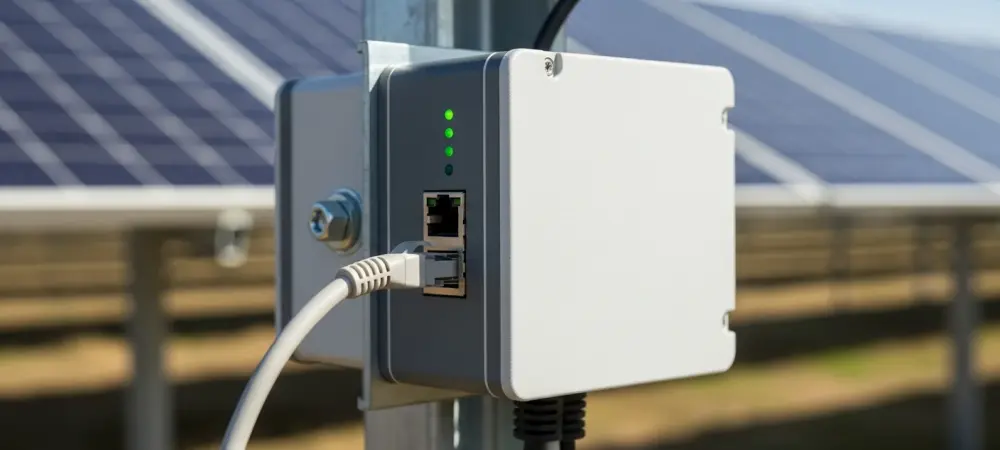
Modern solar farms are no longer isolated fields of panels; they are sophisticated, networked industrial environments. These facilities depend heavily on operational technology (OT) to manage power generation, including Supervisory Control and Data Acquisition (SCADA) controllers and string monitoring boxes that aggregate data from photovoltaic (PV) modules. This digital integration creates a logical pathway for threat actors, who can target interconnected components from the PV modules and string monitoring boxes all the way to the central SCADA system.
This interconnectedness is made significantly more dangerous by the widespread use of legacy industrial protocols like Modbus. Originally designed for isolated serial networks, Modbus lacks fundamental security features such as encryption or authentication. Its continued use in internet-connected solar operations creates a foundational weakness, as any attacker who can reach a device speaking this protocol can send it commands without needing to bypass complex security controls.
Real-World Attack Scenarios and Methods
A primary attack vector exploits the Modbus protocol running over TCP, which is often left exposed to the internet on port 502. This configuration allows hackers to remotely send control commands directly to critical operational equipment. The process begins with reconnaissance, where attackers use widely available network scanning tools like Nmap to identify vulnerable devices. A simple command, such as nmap -sV -p 502 --script modbus-discover , can quickly reveal active Modbus services on a solar farm’s network.
Once a vulnerable device is identified, an attacker can proceed to direct manipulation. Using a tool like mbpoll, they can write to specific memory addresses, known as registers, to alter the system’s state. For example, a command targeting a register mapped to a “SWITCH OFF” function (e.g., 0xAC00) could instantly disable entire strings of power-producing PV panels. This type of attack requires no sophisticated malware, relying instead on the inherent insecurity of the exposed protocol to cause immediate and tangible disruption.
Expert Insights on Protocol and Network Flaws
Security analysts have observed extensive, large-scale reconnaissance and exploitation attempts targeting Modbus-enabled devices across the energy sector. This trend reinforces a critical point: the most significant risk to solar infrastructure does not come from complex zero-day exploits but from fundamental security failures. The danger stems from default-open services and insecure-by-design protocols that are exposed to the public internet, often due to misconfigured firewalls.
Experts identify the string monitoring box as a particularly critical weak point in the solar energy ecosystem. This device acts as a crucial bridge, translating signals from the physical PV strings into data for the SCADA “brain” that manages the entire farm. By compromising this single component, an attacker effectively becomes a rogue SCADA operator, gaining the ability to manipulate power output at will. One recent report highlighted a real-world, high-risk alert triggered by an exposed Modbus port 502, which was directly traced back to overly permissive firewall rules, underscoring how simple configuration errors can create catastrophic vulnerabilities.
The Future Outlook: AI-Driven Threats and Mitigation
The threat model for solar cybersecurity is evolving at an accelerated pace, driven by the integration of agentic AI frameworks that can automate and scale attacks. These emerging AI-driven tools are capable of sweeping vast IP ranges, discovering exposed Modbus services, and methodically injecting malicious commands at a speed and scale that far surpasses human capabilities. This development shifts the advantage heavily toward the attacker, creating a scenario where human defenders will struggle to keep pace with automated threats. This risk is compounded by a common architectural flaw in many solar facilities: the lack of robust network segmentation between information technology (IT) and operational technology (OT) systems. A flat network topology means that once a single device is compromised—whether an office computer or an OT controller—an attacker can move laterally with ease, potentially gaining control over the entire solar farm. The speed and scalability of AI-powered attacks transform isolated incidents into a potential threat to regional power grids and national infrastructure, enabling coordinated, high-impact disruptions.
Conclusion: Securing the Future of Green Energy
The analysis revealed that the combination of insecure legacy protocols, publicly exposed control systems, and the rise of AI-automated tools had created a perfect storm of cybersecurity risks for the solar energy sector. These factors transformed theoretical vulnerabilities into practical and easily executable attack vectors with the potential for immediate disruption.
As solar power becomes an increasingly vital cornerstone of global energy strategy, securing its operational technology is no longer an ancillary concern but a matter of national security. The integrity of the green energy transition depends on the resilience of its underlying digital infrastructure against sophisticated and automated threats.
To safeguard this future, solar operators must urgently pivot toward modern cybersecurity practices. This involves implementing robust network segmentation to isolate critical control systems, closing all unnecessary open ports, and strategically phasing out insecure protocols in favor of secure alternatives. Defending against the next generation of rapid, automated attacks requires a proactive and foundational approach to security, ensuring that our green energy infrastructure is both sustainable and secure.