

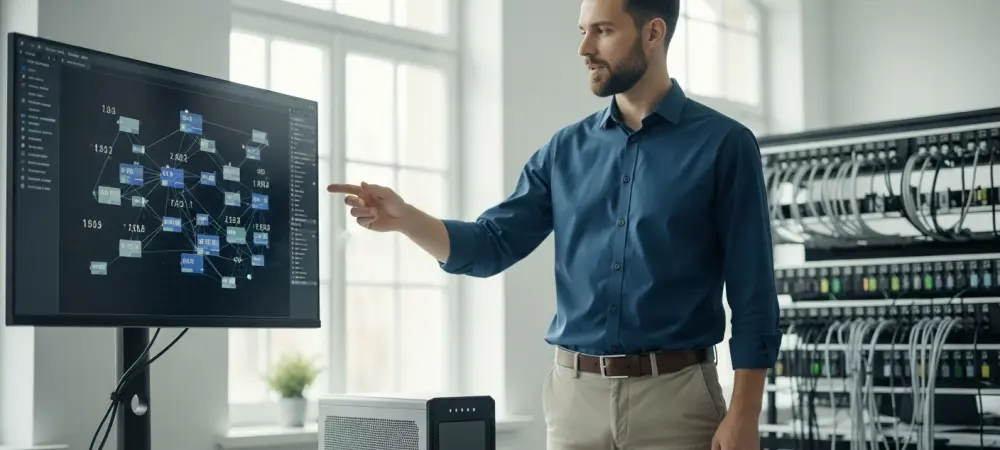
The transition from centralized cloud intelligence toward localized, private server environments marks a definitive turning point for global data management strategies. Developers are increasingly abandoning the superficial convenience of third-party platforms for the granular control afforded by private server infrastructure. This migration represents more than a mere technical preference; it is a fundamental reconfiguration of the relationship between data and the machines that process it. Organizations are realizing that the initial allure of plug-and-play AI often masks long-term risks related to data security and escalating operational costs.
The shift matters because it represents the intersection of data sovereignty, cost efficiency, and performance in the generative AI era. Navigating this new landscape requires a deep understanding of the technical stack, from the base hardware to the autonomous agents that execute high-level tasks. This analysis explores the momentum of localized intelligence, drawing on expert viewpoints to assess the viability of private AI ecosystems. By moving away from shared resources, the industry is establishing a new standard for performance that does not rely on the fluctuating policies of external service providers.
The Momentum of Localized Intelligence
Mapping the Shift: Market Growth and Adoption Statistics
Market data illustrates a significant surge in open-source model downloads, indicating a widespread departure from SaaS-based AI models. Organizations that previously relied on token-based subscription services found themselves vulnerable to unpredictable pricing and shifting data-handling policies. Consequently, the transition toward Virtual Private Server deployments for enterprise workloads accelerated rapidly from 2026. This trend highlights a growing preference for capital investment in infrastructure over recurring operational expenses that offer no long-term equity or data protection. Comparative cost-benefit analysis demonstrates that self-hosting provides substantial savings for high-volume users. While cloud services are efficient for small-scale testing, the cumulative cost of millions of tokens often exceeds the price of dedicated hardware within months. Moreover, the decline in trust regarding third-party data handling has pushed many firms to internalize their AI operations to prevent competitive leakage. This move is not merely about saving money; it is about building a sustainable foundation for proprietary intelligence that remains entirely within the control of the enterprise.
Case Studies in Autonomy: Leveraging Ollama and OpenClaw
Practical implementations of this autonomy often rely on the synergy between management frameworks like Ollama and agentic layers such as OpenClaw. Ollama has simplified the once-daunting task of running Large Language Models on private hardware by providing a streamlined interface for model orchestration. It allows developers to deploy sophisticated models on a private server with minimal configuration, ensuring that the core “brain” of the AI remains local. This accessibility has democratized high-tier AI, making it a viable tool for companies that lack the resources of major tech conglomerates. When paired with OpenClaw, these systems evolve from static chat interfaces into autonomous AI agents capable of executing complex research and data analysis. Successful organizations have used this combination to maintain a strict digital perimeter while automating proprietary internal workflows. For instance, a firm might deploy an agent to analyze sensitive financial records or legal documents without ever sending that data to an external API. This architecture ensures that intelligence remains an internal asset, providing a competitive edge through speed and absolute privacy.
Expert Perspectives: Balancing Sovereignty and Technical Complexity
Industry insiders argue that the sandbox advantage of self-hosting is its most potent feature, as it fosters unrestricted innovation without the performance caps of external providers. Security professionals highlight the legal and ethical necessity of maintaining data within a private infrastructure, particularly as global privacy regulations become more stringent. They suggest that self-hosting is no longer a luxury but a prerequisite for compliance in sectors like finance or healthcare. This perspective shifts the focus from convenience to responsibility, emphasizing the long-term safety of the digital ecosystem.
From a hardware perspective, specialists emphasize the critical balance between memory, processing power, and storage speed. They maintain that while CPU-based processing serves initial development, dedicated GPU acceleration is required to sustain the throughput necessary for production-scale AI agents. Resource allocation must be precise, as insufficient RAM often leads to performance bottlenecks that negate the advantages of a private server. Therefore, experts recommend dedicated environments where resources are not shared, ensuring that CPU and memory availability remains constant for the most demanding workloads.
The Horizon: Evolution of the Self-Hosted AI Ecosystem
Projected developments in the field suggest a future dominated by small models that offer high-tier performance on accessible hardware. These optimized architectures allow firms to run efficient, specialized models locally without the need for massive server farms. As these models become more capable, the gap between cloud-based giants and local installations continues to shrink. This evolution enables even smaller enterprises to leverage powerful AI agents for niche applications, further decentralizing the landscape of digital intelligence and reducing reliance on massive tech monopolies.
However, the move toward self-hosting remains a dual-edged sword, requiring organizations to navigate the trade-offs between absolute control and operational overhead. Managing a private server requires technical expertise and a commitment to regular maintenance and security updates. Despite these challenges, the broader implications for data-sensitive industries are clear. As decentralized AI becomes the standard, the ability to own and manage one’s own infrastructure will be the primary differentiator between organizations that are truly autonomous and those that are dependent on external vendors.
Conclusion: Securing the Future of Private AI
The strategic landscape dictated a move toward ownership as the only way to secure a future in a rapidly shifting technological environment. Organizations that prioritized the triple-threat advantage of privacy, performance, and personalization found themselves better equipped to handle the complexities of decentralized intelligence. The realization took hold that digital intelligence was too valuable to be left in the hands of third-party vendors. It became essential for leaders to audit their current data dependencies and begin the migration of sensitive workloads to private clusters where they could maintain absolute oversight.
Building a digital intelligence infrastructure established a foundation that protected both proprietary secrets and the long-term scalability of automated operations. This proactive stance ensured that the power of AI served the organization directly, rather than the interests of a service provider. The shift toward self-hosting proved to be a permanent correction in the market, as the benefits of sovereignty far outweighed the temporary convenience of the cloud. Consequently, the move toward localized servers secured a more resilient and private future for all industries involved in high-level data processing and analysis.