

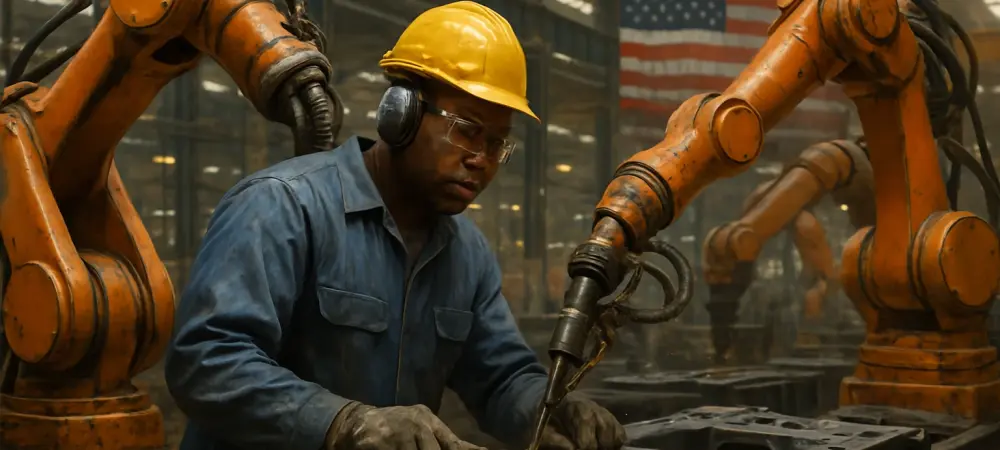
Imagine a factory floor buzzing not just with the hum of machines, but with a seamless dance between human ingenuity and robotic precision, revitalizing a sector many thought was lost to history. American manufacturing, once a titan of economic might, has faced decades of decline, battered by globalization and rising labor costs. Yet, a new wave of innovation through robotics and artificial intelligence (AI) is sparking a renaissance, offering a chance to reclaim lost ground. This transformation isn’t just about machines taking over; it’s about redefining how industry operates, tackling persistent challenges like skills shortages and uncompetitive costs. This analysis dives into the historical struggles of U.S. manufacturing, explores the current surge in robotic adoption, draws on expert insights, and peers into the future implications of this technological shift, culminating in a vision for a revitalized industrial landscape.
The Decline and Revival of American Manufacturing
Historical Context and Economic Struggles
American manufacturing was once the backbone of the nation’s economy, but the early 2000s marked a steep decline that reshaped communities. Between 2000 and 2010, millions of jobs vanished, largely due to cheaper imports from China, as noted by MIT political scientist Suzanne Berger. This wasn’t merely a numbers game; entire industries faced erosion, with small towns losing their economic anchors as factories shuttered or moved overseas. The ripple effect was profound, leaving behind a workforce grappling with uncertainty and diminished opportunities.
Even as global dynamics shift, with rising labor costs in China, the return of jobs to American soil remains sluggish. High domestic labor expenses and a persistent skills gap—with over half a million manufacturing positions unfilled today—continue to hinder progress. Compounding this, fewer individuals see manufacturing as a desirable career path, deterred by perceptions of grueling work and stagnant wages. This creates a vicious cycle, where the lack of trained workers slows industry recovery.
Early Steps in Robotics as a Solution
Amid these challenges, a quiet revolution has begun, with small and medium-sized U.S. firms turning to robotics to bring production back home. Companies in states like Michigan and Ohio are integrating automated systems to handle repetitive tasks, slashing the need for extensive manual labor. For instance, some automotive parts manufacturers have adopted robotic arms for assembly, cutting costs and boosting output without sacrificing quality.
This early adoption isn’t limited to niche players. Larger corporations are following suit, inspired by success stories where automation has streamlined operations. A notable case is a Wisconsin-based firm that automated its packaging process, reducing turnaround times and allowing workers to focus on oversight rather than physical toil. These examples signal a shift, proving that technology can address labor cost barriers while maintaining a human touch in critical decision-making areas.
Expert Perspectives on Robotics and AI Integration
Turning to industry thought leaders, there’s a growing consensus that robotics and AI are not threats but allies in reshaping manufacturing. Tom Biegala, writing for Fortune, champions the idea of automating unskilled tasks while preserving human oversight, arguing this balance is the most cost-effective path to reshoring production. His view underscores a pragmatic approach: let machines handle the mundane, freeing up workers for roles that demand creativity and problem-solving.
Adding depth to this perspective, Sohrab Haghighat, CEO of Hestus, highlights a critical inefficiency in design processes, costing the industry billions annually in lost productivity. He advocates pairing engineers with AI agents that offer real-time feedback on manufacturing feasibility during design phases, preventing costly redesigns. This innovation tackles upstream challenges, ensuring products are built right the first time, and showcases how AI extends beyond factory floors into strategic planning.
Ultimately, these expert voices converge on a shared vision: a partnership between humans and machines. Far from replacing workers, robotics and AI are seen as tools to amplify human potential, enhancing efficiency and allowing American manufacturing to compete on a global stage. This synergy points to a future where technology doesn’t displace but rather elevates the workforce, aligning with modern expectations for meaningful, skilled employment.
Future Implications of Robotics in Manufacturing
Looking ahead, robotics holds the potential to redefine American manufacturing by fostering a new class of technology-driven roles. Imagine a landscape where workers aren’t toiling over repetitive tasks but are instead trained to manage sophisticated systems, earning sustainable wages in the process. This shift could address long-standing issues of job quality, making the sector appealing again to a younger, tech-savvy generation eager for impactful careers.
However, the road to this future isn’t without obstacles. Building robust automation infrastructure demands significant investment, and technological hurdles remain in scaling these solutions across diverse industries. Yet, the benefits—such as skyrocketing productivity and reduced dependency on foreign labor—offer a compelling case. Smaller firms already adopting robotics hint at a stratified system where humans and machines complement each other, promising labor savings without the mass displacement many fear.
Beyond individual factories, the broader implications are staggering. While initial job displacement is a concern, long-term gains could outweigh these risks, with AI advancements further accelerating the trend. Industries from aerospace to consumer goods might see ripple effects, as automation drives down costs and spurs innovation. This evolution, if managed thoughtfully, could position the U.S. as a leader in smart manufacturing, balancing economic growth with workforce stability.
Conclusion: A New Era for American Industry
Reflecting on this journey, the historical decline of manufacturing painted a grim picture, with job losses and global competition casting long shadows. Yet, the rise of robotics emerged as a transformative force, offering solutions to age-old challenges. Expert optimism around human-machine collaboration reinforced a hopeful outlook, suggesting technology could rebuild what was lost.
Looking back, the path forward became clear: stakeholders needed to embrace automation not as a replacement for human labor but as a catalyst for reinvention. By focusing on training programs to bridge skills gaps and investing in scalable robotic systems, industry leaders could ensure a competitive edge. This technological shift promised not just to restore American manufacturing but to redefine it, addressing national priorities like job security and economic resilience for generations to come.