

The silent hum of progress from the massive data centers powering artificial intelligence has grown into a roar of public concern, demanding a fundamental recalculation of their true cost to local communities. As the demand for AI skyrockets, so does the construction of these colossal facilities, placing unprecedented strain on local power grids, water supplies, and public services. This has ignited a new wave of public and regulatory scrutiny, forcing a critical shift in how the industry expands. This analysis examines the emerging trend of responsible AI infrastructure, using Microsoft’s new “Community-First” framework as a case study to explore how tech giants are rethinking their role from resource consumers to community partners.
A Strategic Shift Toward Community-Integrated Infrastructure
The once-unquestioned expansion of hyperscale data centers is now meeting significant friction. This evolving landscape is compelling tech companies to move beyond a purely technical or financial approach to development and adopt a more holistic strategy that integrates community well-being into their core business plans. This strategic reorientation is not just about mitigating risk but about building a sustainable foundation for long-term growth in an increasingly skeptical world.
The Catalyst From Public Opposition to Proactive Policy
Growing opposition from communities concerned about the environmental and economic impact of hyperscale data centers has become a primary driver for this strategic pivot. No longer content to accept development at any cost, local groups and governments are demanding greater accountability for the immense resources these facilities consume. The industry is realizing that a failure to address these concerns can lead to costly delays and damage corporate reputations. A key catalyst for this change was Microsoft’s project setback in Caledonia, Wisconsin, which served as a powerful lesson on the financial and reputational risks of underestimating local sentiment. The resistance encountered there highlighted that the old model of development, which often prioritized speed over consensus, was no longer viable. In response, Microsoft’s “Community-First Infrastructure” framework is being implemented for all new and expanding U.S. data center projects, setting a new, more collaborative standard for the industry.
The Blueprint: Microsoft’s Four Pillars of Responsibility
At the heart of Microsoft’s new strategy is a commitment to responsible power and grid management. The company now pledges to fund necessary grid upgrades and contract for new power generation equivalent to its consumption, citing its significant procurement of 7.9 GW in the MISO market as evidence. Moreover, it advocates for specialized tariffs that ensure the full cost of its immense energy load is not unfairly passed on to residential customers, a move designed to prevent households from subsidizing industrial-scale power use.
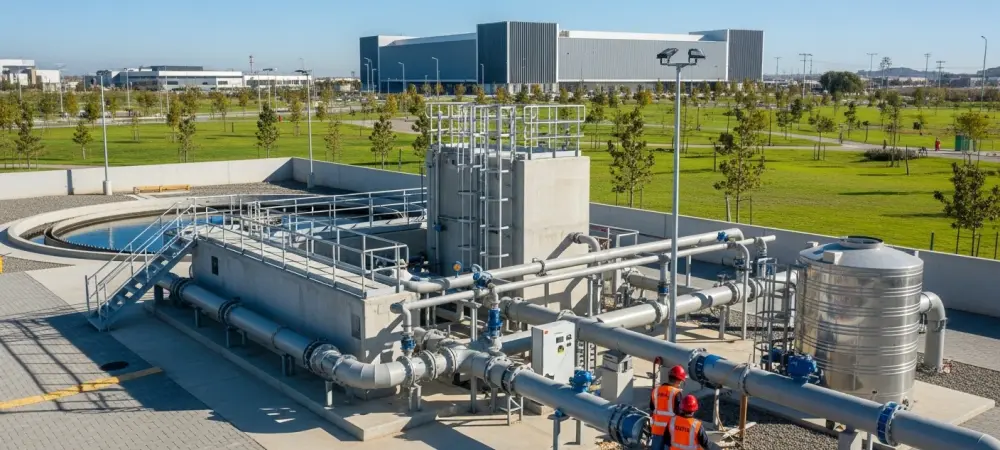
Comprehensive water stewardship forms another critical pillar. Acknowledging the high water consumption traditionally associated with data center cooling, the company now pledges to replenish more water than it consumes in local districts. It also aims to reduce its data center water-use intensity by 40% by 2030, a goal supported by the deployment of advanced closed-loop cooling systems in newer facilities in Wisconsin and Georgia. In areas with strained resources, Microsoft is also funding water infrastructure upgrades, as demonstrated by its partnership with the Quincy Water Reuse Utility in Washington.
The framework also establishes a firm commitment to fiscal contribution and local investment. By vowing to pay full local property taxes on all its data centers, Microsoft ensures direct and predictable financial support for essential public services like schools, hospitals, and civic infrastructure. In Quincy, Washington, for instance, the company’s facilities are estimated to generate over $200 million in annual regional economic activity, providing a substantial boost to the local tax base and funding for public works.
Finally, the initiative focuses on workforce development and creating genuine economic opportunity. The framework aims to create thousands of local jobs through strategic partnerships with organizations like North America’s Building Trades Unions to bolster apprenticeship pipelines. It is also expanding its Data Center Academy programs to provide specialized training for careers in data center operations. These efforts are supplemented by investments in community AI literacy programs and direct support for local small businesses, fostering a more inclusive economic ecosystem.
Expert Insights: Earning a Social License to Operate
Industry experts widely view this proactive approach as a necessary and sophisticated evolution for hyperscale operators. One leader in the field noted that such frameworks represent a “sophisticated optimization of land, energy, and water resources,” moving beyond simple resource acquisition to a more integrated and sustainable model. This perspective underscores a shift from a transactional relationship with communities to one built on mutual benefit and long-term planning.
This strategic change reflects a mature understanding that lasting success in the AI era is no longer just about technical capability or processing power. It is fundamentally about earning and maintaining a “social license to operate” within the communities that host this critical infrastructure. Without local trust and buy-in, even the most technologically advanced projects risk being derailed by public opposition and regulatory hurdles, making community partnership a critical business asset.
The Future of Development: Setting a New Global Standard
Microsoft’s comprehensive framework is positioned as a replicable global model, which will likely apply significant pressure on competitors like Amazon and Google to adopt similar transparent, community-focused policies. As more communities demand these standards, this approach could quickly evolve from a corporate initiative into a de facto regulatory baseline for data center development worldwide, shaping the future of digital infrastructure.
The primary benefits of this trend include stronger community relations, a more stable and predictable regulatory environment, and the accelerated development of renewable energy to meet corporate commitments. However, significant challenges remain. These include higher upfront infrastructure costs and the immense complexity of negotiating bespoke agreements with hundreds of different local utilities and governments, each with its own unique needs and regulatory landscape.
Ultimately, this trend signals a fundamental change in the relationship between Big Tech and local communities. If successful, it could transform the industry’s reputation from that of an extractive force to a symbiotic partner. This new model, which fosters shared and sustainable growth, has the potential to redefine what it means to build the physical backbone of the digital world.
Conclusion: Redefining Progress in the Age of AI
The clear trend toward responsible AI infrastructure, exemplified by Microsoft’s commitments to power, water, fiscal, and community well-being, marks a pivotal moment. It represents a shift from a growth-at-all-costs mindset to a more balanced and sustainable approach to development that acknowledges the deep interconnectedness of technology and society.
As AI’s physical footprint continues its exponential expansion, a community-first approach is no longer a public relations choice but a core business imperative. The success of this model will not only determine the future of sustainable data center development but also set a crucial precedent for what it means to be a responsible corporate citizen in the 21st century.