

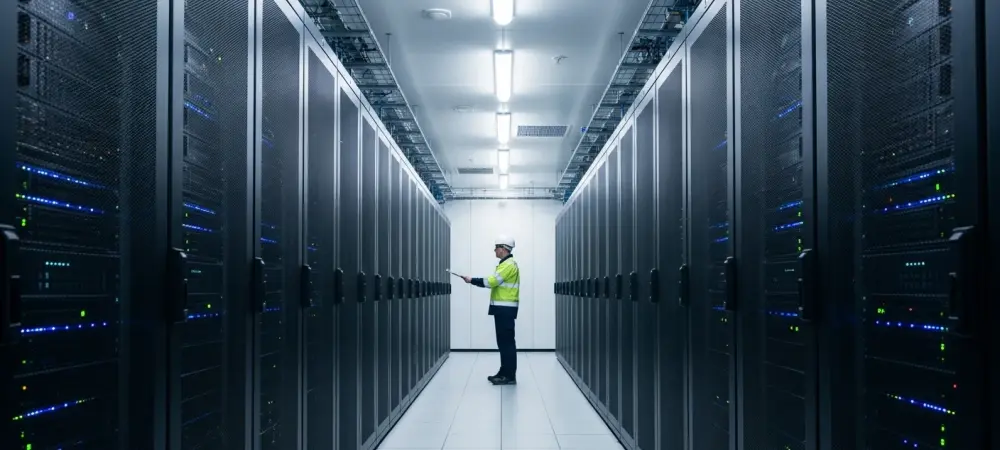
The relentless hunger for high-speed processing has pushed the digital frontier beyond traditional metropolitan skylines toward once-overlooked regional landscapes. As power constraints and land scarcity stifle growth in primary markets, developers are looking for “middle-ground” locations to house the massive infrastructure required for modern AI workloads. This shift represents a fundamental pivot in global strategy, where the availability of high-voltage electricity and sprawling acreage outweighs the proximity to urban centers.
This analysis explores the surge in regional data center development, using the PowerCampus Texas project in Wichita Falls as a primary case study. By examining this transition, we can see how secondary hubs are becoming the new backbone of the cloud.
The Decentralization of Digital Infrastructure
Market Data and Regional Growth Statistics
The traditional dominance of Tier 1 markets like Northern Virginia and Dallas is eroding as investment flows toward Tier 2 regional hubs. Rising costs in established centers have forced a redistribution of capital, with developers paying significant premiums for land in specialized business parks. Data suggests that the primary driver for this migration is no longer just proximity to users, but the immediate availability of massive power loads that urban grids can no longer support.
Consequently, land acquisition trends show a marked increase in large-scale purchases in areas previously considered too remote for tech investment. These regions offer the physical space necessary for hyperscale facilities that require hundreds of acres. This geographic dispersion ensures that the digital fabric remains resilient, even as the scale of individual projects continues to balloon.
Real-World Application: The Skybox PowerCampus Texas Case Study
The partnership between Skybox Datacenters and Blue Owl in Wichita Falls serves as a blueprint for this new era of regional development. By securing a 350-acre footprint, the PowerCampus Texas project aims to deliver a staggering 2 million square feet of space. The strategy focuses on early land acquisition and power securing, with the first 150,000-square-foot facility expected to be operational by late 2028.
This initiative has sparked a local tech gold rush, evidenced by the competing Brad Altman campus currently navigating rezoning nearby. While some local projects face uncertainty, the Skybox venture demonstrates how institutional backing can transform a mid-sized city into a critical infrastructure node. The presence of multiple large-scale proposals indicates a high level of confidence in the regional model.
Expert Perspectives on the Regional Pivot
Real estate investment trusts now view the risk-reward profile of these emerging nodes with increasing optimism. Building between major markets allows for lower entry costs while still maintaining logical connections to existing fiber backbones. Experts suggest that while these areas lack the immediate workforce of a major city, the sheer scale of the infrastructure eventually draws in the necessary talent and auxiliary services.
Economic development agencies are also leveraging these projects to revitalize local economies. By providing the necessary zoning and utility support, mid-sized cities can secure long-term tax revenue and high-tech jobs. However, technical experts warn that challenges regarding latency and specialized labor remain, requiring developers to invest heavily in local training and advanced networking hardware to bridge the gap.
The Future Landscape of Data Infrastructure
Infrastructure Evolution: Integrating Regional Hubs
Future regional hubs will likely integrate seamlessly with Tier 1 networks to create a more decentralized and robust data fabric. Instead of being isolated outposts, these campuses will act as massive processing engines that feed into the broader national grid. This evolution will allow for greater redundancy, ensuring that the failure of a single urban node does not disrupt global cloud services.
Challenges and Hurdles: Regulatory and Grid Pressures
The path forward is not without significant obstacles, as regulatory roadblocks and rezoning delays frequently slow development. Public scrutiny of power grid impacts is also increasing, as local communities worry about the strain these massive facilities place on shared utilities. Developers must navigate these political waters with transparency to avoid long-term project stagnation.
Broader Implications: Local and Workforce Shifts
This expansion is poised to fundamentally alter local real estate markets and utility cost structures. As tech infrastructure decentralizes, the workforce may follow, leading to a slow but steady migration of specialized talent away from coastal tech hubs. This shift could equalize economic opportunities across different regions, though it also risks driving up living costs in previously affordable areas.
Projected Outcomes: Risks of Speculative Building
The “build it and they will come” strategy remains a high-stakes gamble in an uncertain economic climate. While the demand for AI capacity is currently explosive, the risk of oversupply or shifts in technology could leave some regional projects underutilized. Success will likely depend on a developer’s ability to secure long-term tenants before the final phases of construction are completed.
Summary and Strategic Outlook
The shift from urban concentration to regional dispersion, championed by firms like Skybox, redefined the parameters of industrial real estate. Investors and municipal leaders recognized that the next generation of AI workloads required a footprint that major cities could no longer provide. This transition necessitated a focus on sustainable infrastructure and long-term grid stability. Stakeholders prioritized the integration of renewable energy sources and advanced cooling technologies to ensure these massive campuses remained viable for decades. The focus moved toward creating adaptable environments that could evolve alongside rapidly changing hardware requirements.